An athlete suffered second-degree burns after the failure of their shirt with integrated sensors. Digital forensic analysis revealed that sweat caused a short circuit in the flexible solder nodes, producing a thermal arc. This accident exposes a critical vulnerability in wearable design: the lack of insulation in areas of high conductivity and humidity. 3D simulation becomes the key tool to prevent these risks.
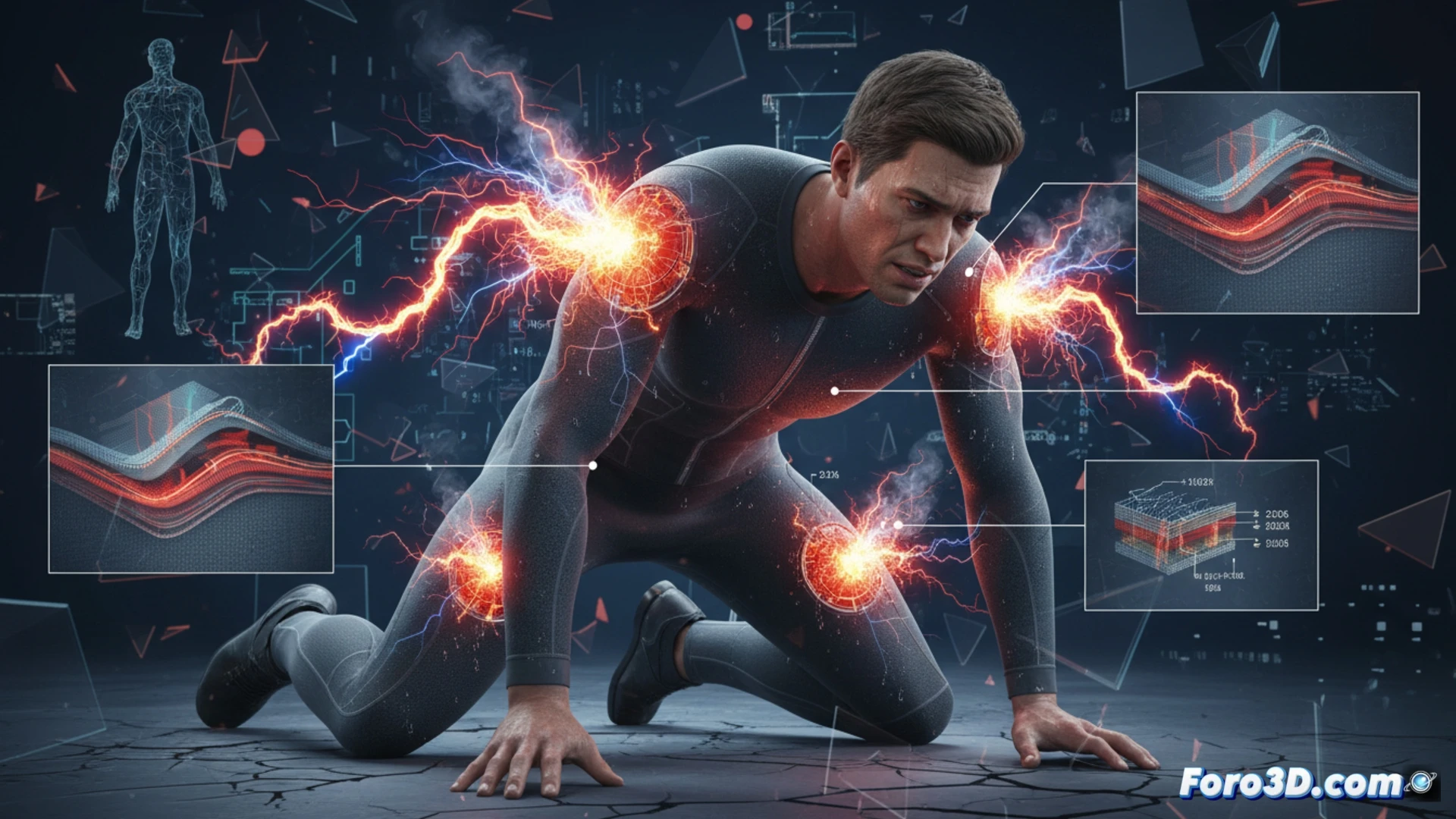
Technical workflow: from Marvelous Designer to Ansys 🔥
The analysis pipeline began in Marvelous Designer, where the garment's fit was simulated on a digital avatar. Areas of greatest friction and skin contact were identified, where sensors and conductive tracks were exposed. Then, in VGSTUDIO MAX, a volumetric scan of the fabric was performed to map the distribution of conductive threads and detect microcracks in the flexible solders. Finally, in Ansys, the electrical behavior of the system was modeled under sweating conditions. The simulation showed that humidity reduced the insulation resistance between nodes, creating a low-impedance path that triggered the thermal arc. The analysis suggested encapsulating the nodes with dielectric silicone and redesigning the seam pattern to prevent liquid accumulation.
Lessons for smart garment design ⚡
This case demonstrates that 3D fashion should not only focus on aesthetics and comfort, but also on the user's electrical safety. Integrating mechanical, thermal, and electrical simulations into a single workflow allows predicting catastrophic failures before manufacturing a prototype. For wearable designers, the lesson is clear: every conductive node must be treated as a critical risk point, and sweat must be considered an active electrolyte in virtual tests.
As the current flow in a smart textile is distributed through a three-dimensional conductive mesh, which 3D simulation methodology allows for the most accurate prediction of critical points of thermal concentration that can cause arc injuries under sweating and dynamic movement conditions?
(PS: Designing fashion in 3D has the advantage that you never have to sew a button.)