The Star Trek reboot trilogy, launched in 2009 with J.J. Abrams' vision, has gone from being a divisive experiment to establishing itself as a recurring option for weekend marathons. With a brisk pace and a charismatic cast, these films offer an accessible gateway into the Trek universe. Their constant revaluation among fans shows that, beyond the initial controversies, the Kelvin saga works as solid, standalone entertainment.
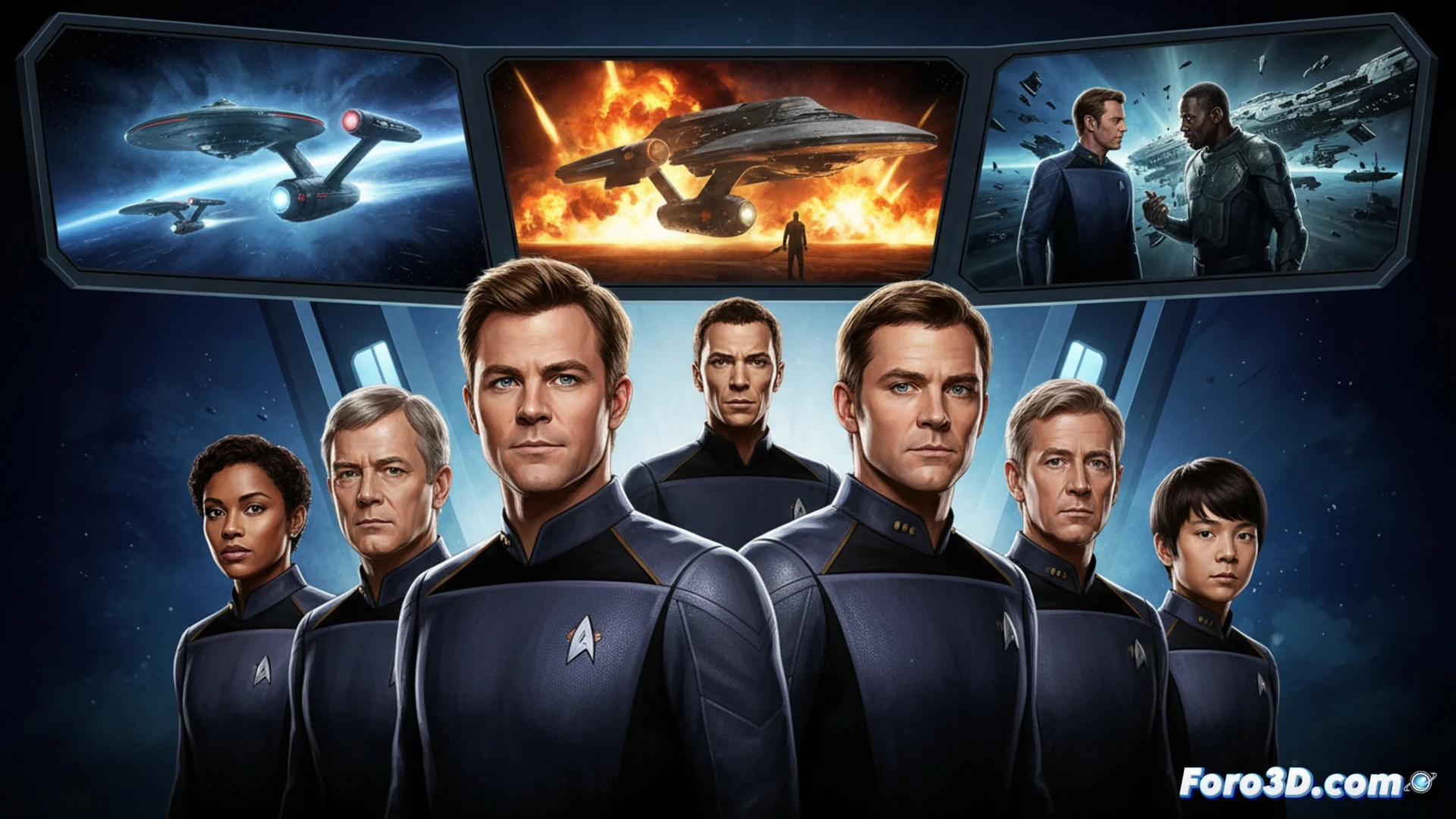
Visual effects and production design: the engine of the saga 🚀
The technology used in the Kelvin trilogy marked a before and after in the franchise. Abrams bet on a mix of practical effects and cutting-edge CGI, with the Enterprise as the absolute star. Filming with anamorphic cameras and wide-angle lenses gave the ships and sets an unusual depth of field. The lens flare lighting, though criticized, became a visual signature. The sound design, with rumbling warp engines and powerful phaser blasts, completed an immersive experience that ages with technical dignity.
When Spock and Kirk looked like two office buddies ☕
The curious thing about this trilogy is that, despite its spaceships and time travel, the conflicts feel more like a hallway argument between departments than a galactic odyssey. Kirk is the rebellious intern who shows up late, Spock the IT manager who hates him, and Scotty the technician who solves everything with coffee. Add a villain who talks like an angry CEO, and you have the most corporate movie in outer space. Perfect for watching in your pajamas while ignoring your own work emails.