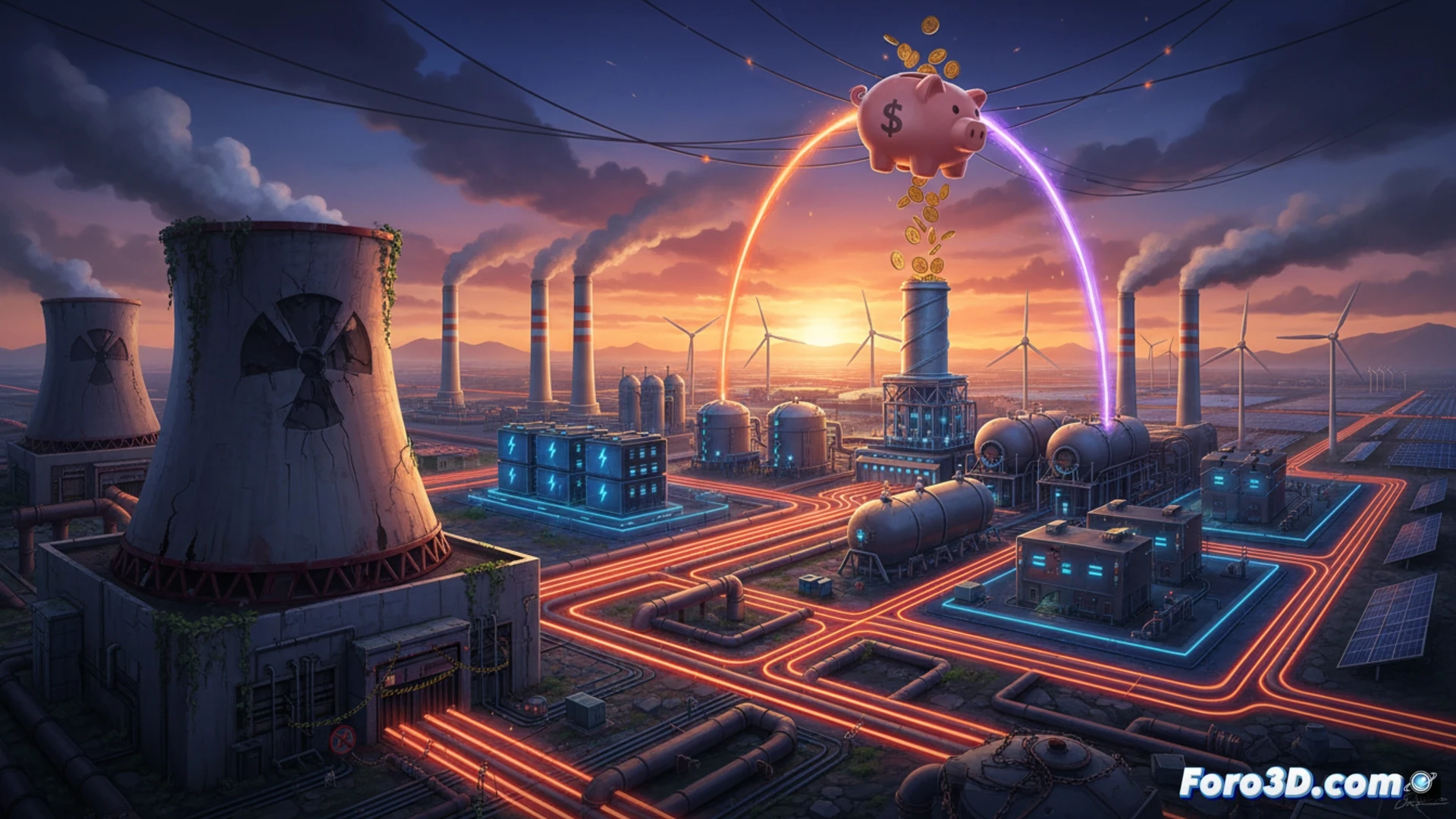
The decision to reduce dependence on nuclear power has brought a counterintuitive consequence: more money must be invested in electrical backup systems. While stable reactors are being shut down, gas plants, batteries, and combined cycle plants are multiplying to cover the gaps left by renewables. The result is a more complex and expensive grid, where what is saved on uranium is spent on emergency infrastructure.
The hidden cost of intermittency in the electrical grid ⚡
Each megawatt of solar or wind power needs between 0.8 and 1.2 MW of firm backup to guarantee supply. This involves installing gas turbines that operate only a few hours a year, lithium battery storage systems with limited lifespans, and interruptibility contracts for large consumers. The capital cost of this safety park often exceeds the savings from not buying nuclear fuel. Furthermore, the useful life of these systems rarely exceeds 15 years, compared to 40 or 60 years for a reactor.
Shutting down nuclear: the most expensive way to need more power plants 💸
It turns out that closing a nuclear power plant is like selling your reliable car to ride a bike, but having to pay for an Uber every time it rains. Now we have to keep gas plants running just in case, batteries that last as long as an expired yogurt, and a grid operator who doesn't sleep a wink. The best part is that we pay twice: for the renewable electricity and for the insurance that makes it work. The irony of wanting to be greener without counting the full cost.