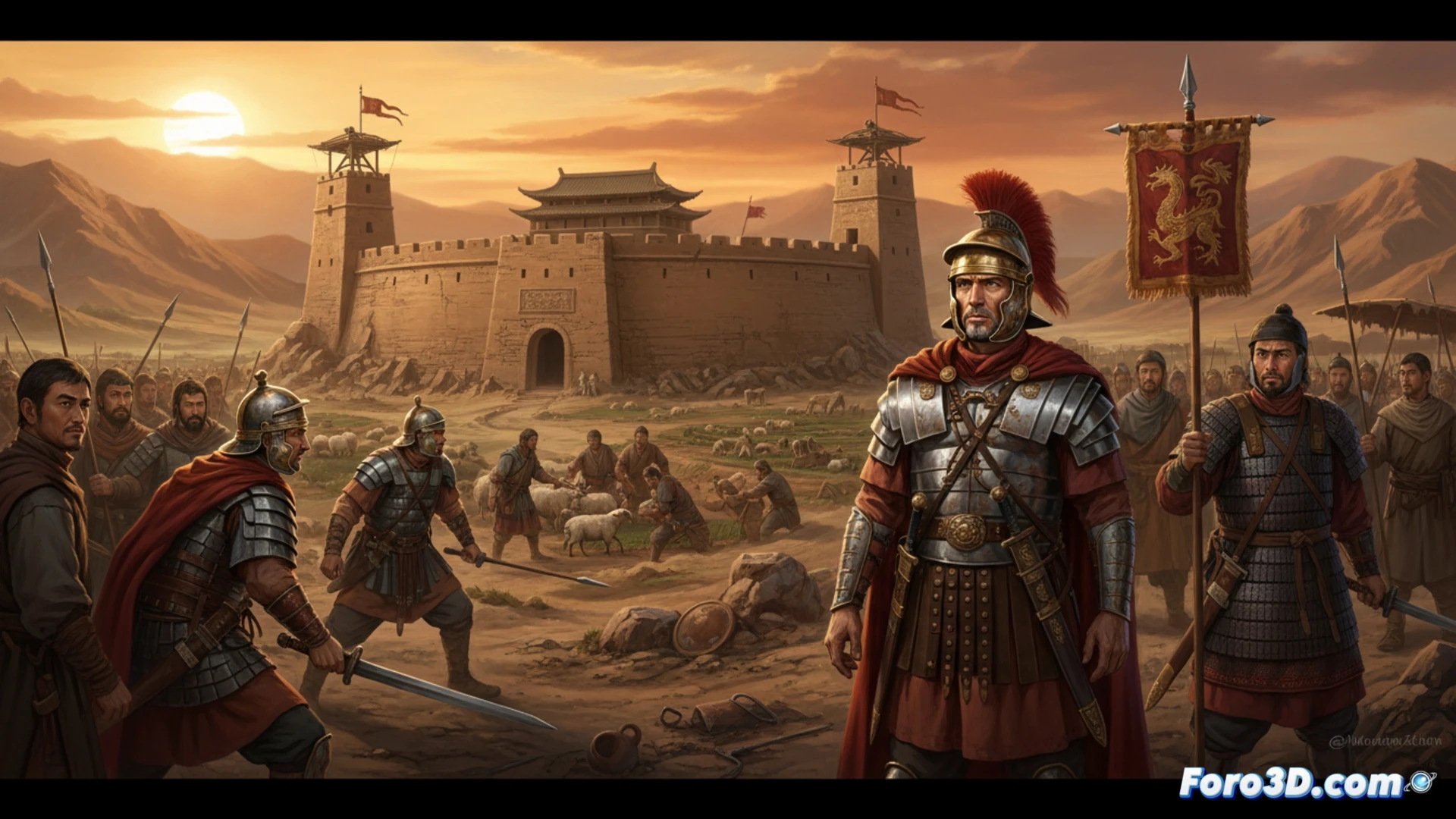
One of the most fascinating historical theories suggests that after the Battle of Carrhae in 53 BC, thousands of Roman soldiers captured by the Parthians did not disappear. According to this hypothesis, they were relocated as mercenaries to the eastern frontier of the Parthian Empire, where they eventually founded or integrated into the village of Liqian, in what is now Gansu Province, China. The debate combines archaeology, genetics, and mythology. 🏛️
DNA and Archaeology: The Technical Evidence of the Case 🔬
Since the 1950s, researchers have analyzed remains in Liqian searching for European genetic traits. Mitochondrial DNA tests on local inhabitants showed a higher percentage of Western lineages than in neighboring regions, but not conclusive. The local architecture features elements such as a hexagonal-shaped fort and pottery remains reminiscent of Roman techniques from the 1st century BC. However, the lack of contemporary Chinese or Parthian written documentation leaves the case in speculative territory. The use of strontium isotope analysis on skeletons could provide more solid data on ancient migrations.
Caesar, the Parthians, and a Monumental Translation Error 😅
The theory gained popularity when a historian suggested that the name Liqian derived from Legion, but it turns out the Chinese word already existed before Crassus. So basically, maybe the Romans didn't found anything; they just arrived at a village that was already called that and said: well, we'll stay here then. The funniest part is that if you ask a resident of Liqian if they are descended from a legionary, they'll tell you their grandfather was a farmer and the only Roman thing they know is soccer. But hey, genes don't lie entirely, even if tourism marketing exaggerates a bit.