3D technology can optimize the teleoperator's work by creating physical tools that improve their ergonomics and efficiency. A clear example is custom headset stands or wrist rests printed in 3D. To design them, software like Blender or Tinkercad is needed, along with an FDM printer and PLA filament. This reduces injuries and allows the workstation to be adapted to each worker.
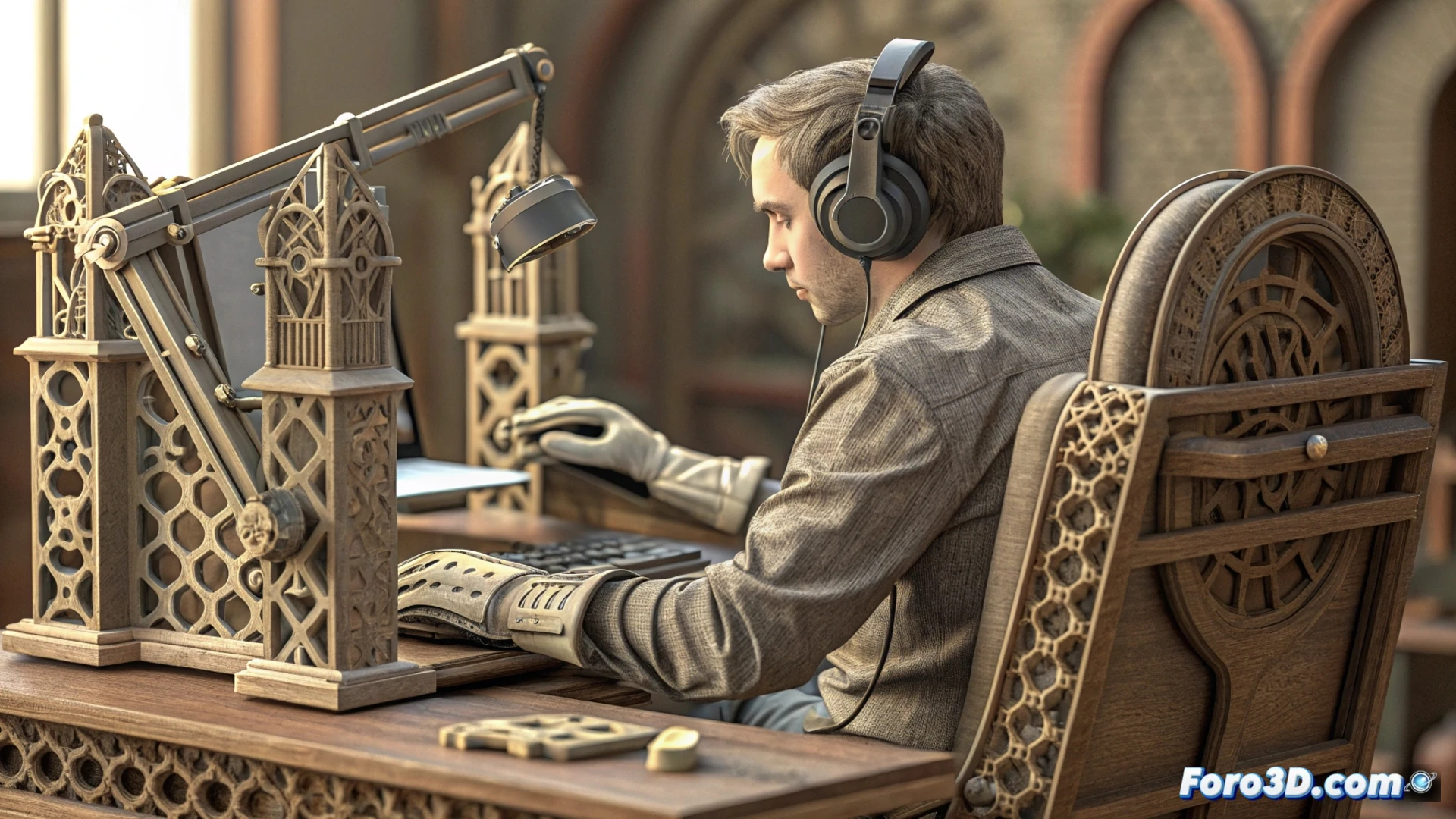
3D Modeling for Workstation Accessories 🖥️
The process begins with measuring the workspace and the teleoperator's needs. Using programs like Fusion 360 or FreeCAD, a monitor stand or cable organizer is designed. The STL file is then exported to a slicer like Cura or PrusaSlicer to generate the G-code. Printing takes between 2 and 6 hours, depending on the size. The result is a custom accessory not found in commercial stores, costing less than 5 euros in material.
The Drama of Call Centers and Their Torture Chairs 🪑
Because yes, we all know the call center chair seems designed by a sadist with a degree in reverse ergonomics. With 3D printing, you can make a footrest that doesn't break after two days or a phone stand that prevents turtle neck. Of course, don't print a replica of your boss for target practice: even if it's therapeutic, HR won't approve it.