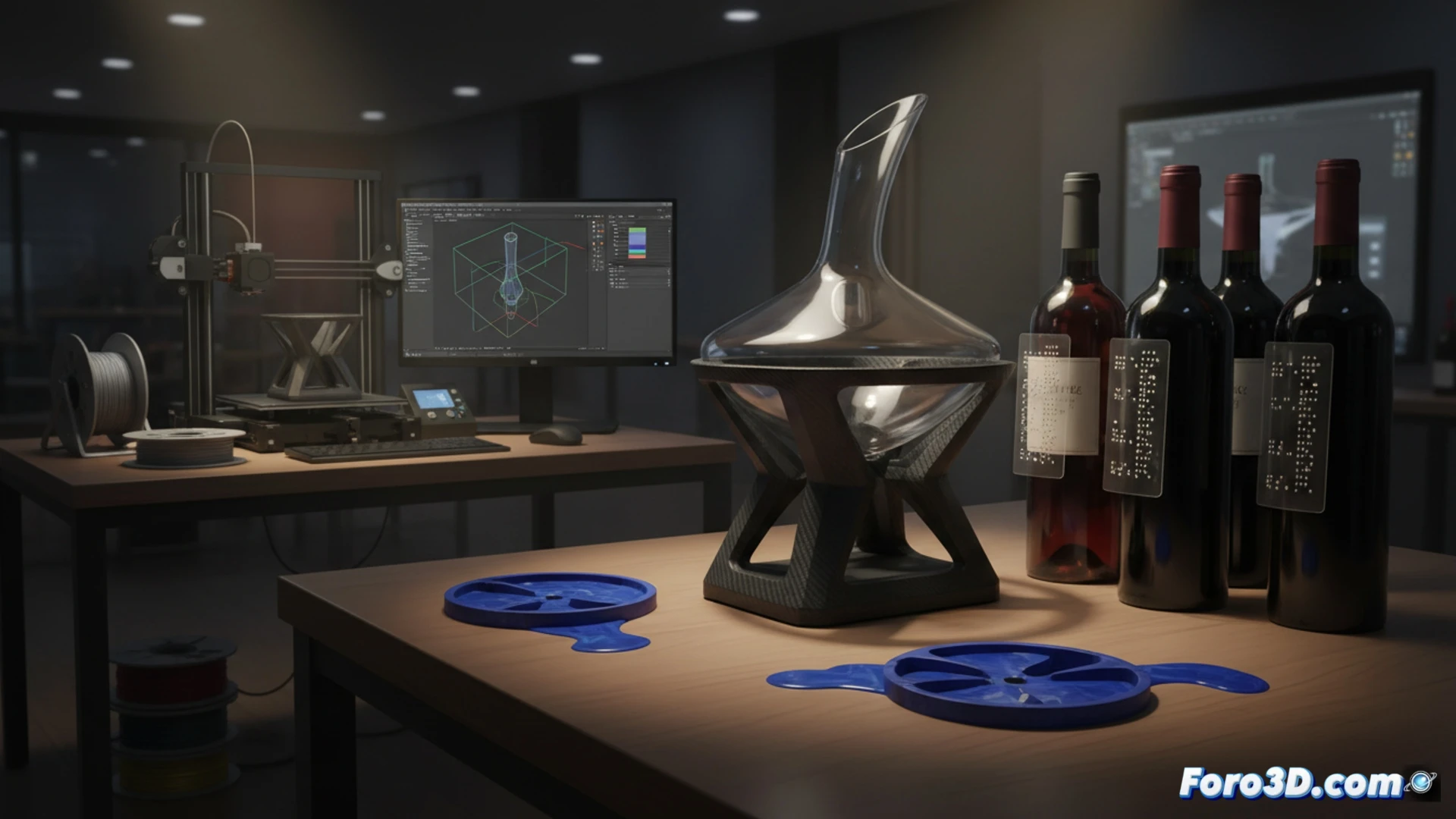
3D technology is breaking into sommelier work to solve practical problems. A clear example: the manufacturing of custom coasters with geometric shapes that channel spilled wine toward the center, preventing stains on tablecloths. Also printed are decanter stands or tactile braille labels for inclusive tastings. The necessary programs are Fusion 360 for parametric design and Cura for slicing the files.
Designing accessories with millimeter precision 🍷
To create a glass holder that prevents wobbling during service, it is modeled in Fusion 360 using digital tracings of the glass base. Tolerances of 0.2 mm are adjusted for a firm fit. Then, in Cura, parameters such as layer height (0.12 mm) and infill (20% with honeycomb pattern) are configured to optimize strength and weight. The ideal material is PLA, for its rigidity and low odor, avoiding contamination of the wines. The resulting STL file is printed on an Ender 3 or similar.
When the printer replaces the tasting glass 🖨️
Sure, one might think a cork and some tape would suffice. But no: now we print an articulated tasting glass that, according to the manufacturer, detects red fruit notes. In reality, it only detects the hot plastic from the hotend. But hey, it looks great on Instagram. While the traditional sommelier smells the wine, you show off a printed piece that looks like a robotic octopus. The wine tastes the same, but the presentation is on another level.