3D technology offers useful tools for training and safety of prison staff. It allows recreating scenarios of riots, escapes, or searches without putting officers at risk. With realistic models, response protocols can be practiced and the layout of cells or common areas studied, improving the ability to respond to real incidents within the facility.
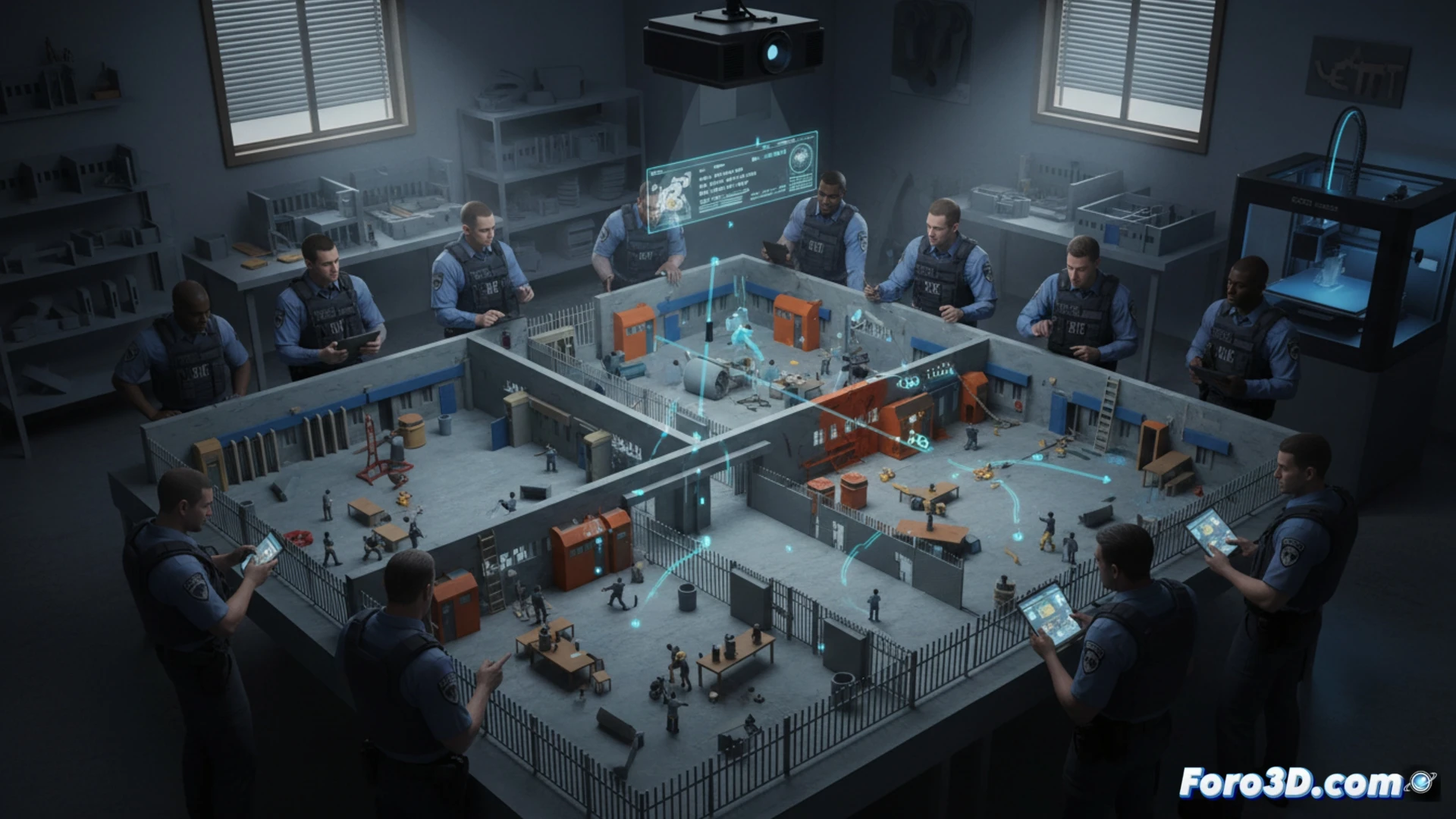
Tactical simulations with printed models 🎯
A concrete example is printing scale replicas of pavilions with furniture and bars. Officers can plan intervention routes or practice cell searches with camouflaged objects. Programs like Blender are used to model the environment, Cura or PrusaSlicer to prepare the print, and an FDM printer with PLA filament. This allows iterating security designs, such as locks or barriers, before manufacturing them in metal.
When the printed bars don't stop anyone 😅
Of course, don't even think about using PLA for real bars. The most patient inmate will bite them and eat them. 3D printing is for planning, not for replacing the good old padlock. Luckily, the officer can print a fake master key and practice how it feels to open cells without anyone yelling at them from the isolation module.