The General Directorate of Traffic has launched a new offensive against speeding using section speed cameras. The country's most extensive device, located on the CL-615 in Palencia, covers 33 kilometers of uninterrupted surveillance. This is joined by two recent activations in Navarre: one on the A-68, with more than 30 kilometers between Cortes and Tudela, and another on the N-121-A, which controls 14 kilometers in the Belate and Almandoz tunnels.
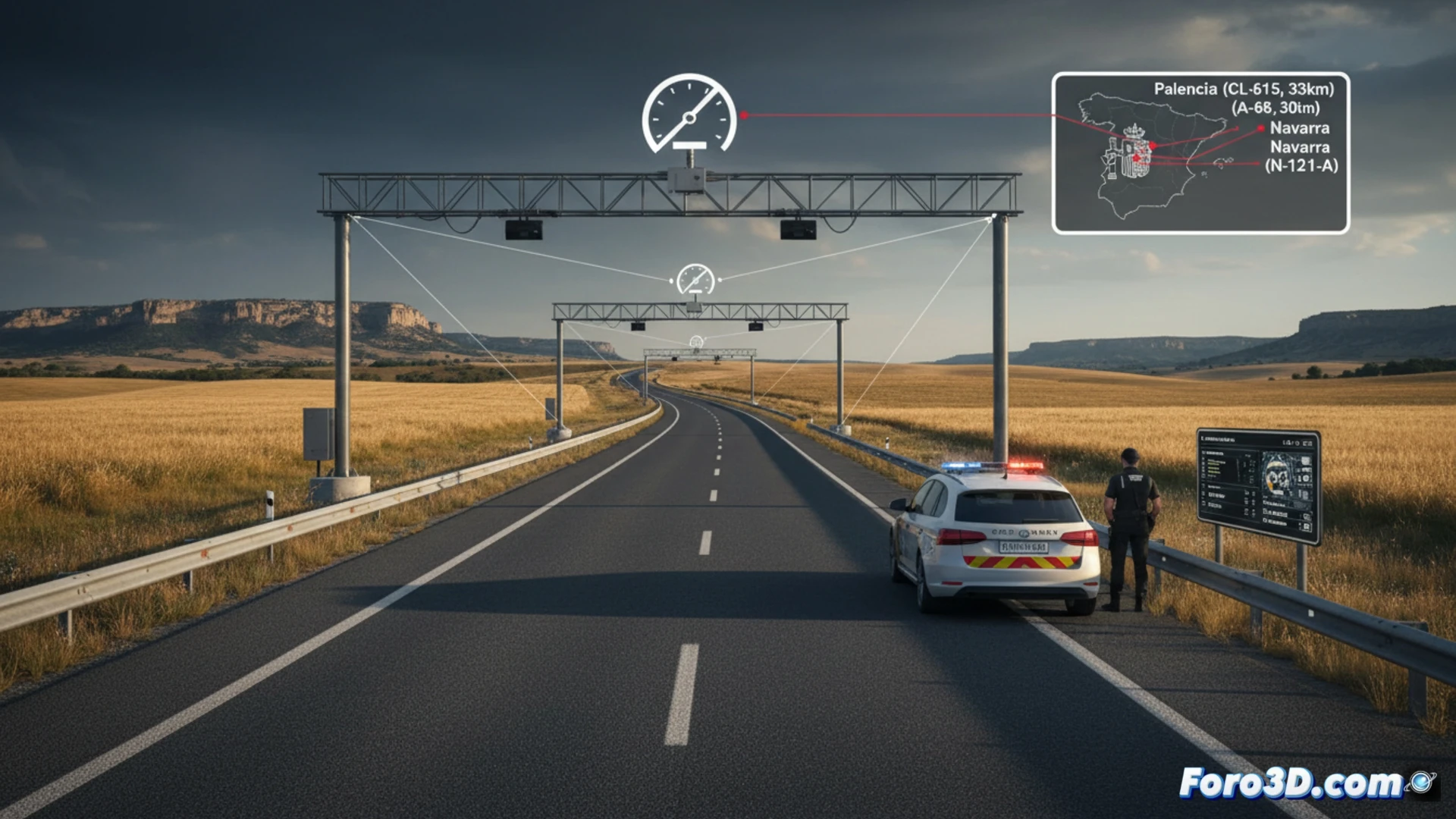
How the technology that measures your average speed kilometer by kilometer works 🚗
These systems are not based on a fixed point, but on two cameras that record the license plate at the start and end of the section. A computer calculates the time taken and, if the average speed exceeds the permitted limit, the fine is generated. The precision is high, as the system discards stops at service areas or traffic jams through algorithms. This makes it impossible to fool the radar by braking only at a control point, as was done with conventional speed cameras.
Goodbye to the trick of braking just before the radar 😅
If your favorite strategy was to slam on the brakes when you saw the gray car, bad news. With these section speed cameras, that maneuver no longer works. Now, to avoid the fine, you would have to make a half-hour pit stop at a gas station or pretend you like the scenery for several kilometers. The DGT has turned long trips into a patience gymkhana, where the only thing measured is your ability not to step on the accelerator.