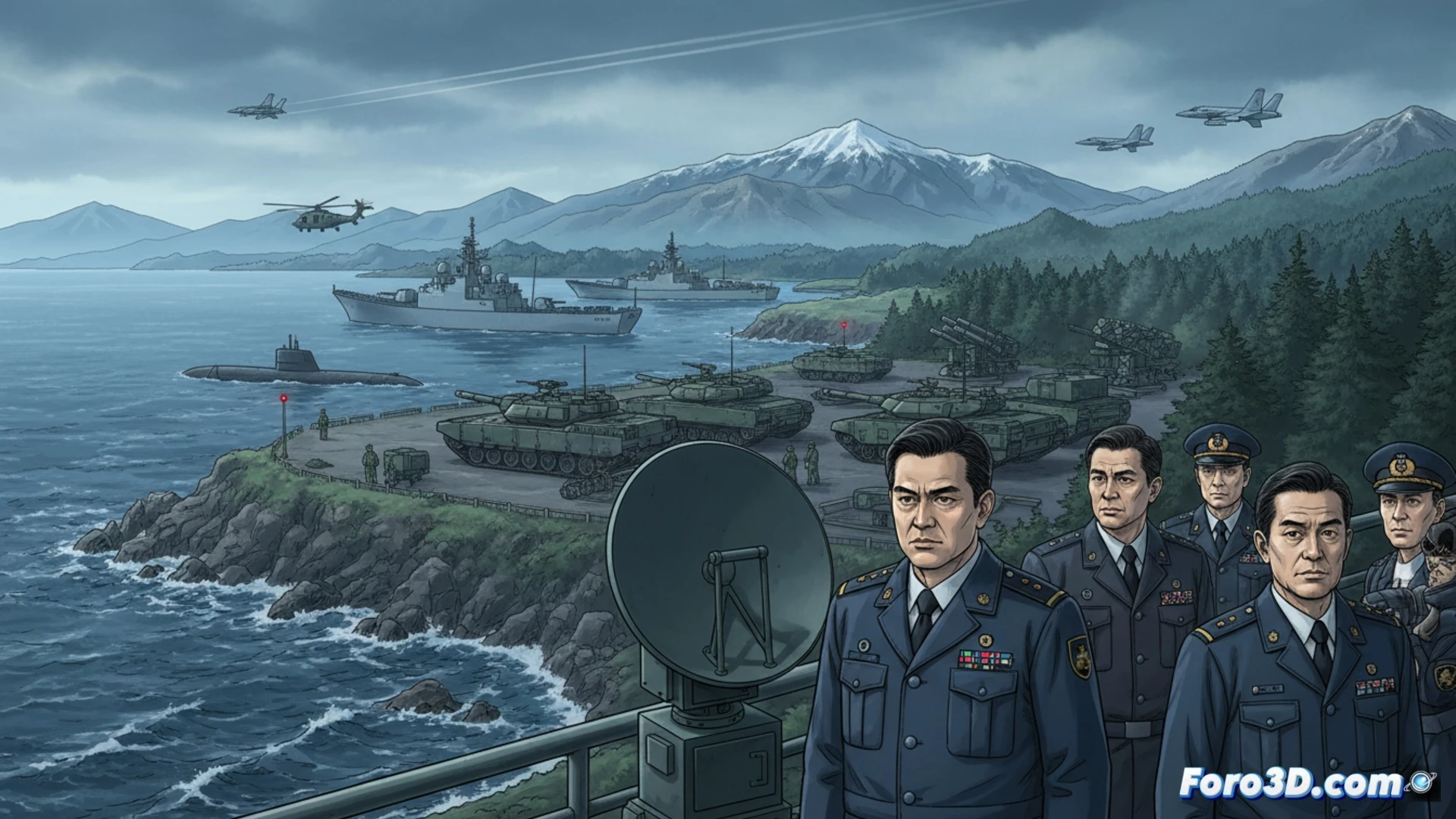
Japanese Defense Minister Koizumi visited a Self-Defense Forces base in Hokkaido on May 23 to inspect operational capabilities. Amid increased Russian military activity in the area, he stressed the need to maintain a continuous and robust defense system, without gaps, in this strategic region of northern Japan.
Warning systems and missiles to cover the northern flank 🛡️
Tokyo has deployed long-range radars and anti-aircraft missile batteries in Hokkaido to monitor Russian movements. Priority is given to data integration between Aegis ships and ground stations, along with the upgrade of F-15 and F-35 fighters. The Russian Navy conducts naval and air exercises near the Kuril Islands, forcing Japan to maintain constant vigilance and rapid response capability.
Noisy neighbors: when the Russian bear roars next door 🐻
Moscow seems to have found its new military dance floor in the Far East, with almost seasonal air and naval maneuvers. Japan, for its part, is busy putting up digital fences and missiles as if they were window curtains: they don't stop the noise, but at least they hide it. Koizumi insists on a system without gaps, although the truly difficult part will be sealing the border with vodka and protocols.