3D technology allows funeral celebrants to personalize service details. From urns with specific shapes to replicas of the deceased's symbolic objects, additive manufacturing offers unique solutions. A clear example: creating an exact plastic replica of grandpa's favorite hat to place on his coffin. Programs like Blender or Fusion 360 are needed for modeling, and an FDM or resin printer to materialize the piece.
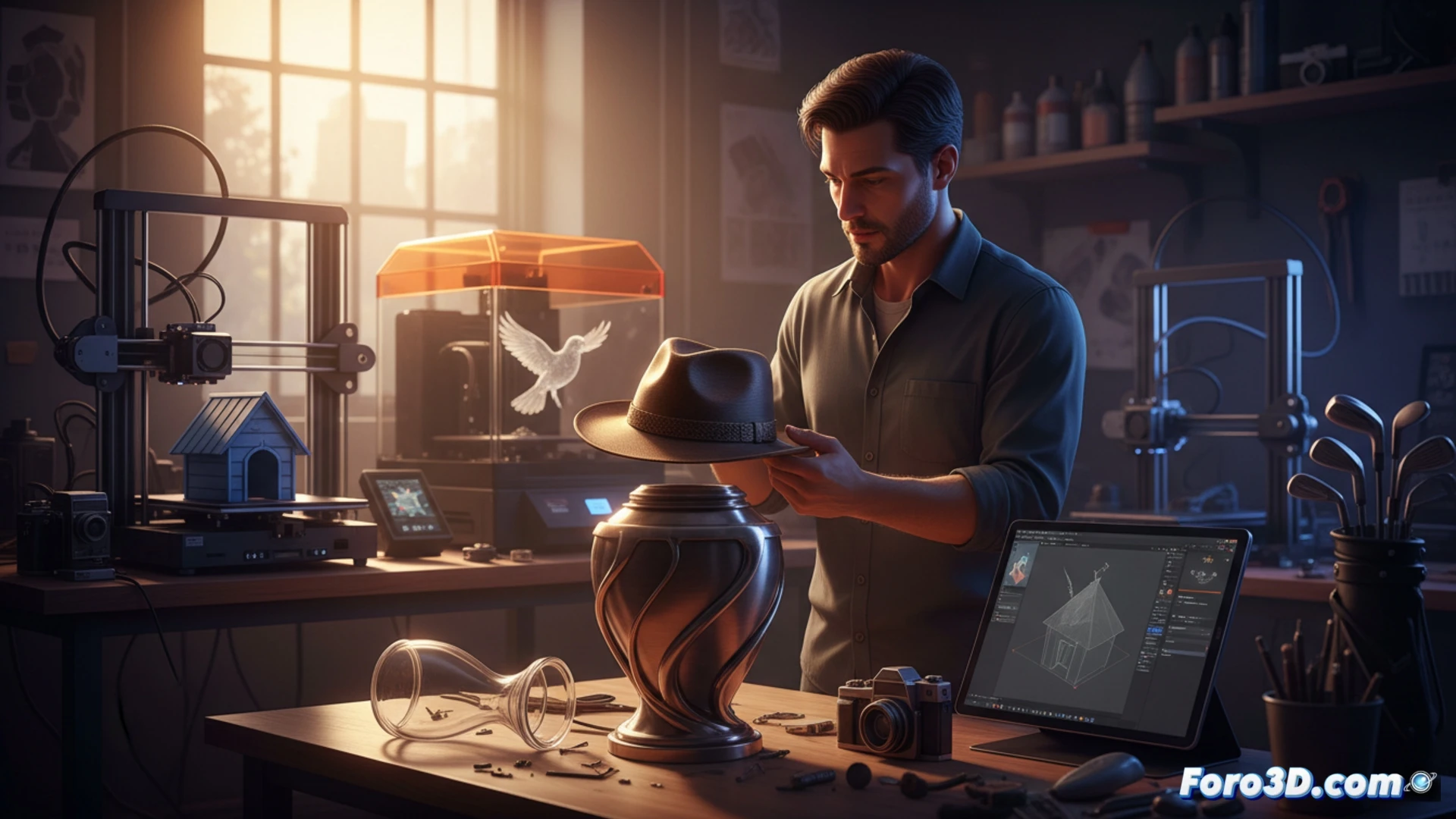
3D Modeling: How to Shape the Memory 🖨️
The process begins with a photograph or a reference object. Using software like Blender, the piece is modeled in 3D, adjusting scale and details. It is then exported to STL format and prepared in a slicer like Cura or PrusaSlicer. For small or highly detailed objects, resin printing (DLP/SLA) is used. For large and sturdy pieces, an FDM printer with PLA or PETG is sufficient. Printing time varies from 2 to 12 hours, depending on size and complexity.
And if the printer fails, there's always the condolence 😅
Everything is very nice until the nozzle clogs mid-print and instead of a hat, you get a plastic blob. Then the celebrant has two options: explain that it is posthumous abstract art or fall back on plan B: the classic bouquet of flowers. At least, if the printer decides not to cooperate, you can always say the deceased was very tech-savvy and that the error is part of the grieving process. Ironies of the trade.