3D technology offers pastry chefs tools to create custom molds, geometric decorations, and complex structures that would be difficult to achieve by hand. A clear example is the fabrication of a chocolate support with precise shapes. Necessary programs include Blender or Fusion 360 for modeling, and slicing software like Cura to prepare the print.
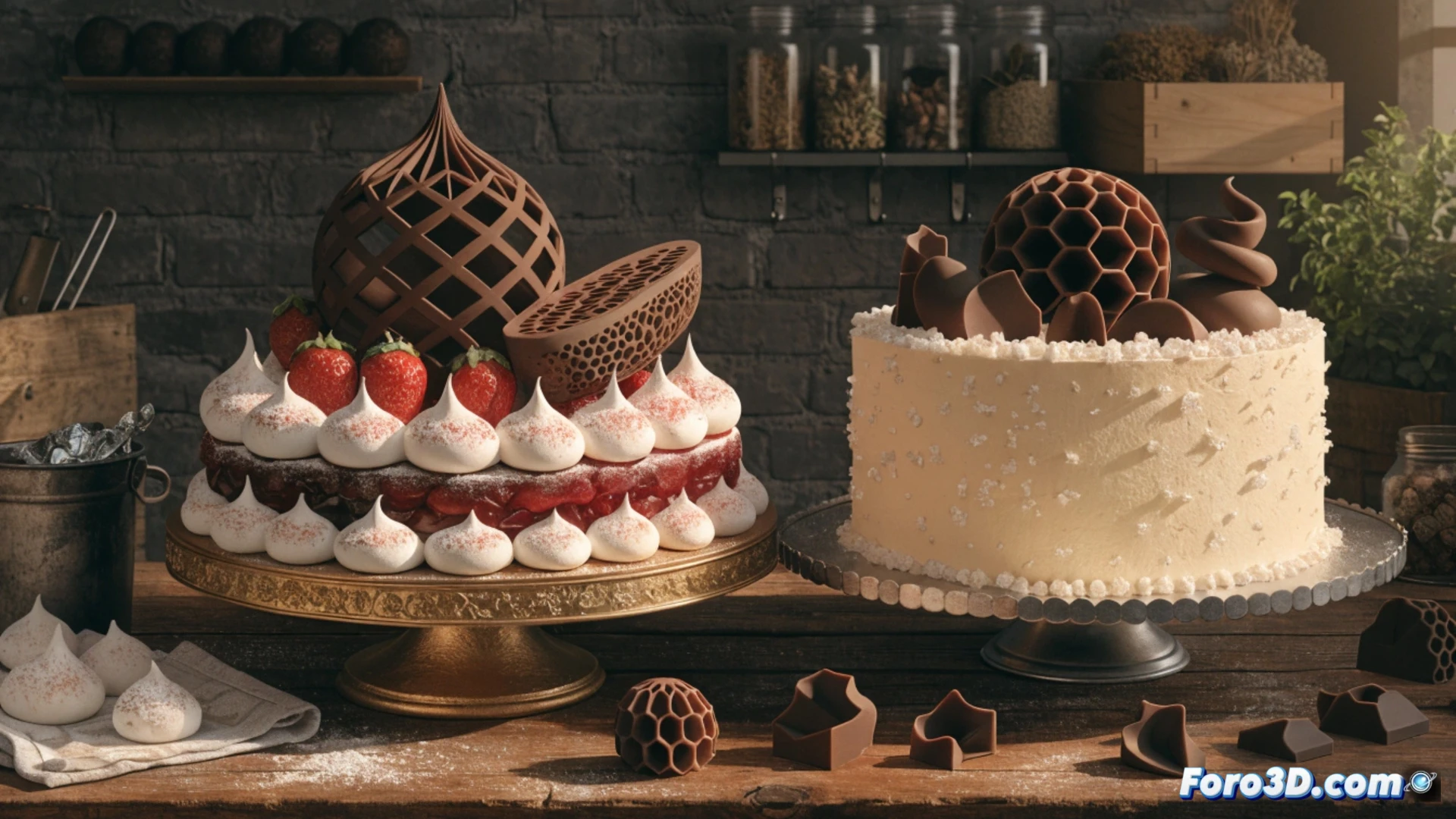
From screen to oven: modeling and safe materials 🍰
The process begins by designing the mold or decorative piece in CAD software like Tinkercad or Rhino 3D. Then, the STL file is exported to a slicer like PrusaSlicer. For printing, food-grade filaments are used, such as silicone PLA or PETG, which do not release toxins. The printed piece serves as a negative for pouring chocolate, fondant, or isomalt, achieving details that a manual cutter cannot reach.
When your silicone mold costs more than the cake 😅
Sure, you can design a 12-pointed star mold in 3D, but then you discover the printer jams at 3 in the morning and the filament runs out just when two points are missing. The result: a mutant star that looks like a depressed octopus. And of course, the client asks you if it's modern art or a calculation error. But hey, at least you learned to use Blender.