The profession of a QA Tester demands precision and patience, but it often clashes with the lack of physical hardware to test interfaces. This is where 3D technology comes in: it allows for the creation of realistic prototypes of devices or casings where sensors and buttons will be integrated. A clear example is simulating a mobile phone chassis to validate the feel of an app prototype.
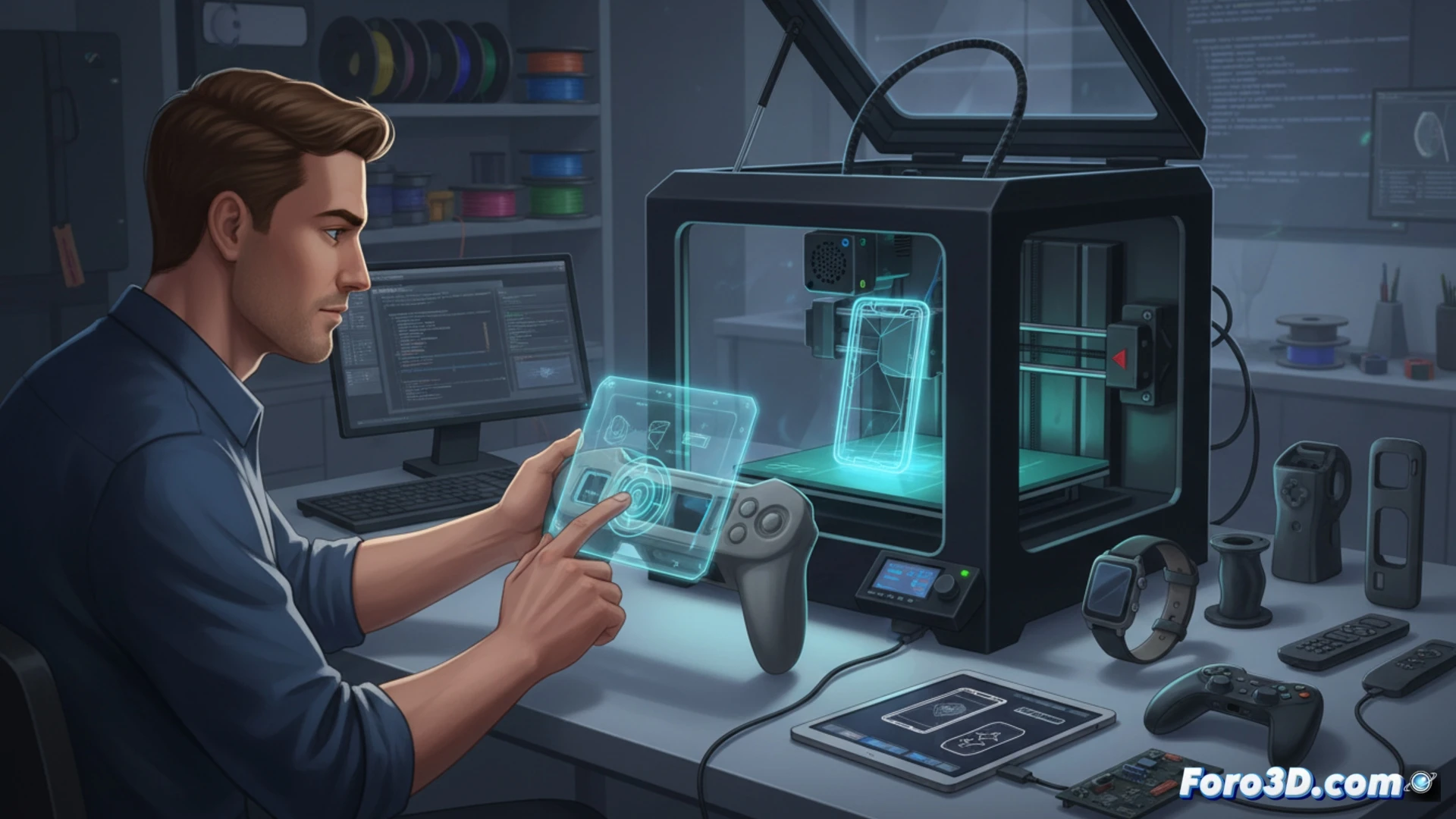
Creating fixtures and test templates with CAD 🛠️
To automate physical tests, you can design supports or fixtures that hold boards or screens at exact angles. Programs like Fusion 360 or FreeCAD allow you to model these parts, and with an FDM or SLA 3D printer, you can materialize them in hours. This way, you test button resistance or USB connector alignment without relying on external suppliers. The workflow is: CAD design, slicing with Cura or PrusaSlicer, printing, and immediate testing.
When the bug is your printer's fault, not the code's 😅
Of course, there is always the risk that the failure is not in the app, but in that 3D part that warped due to poor calibration. Nothing like spending two hours looking for a software error only to discover that the printed support has a crack and the button doesn't press properly. But hey, at least you learn to level the bed while pretending everything is under control. The modern QA tester also knows about thermoplastics.