Forged in the classical school of animation, Hiroyuki Morita achieved what few have: directing a feature film for Studio Ghibli without being one of its founders. His best-known work, The Cat Returns, is built on a gentle fantasy and an expressiveness that recalls the great masters of hand-drawn animation. Morita understands that fluidity of movement is not an ornament, but the vehicle for a clear narrative that awakens wonder in the viewer. He also left his mark on the series Bokurano, proving that his vision can adapt to darker tones without losing its essence.
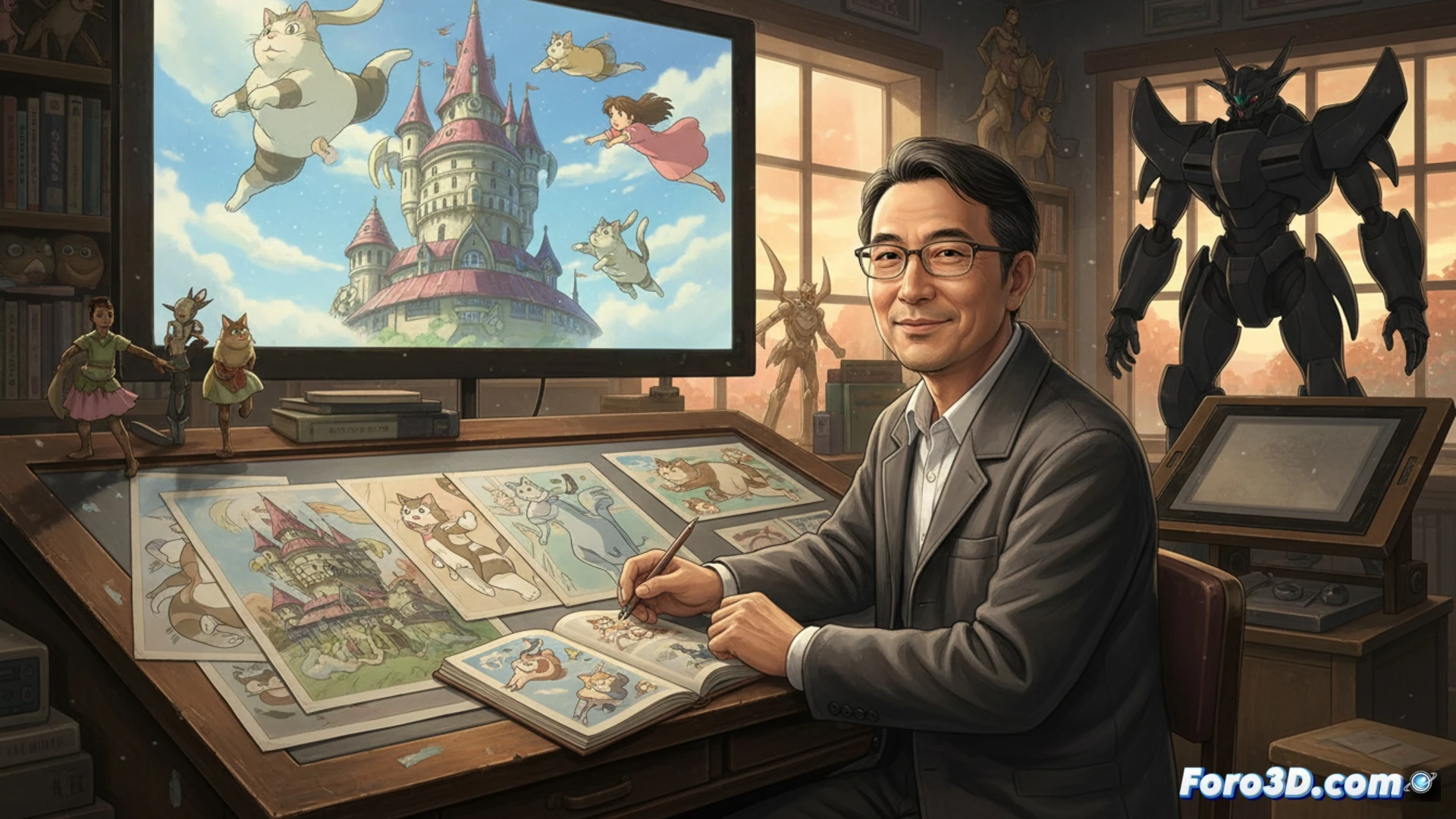
Traditional Animation and Sequence Planning in Morita's Work 🎬
From a technical standpoint, Morita prioritizes animation over dialogue. In The Cat Returns, transitions between scenes are resolved with precise cuts that maintain the continuity of movement. Each keyframe is drawn to guide the viewer's eye without the need for verbal explanations. Morita uses a soft color palette and detailed backgrounds that reinforce the fairy-tale atmosphere, but without falling into an excess of digital textures. His method recalls that of classic studios: highly defined storyboards, limited animation in certain shots, and a calculated use of pauses to give emotional weight to the actions.
When Directing a Movie About Cats is Harder Than Raising a Real One 🐱
That Morita managed to keep The Cat Returns from being a meaningless parade of furballs is already an achievement. Because, let's be honest, making an animated cat look like a real cat is difficult, but making it have a personality and not just meow or knock things off a table is almost a miracle. Morita achieved this without resorting to explosions or epic dramas, just with a story about a girl who learns to say no. And on top of that, the cats don't eat the birds in the background. Quite a production feat.