Swedish artist Hilma af Klint created abstract and geometric works before Kandinsky or Mondrian, but her legacy remained hidden for decades. Influenced by esotericism, she broke gender and stylistic barriers. Now, an exhibition at the Grand Palais reclaims her fundamental role in art history, proving that her vision was ahead of its time.
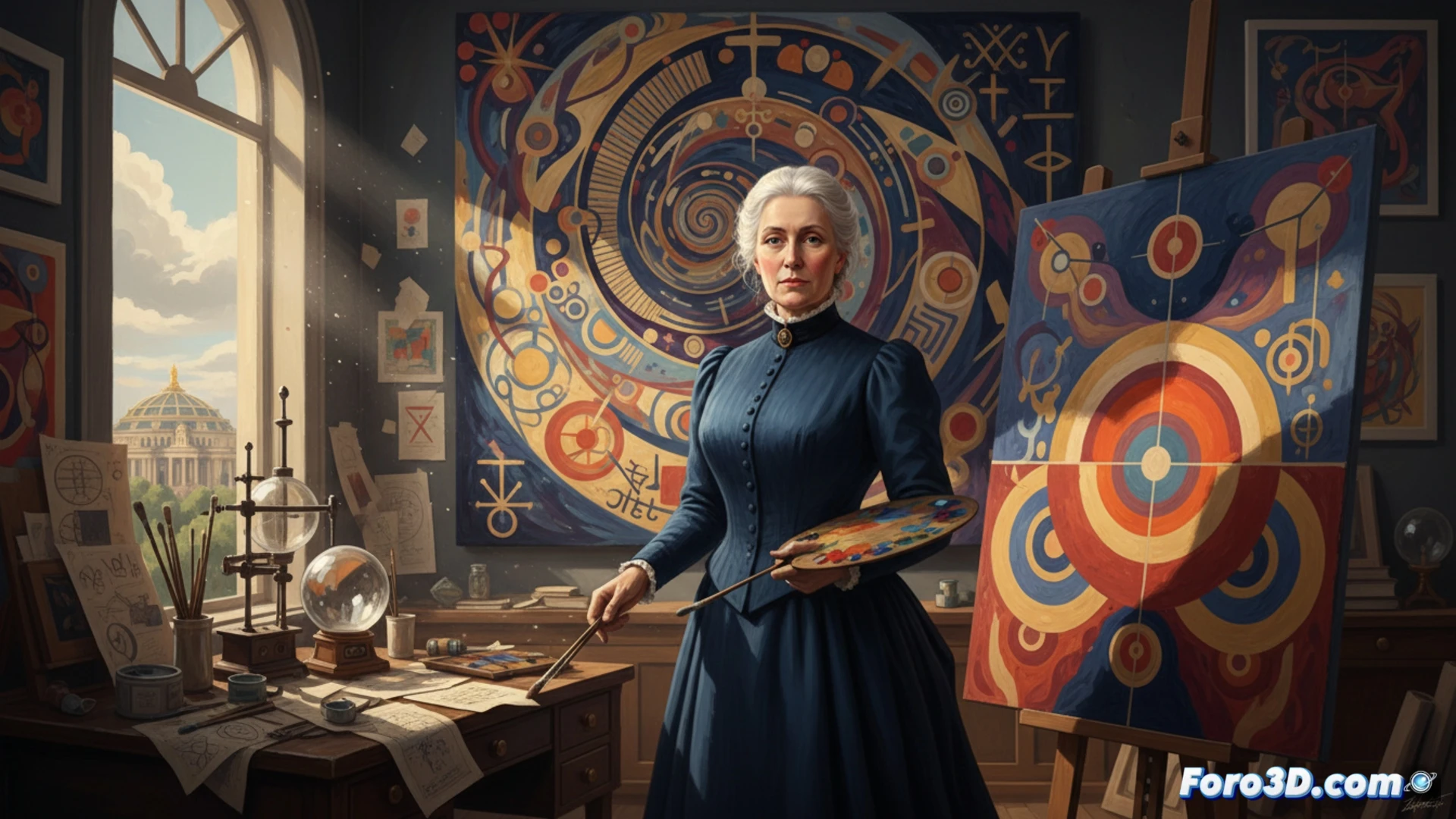
The visual revolution that anticipated generative art 🎨
Hilma af Klint's compositions, with repetitive patterns and geometric shapes, bear a remarkable resemblance to current generative art. Her series, such as The Ten Largest, employ sequences of color and symmetry that recall visual algorithms. Had she had access to digital tools, she would likely have explored shape programming, also anticipating the computational abstraction we see today in interactive installations and NFTs.
The grandmother of NFTs no one invited to the party 🤖
It is ironic that Hilma af Klint painted spiritual abstractions in the early 20th century, and now her works sell for millions at art fairs, while NFT creators struggle to sell images of pixelated monkeys. If she saw today's market, she would probably say she preferred her esoteric notebooks to a cryptocurrency wallet. At least, her legacy is finally receiving the credit it deserves.