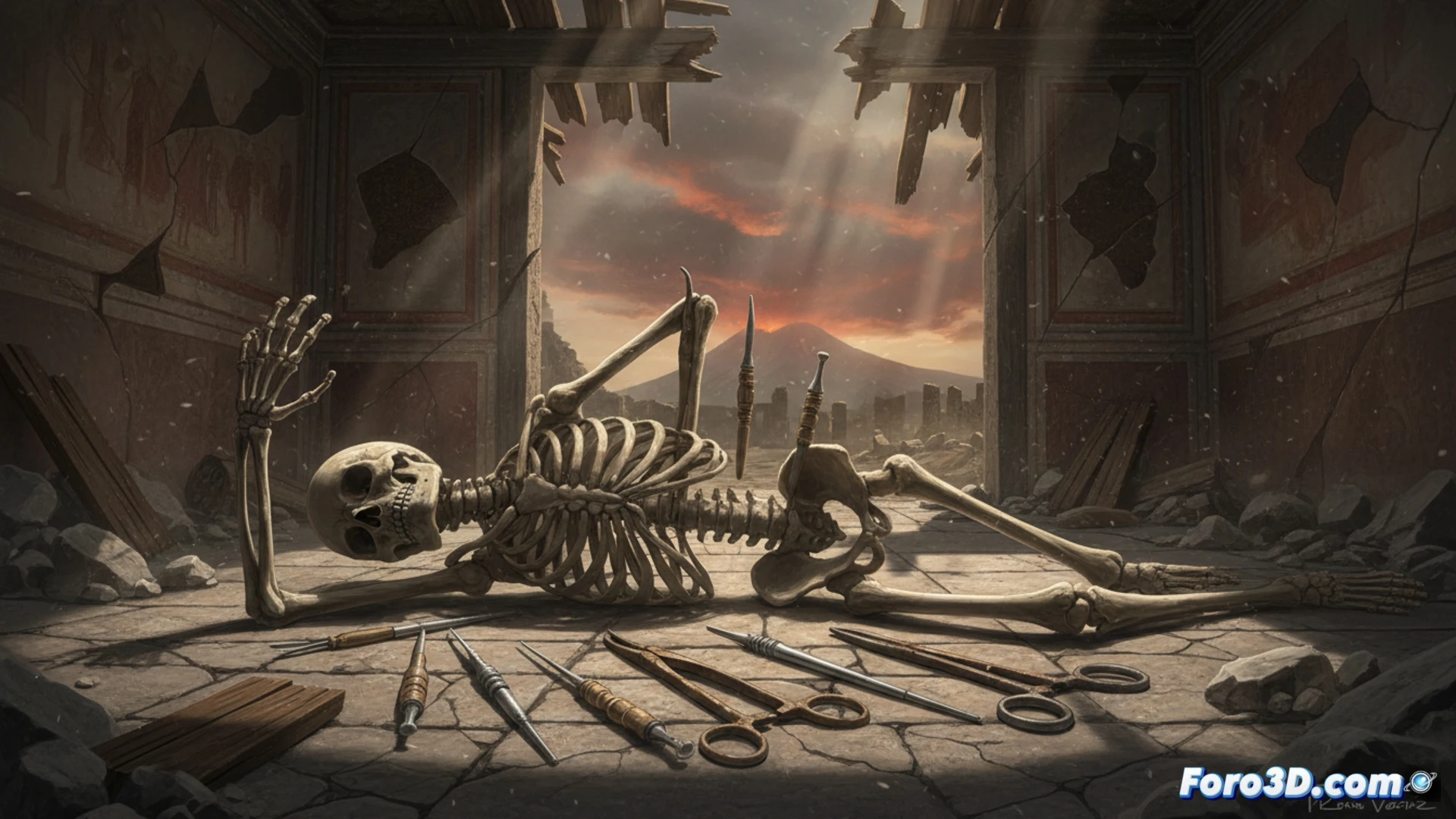
In the Garden of the Fugitives in Pompeii, a team of researchers has identified the skeleton of a man between 40 and 50 years old. Alongside his remains, scalpels, forceps, and probes were found. Everything points to him being a physician who tried to escape the eruption of Mount Vesuvius carrying his work tools, a direct testimony to the catastrophe of 79 AD.
Tools that reveal a profession 🏺
The utensils found are key to understanding Roman medical practice. The bronze and iron scalpels, the forceps for extracting objects, and the probes for exploring wounds show specialized equipment. The arrangement of the objects suggests the physician carried them in a case or bag. This discovery allows archaeologists to analyze the healthcare technology of the era, confirming that these professionals carried instruments very similar to those used centuries later.
Colleagues from the past, same bad luck 😅
We already knew working in Roman emergency rooms was tough, but fleeing a volcano with a bag full of metal tools is another level. This physician demonstrated a loyalty to his tools that today we would call occupational Diogenes syndrome. Seriously, he didn't leave his instruments behind even during an eruption. Surely, upon arriving in the underworld, the first thing he did was ask if they took appointments.