Greece produces more and more solar and wind energy, but its households continue to pay exorbitant electricity bills. The reason is not a lack of renewables, but the design of the European wholesale market, where the price is set by the last power plant needed to meet demand, which is usually a gas plant. Thus, the abundance of cheap energy does not translate into real savings for the end consumer.
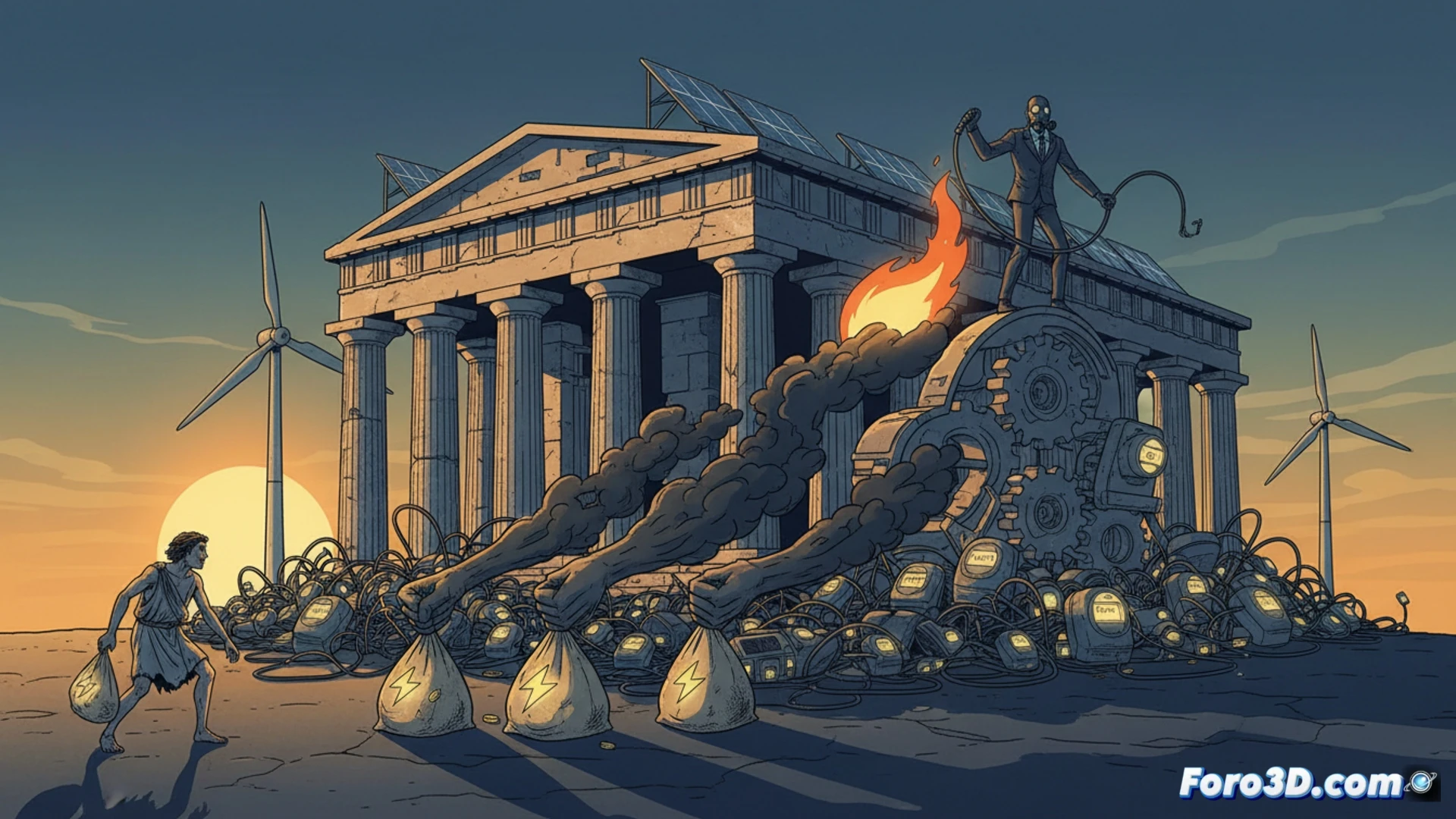
The marginalist model distorts the price of electricity ⚡
The system known as marginalist or merit order works like this: all technologies (solar, wind, hydro, gas) compete in an auction. The cheapest ones enter first, but they all charge the price of the last and most expensive unit dispatched, almost always a gas plant. This generates extraordinary profits for renewables, which sell their energy at a price much higher than their production cost, while consumers bear the extra cost of gas.
Cheap sun, gas bill: the scam of the century 💸
It's like going to a buffet where you pay the price of the most expensive dish someone orders at the table, even if you only eat salad. Greece has sun to spare to supply half of Europe, but because the market says the price is set by an Italian gas plant, Greeks pay as if they were heating dinner with a lighter. The logic of the market is perfect, as long as you don't live in it.