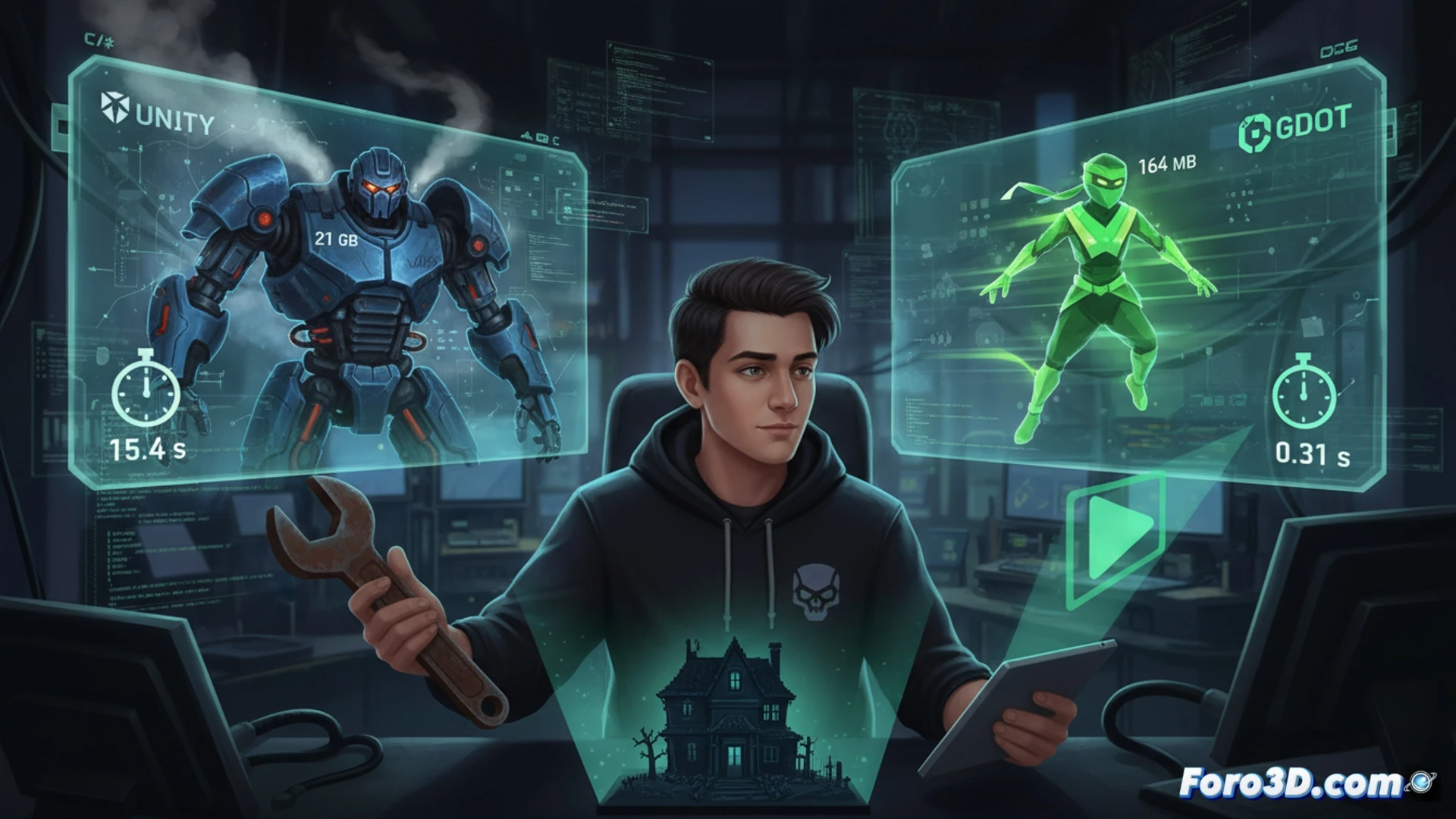
A developer has put on the table a comparison as revealing as it is brutal. Unity, with 21 GB of installation and a C# compilation that takes 15.4 seconds, versus Godot, which barely occupies 164 MB and compiles in 0.31 seconds. For their horror game, the decision was clear: Godot, for speed and lightness.
Load and compilation times: the critical factor in development ⏱️
In horror game development, every iteration counts. Unity demands waiting over 15 seconds for each script compilation, which adds up over long work sessions. Godot, on the other hand, offers an almost instantaneous response. Added to this is that the Unity engine takes up 21 GB on disk, while Godot fits on a pen drive. For a solo developer, that difference in weight and speed can define the workflow.
The terror of 21 GB: when the engine weighs more than the game 👻
Imagine your horror game is scarier because of the time it takes Unity to start up than because of the scares you've programmed. With 21 GB, the engine seems like a monster on par with a triple-A title, but with 90s demo performance. Godot, with its 164 MB, is more like a slippery ghost: you don't see it, but it's there. In the end, the developer chose the one that doesn't steal hard drive space or lifetime.