3D technology is no longer just an engineer's whim; it has made its way into the photographer's studio. Where you once relied on natural light and a good composition, you can now capture objects with real volume and manipulate them later. A clear example: photographing a product for a catalog and being able to rotate it 360 degrees without having to set up the scene again. Programs like Blender or Agisoft Metashape allow you to generate three-dimensional meshes from photos.
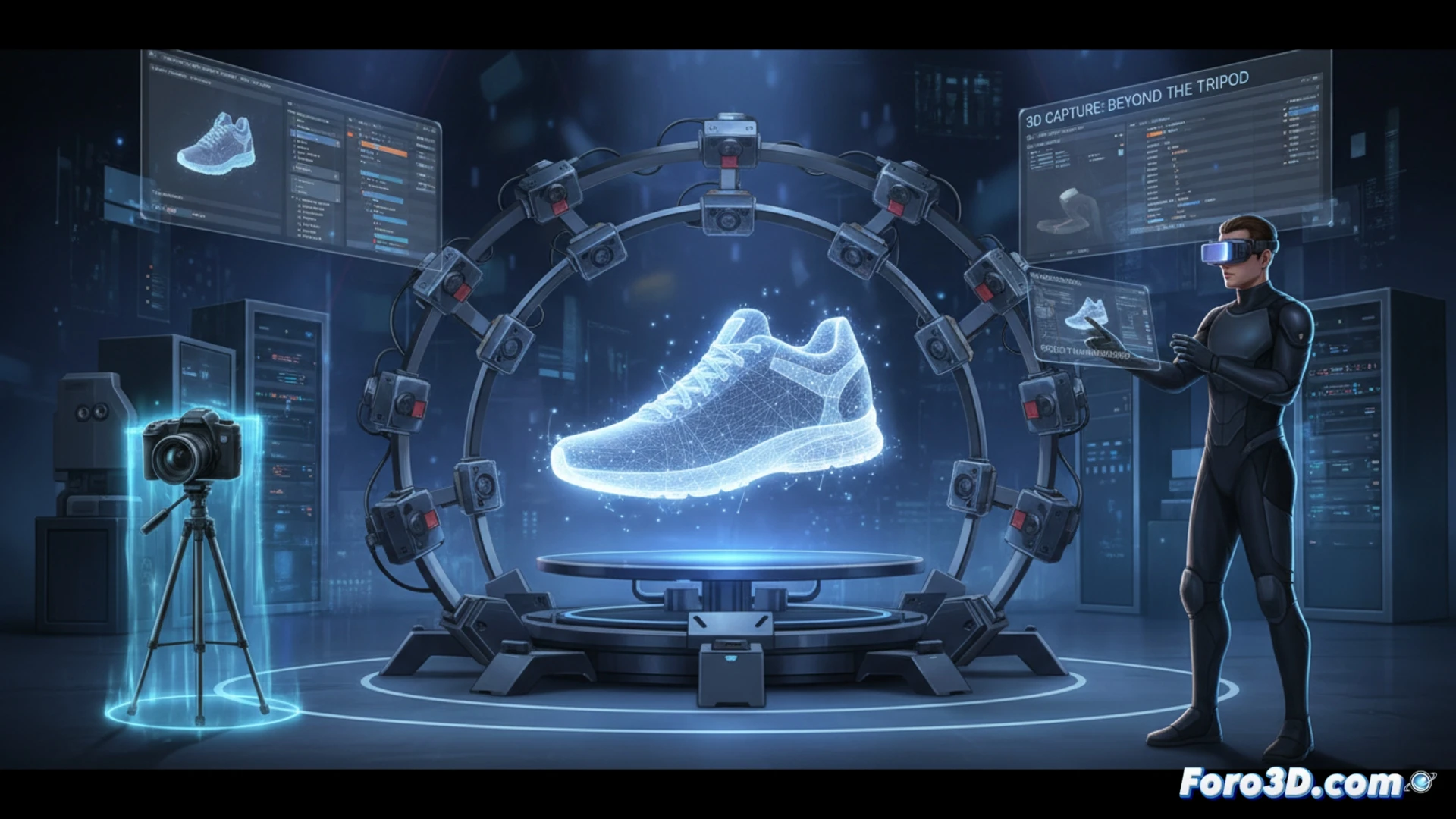
From the flat photo to the point cloud 📸
The technical process is called photogrammetry. You take between 30 and 100 photos of an object from different angles, always with 60% overlap. Then, programs like RealityCapture or Meshroom analyze the pixels and calculate the position of each point in space. The result is a point cloud that turns into a textured model. With ZBrush or Substance Painter, you can retouch imperfections. You don't need a laser scanner; your current camera will do.
The client who wants to see the inside of the sweater 🧥
You arrive at the session with everything ready, and the client drops: Can we see what the inner lining looks like?. Instead of unstitching the garment or faking a migraine attack, you rotate the 3D model on the screen. The look of astonishment is priceless. The downside: then they ask you to add a virtual pocket, and you, who only knew about photography, end up learning to model in SketchUp at two in the morning. 3D technology saves you, but it charges you in hours of sleep.