The production of high-purity gold ingots faced a critical problem: ceramic inclusions in the final metal. Suspicion pointed to the ceramic foam filters used in the casting process. The simulation team applied a 3D pipeline to verify whether thermal shock, generated by pouring molten metal, fractured the porous structure of the filter, releasing contaminating particles into the gold flow.
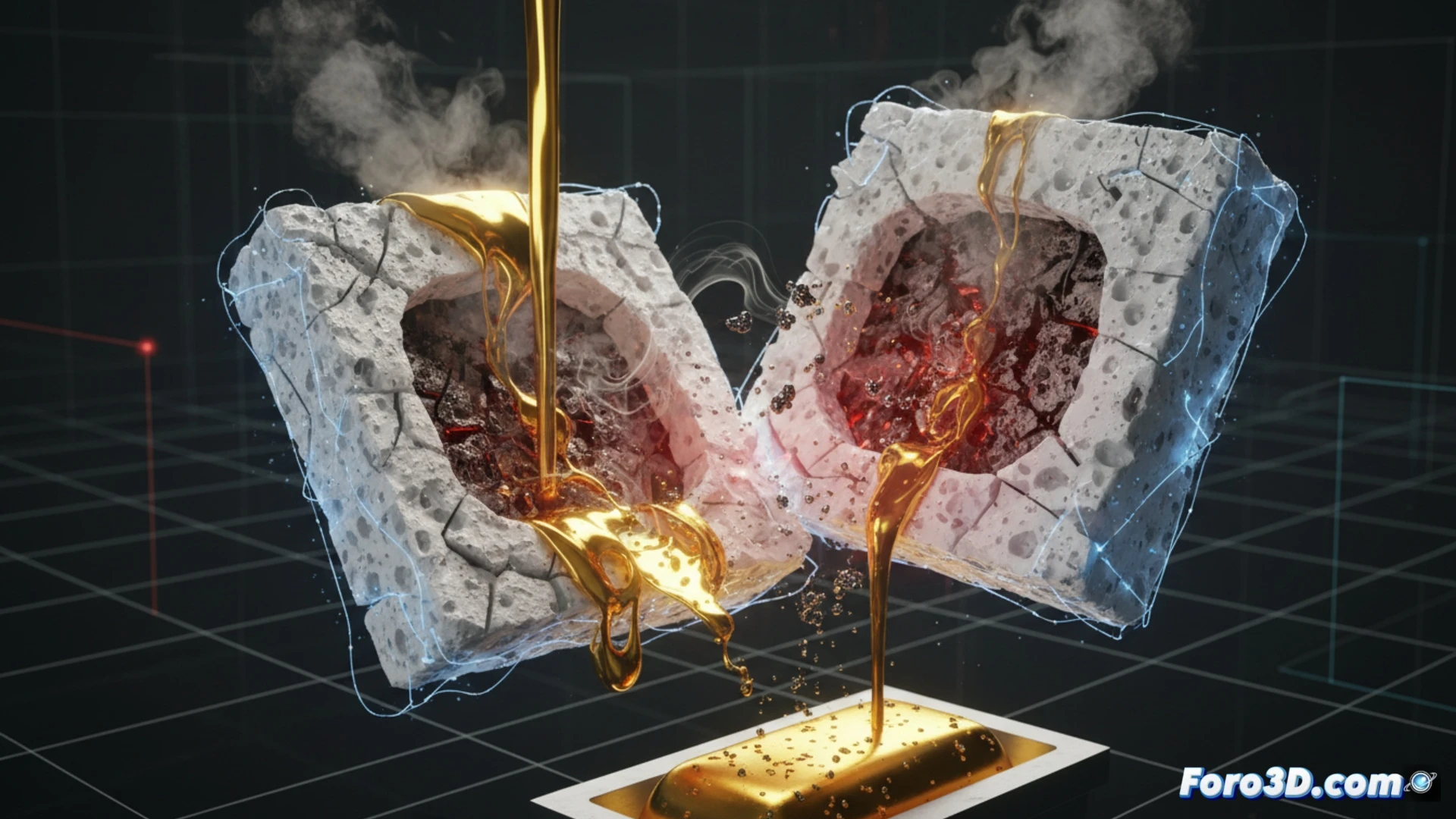
Simulation Pipeline: From Tomography to Thermal Fatigue 🔥
The analysis began with Volume Graphics to scan the micro-porosity of the used filter. The images revealed internal microfractures, not visible externally, concentrated on the walls of the foam cells. To validate the cause, the geometry was imported into SolidWorks and a thermal stress simulation was applied. The model calculated the temperature gradient between the liquid metal (1064°C) and the cold ceramic, generating localized compressive and tensile stresses. Finally, MATLAB processed the stress maps to correlate the high-stress zones with the observed fractures, confirming that the failure initiated at the foam nodes where the differential thermal expansion exceeded the material's yield strength.
Lessons for the Industry: The Hidden Fragility of Foam ⚠️
This case demonstrates that superficial visual inspection of a filter is not enough. Thermal shock-induced fatigue is an invisible phenomenon that degrades material integrity from within. Thanks to 3D simulation, not only was the exact failure point identified, but a filter preheating protocol was established to mitigate the thermal gradient. The lesson is clear: in high-temperature processes, the microstructure is the Achilles' heel that only digital analysis can reveal.
In your thermal shock fatigue analysis of ceramic filters for gold casting, which 3D meshing parameters were most critical for predicting the exact location of microcracks before catastrophic failure?
(PS: Material fatigue is like yours after 10 hours of simulation.)