The efficiency of a Direct Air Capture (DAC) plant plummeted without warning. Forensic 3D modeling with ANSYS Fluent and Revit uncovered the cause: the granular material in the silo compacted asymmetrically under its own weight and thermal cycles. This deformation, a clear symptom of material fatigue, created preferential air channels that bypassed contact with the chemical filter, nullifying the adsorption capacity and revealing a blind spot in the original design.
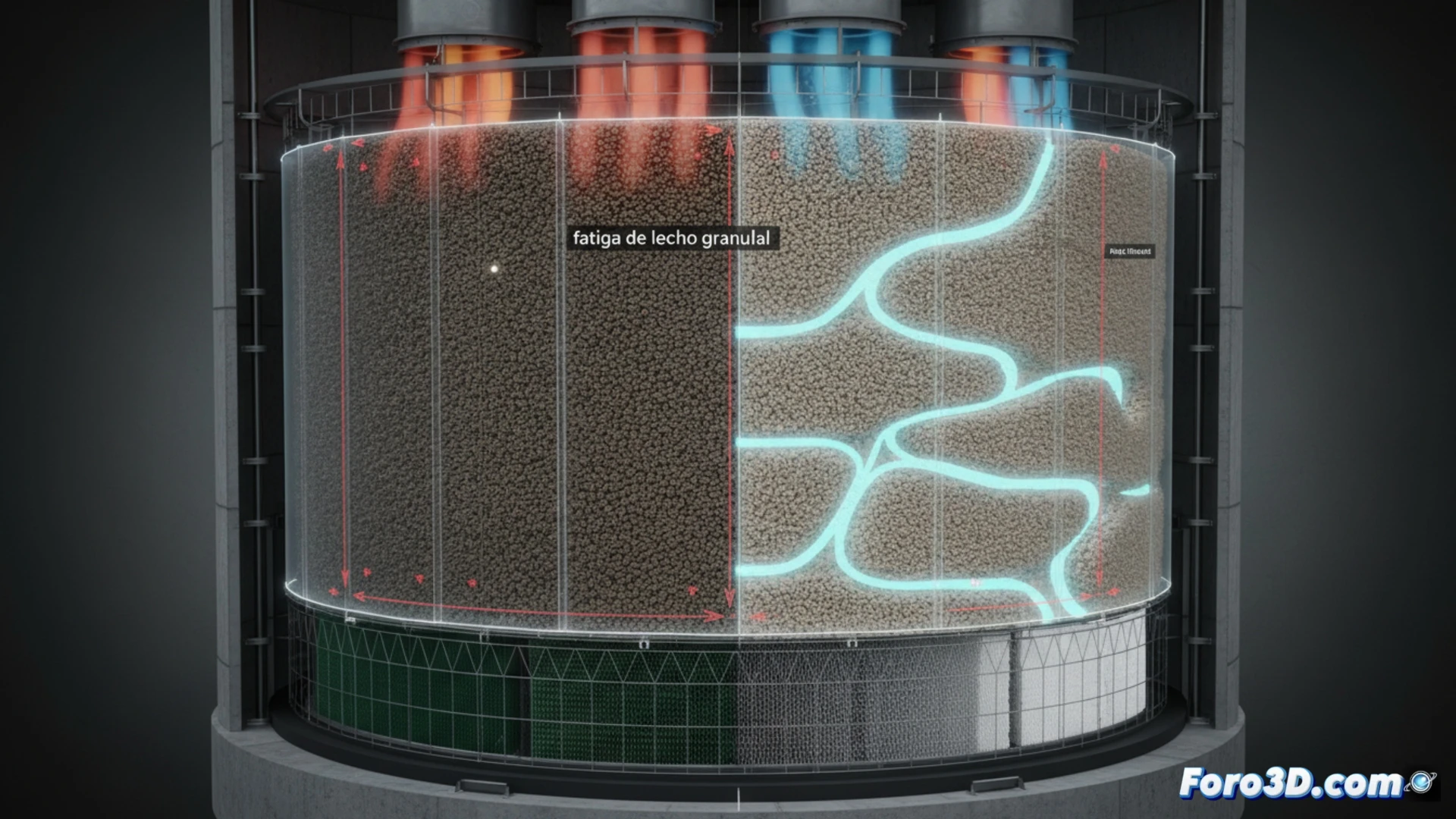
Asymmetric compaction and simulation of preferential flows with ANSYS Fluent 🔍
The analysis began with the geometric reconstruction of the silo using Revit and scanning with Artec Studio to capture the actual deformation of the granular bed. By importing the deformed geometry into ANSYS Fluent, the CFD simulation showed that the localized porosity in the less compacted areas acted as a highway for the gas. The flow lines, visualized in post-processing, showed that CO2 avoided the dense regions where the chemical adsorbent resided. This phenomenon, similar to the formation of cracks from cyclic fatigue in metals, reduced the effective contact surface by more than 40%, explaining the drastic loss of efficiency.
Lessons for fatigue simulation in granular materials ⚙️
This case demonstrates that fatigue is not exclusive to metals or polymers. Granular beds, subjected to static loads and operational vibrations, undergo plastic rearrangement that compromises their function. Incorporating dynamic compaction models into pre-design CFD simulations would allow predicting these preferential channels. The key is to treat the granular bed as a living material that fatigues over time, an approach that can save millions in efficiency in the next generation of DAC plants.
How did you model the viscoelastic contact between zeolite particles and the granular bed so that CFD revealed the differential fatigue that caused the efficiency loss in the DAC silo?
(PS: Material fatigue is like yours after 10 hours of simulation.)