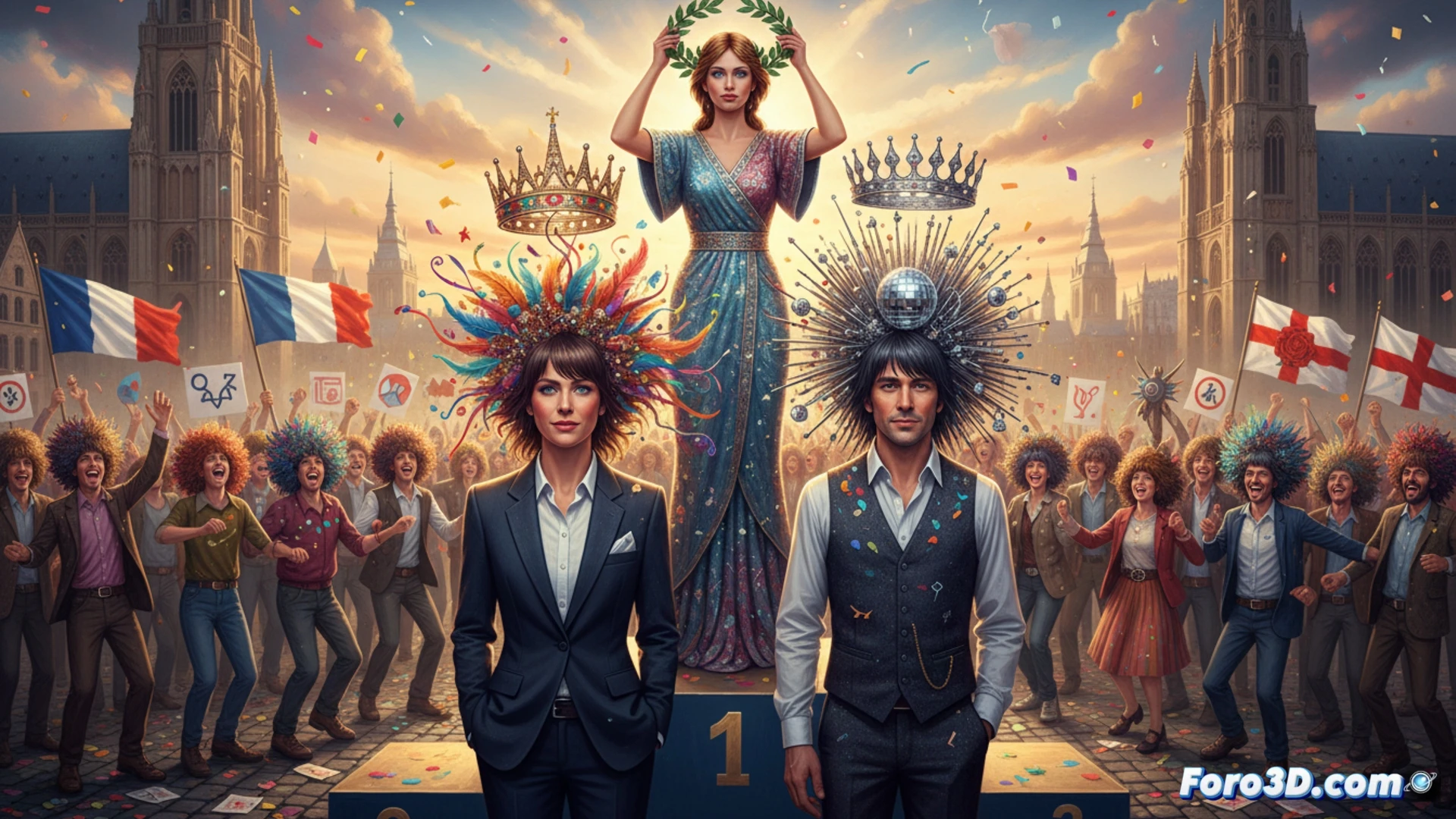
The fourth European Mullet Championship brought together hundreds of participants from France, Spain, and England in Belgium to celebrate this hairstyle of contrasts: serious in the front, festive in the back. Judges evaluated criteria such as tolerance, kindness, and personal freedom, beyond hair length. The absolute champions of 2026 were Berenice and Samuel, from the BesaMulet collective, who demonstrated that the mullet is a symbol of openness and diversity that helps overcome difficulties, as in the case of a 60-year-old Belgian contestant.
The Fringe Algorithm: How Technology Measures Hair Freedom 💻
To evaluate the symmetry and volume of the back mane, organizers used a 3D scanning system and hair density analysis. Computer vision software calculated the ratio between the fringe and the nape, while an ambient humidity sensor adjusted parameters to avoid climate bias. The result was cross-referenced with data from social perception surveys of participants, thus measuring the hairstyle's tolerance in work environments. Technology allowed the judgment to be objective, although the human factor still weighed in the kindness category.
Hairdressers, Refrain: The Mullet Is Not Styled, It Is Declared ✂️
While Belgian contestants straightened their fringes with titanium flat irons, the Spanish arrived with disheveled hair and an air that they had already won through charm. An Englishman with a back crest swore his mullet was a tribute to the 80s, though it looked more like a tribute to a wet cat. The best part was seeing a Frenchman argue with the judge because his nape was more philosophical than his neighbor's. In the end, everyone agreed: the mullet is not styled, it is lived. And washed, every now and then.