Furniture restoration deals with worn, broken, or missing parts. 3D technology allows documenting the current state and reconstructing missing elements with millimeter precision. A clear example is the reproduction of a broken chair leg: the original leg or its twin is scanned, the missing piece is modeled, and it is printed in resin to cast a silicone mold.
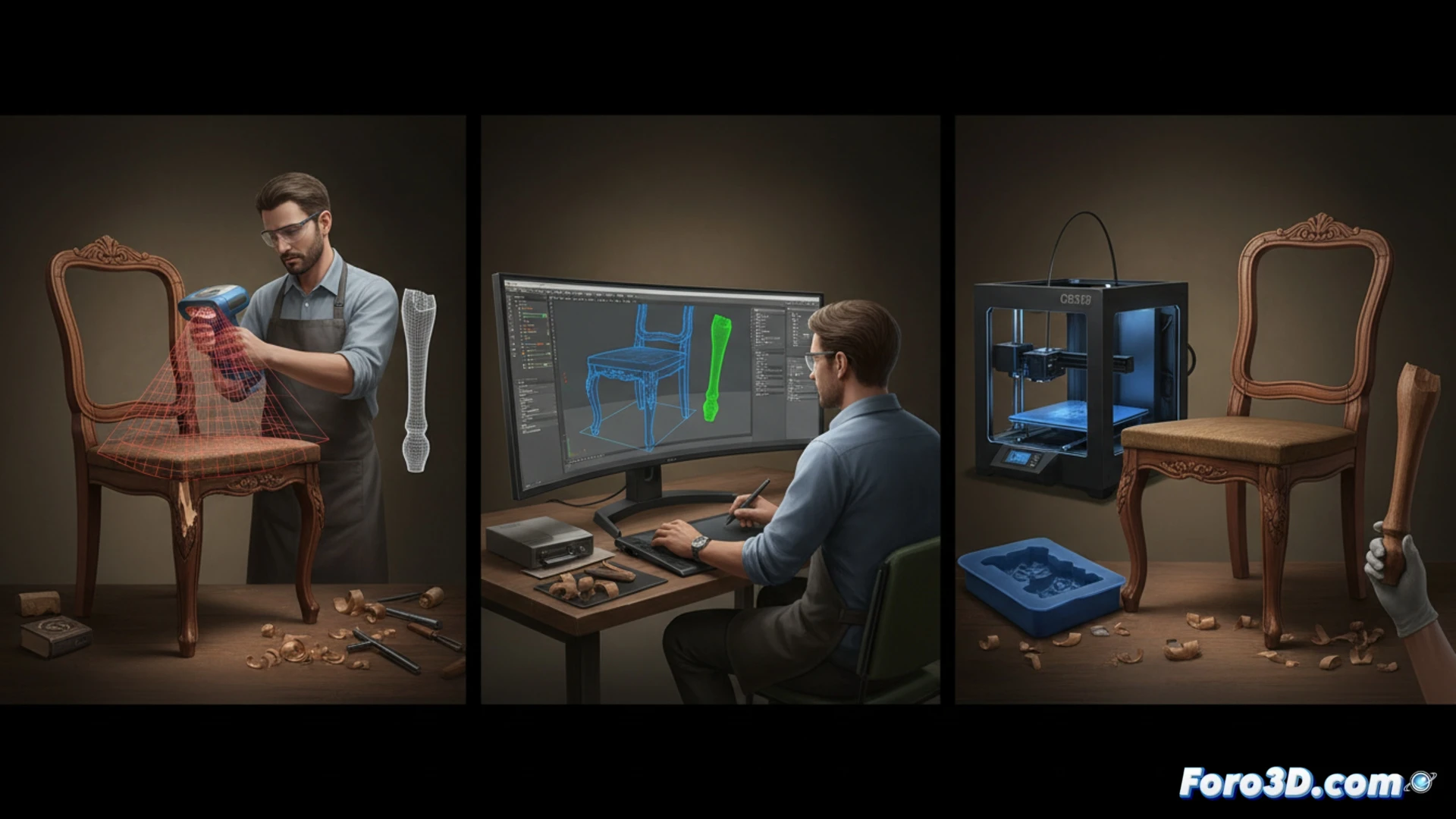
Digital workflow for exact replicas 🛠️
The process begins with a handheld 3D scanner, such as the EinScan H or the Revopoint POP 3, to capture the geometry of the piece. Software like Blender or Fusion 360 is then used to clean the mesh and design the missing part. 3D printing is done with PLA filament or resin, depending on whether the final piece will be made of wood (as a model for carving) or resin for direct use. Programs like MeshMixer help repair damaged meshes.
When the furniture knows more than the restorer 😄
The fun part comes when you scan a leg you thought was straight and the software tells you it has been crooked since 1820. Or when you print a perfect replica and discover that the original was from another piece of furniture. But nothing beats the moment when the client asks you if the scanner can also fix their relationship with their partner. Technology helps, but it doesn't perform sentimental miracles.