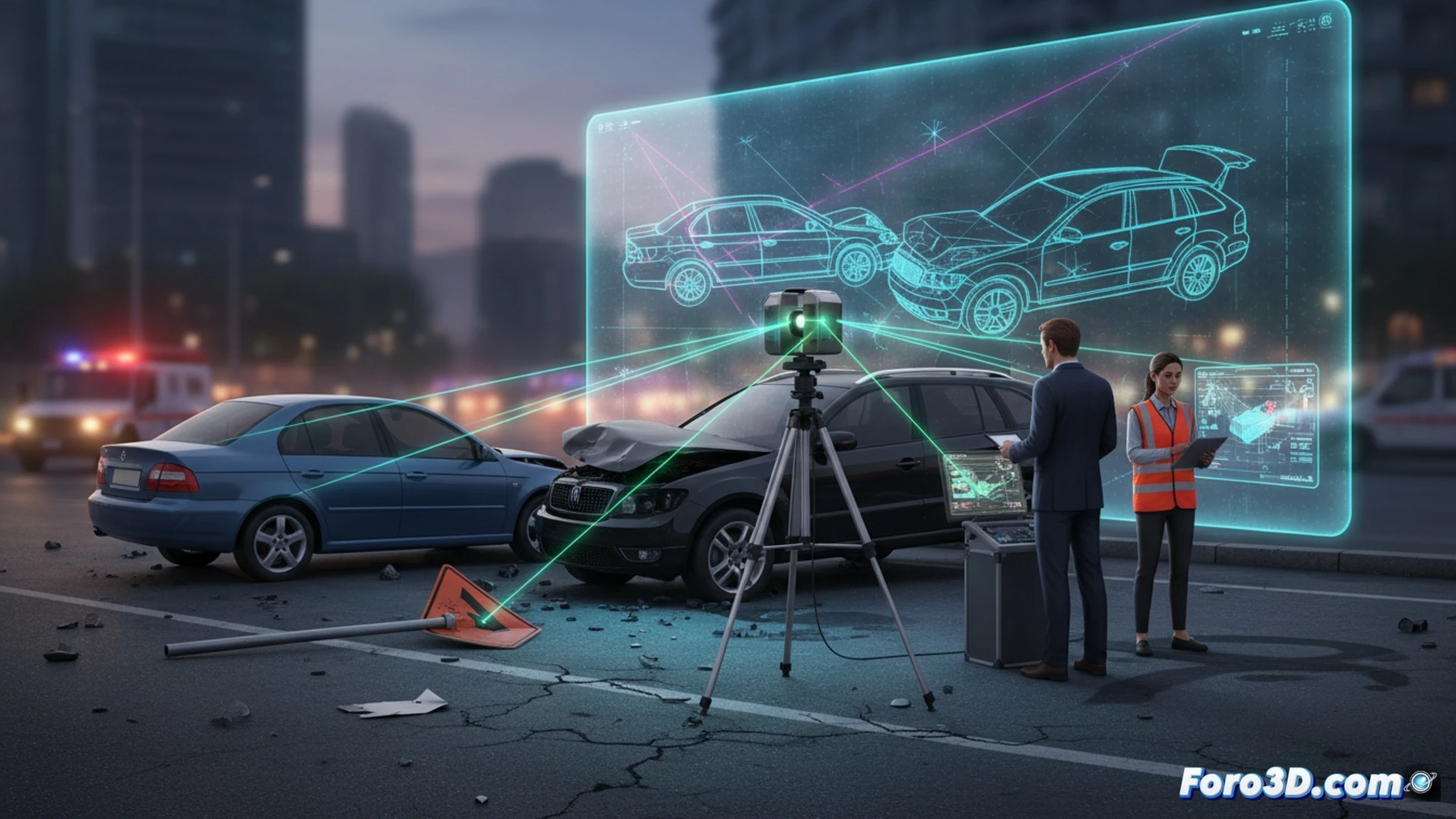
3D technology allows solicitors to document physical spaces with millimeter precision. A clear example: after a traffic accident, a 3D scanner captures the exact position of vehicles, signs, and road markings. This generates a digital model that can be presented as irrefutable evidence in court, avoiding biased interpretations of photographs or hand-drawn sketches.
Programs and workflow for forensic reconstruction 🛠️
For this task, a scanner like the Faro Focus or a camera like the Matterport Pro2 is needed. The key software is Autodesk ReCap for processing point clouds, and SketchUp or Blender for creating simplified models. With these programs, the solicitor generates an .obj or .ply file that can be viewed in any free 3D viewer. The result: a digital file that the judge can rotate and measure without leaving their office.
The 3D solicitor: when the judge asks you to pass them the virtual tape measure 😅
Imagine the solicitor arriving at the courthouse with a virtual reality headset. The judge says to them: Show me the 3D model of the accident. The solicitor, sweating, replies: Your Honor, my tablet doesn't have an HDMI port. In the end, the opposing lawyer still uses a folded piece of paper as a model. But hey, at least the digital model doesn't get wrinkled in the pocket of the robe.