After a wildfire in Montana that scorched 50,000 trees, Mast Reforestation chose to bury the charred logs in a 5,000 m² pit, covering them with six meters of soil. This practice prevents decomposition and the release of nearly 7,000 tons of CO₂ that would occur if they were burned. The company finances replanting by selling carbon credits.
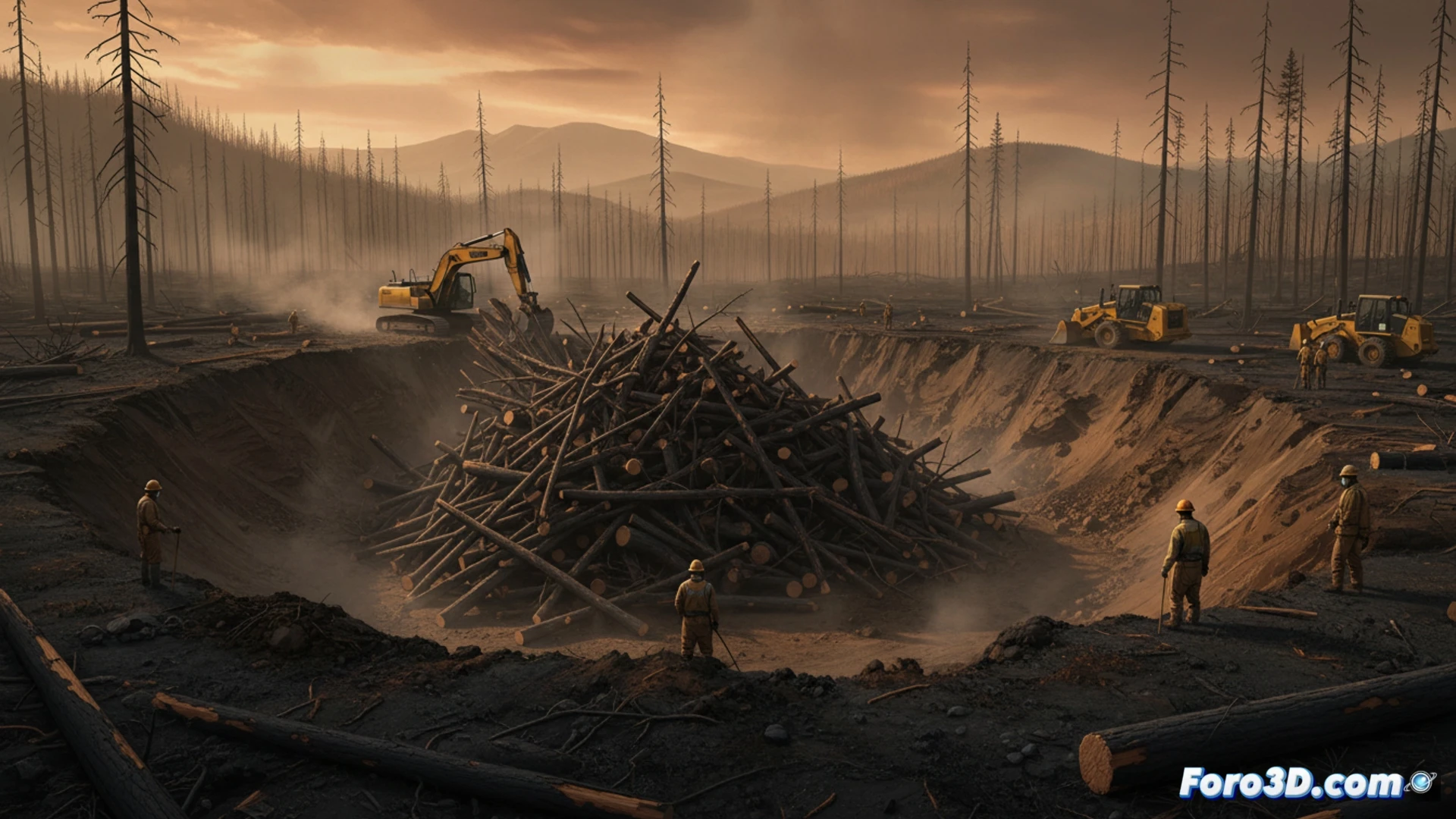
The technical method: a carbon pit sealed for centuries 🌲
The technique involves digging a trench, depositing the logs, and covering them with gravel and soil to isolate them from oxygen. Without oxygen, microbial decomposition stops, trapping the carbon permanently. Mast assures that the trees will not degrade for centuries, also reducing the risk of new fires. Although it is not a global solution, it represents a concrete tool for managing burned forests.
The world's largest forest coffin ⚰️
So, instead of making a giant bonfire to roast marshmallows, they've set up a tree cemetery. 50,000 logs in a 5,000 square meter pit. It's as if the trees, after burning, had a first-class burial funeral. And to top it off, they sell the smoke (well, the buried carbon) as credits. At least there won't be any CO₂ ghosts haunting the forest.