Opened in 2012 with a budget of £60 million, the London cable car was presented as a transport solution for commuters and a lever for urban regeneration. However, its daily usage did not meet initial expectations, and today it has established itself as a magnet for tourists. Although its operation costs £9.8 million annually, it achieves a surplus of £1.6 million thanks to advertising.
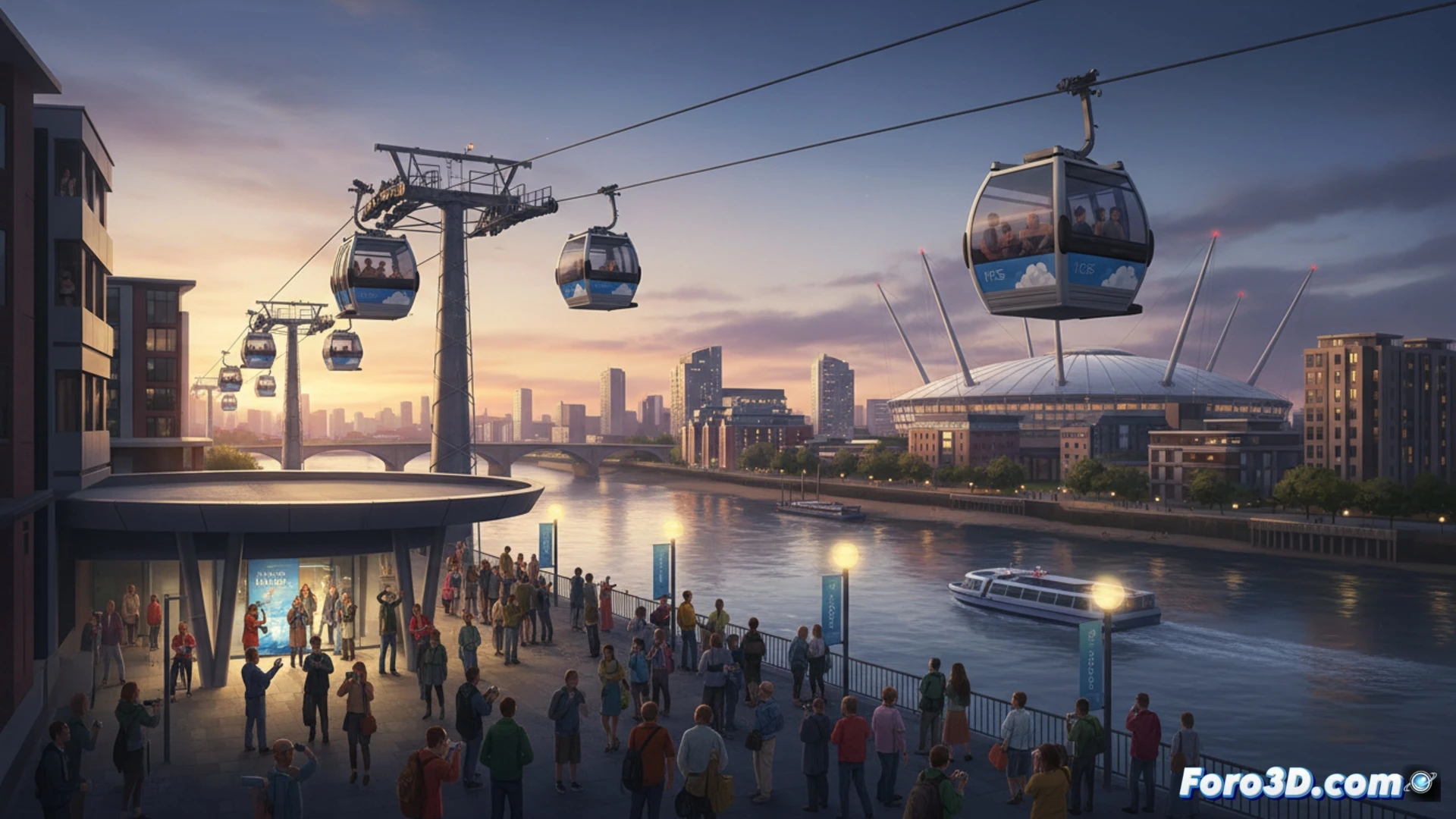
The engineering behind a high-cost urban cable car 🏗️
The system, designed by Doppelmayr, uses a continuous loop cable with 34 cabins, each with a capacity for 10 passengers. It travels 1.1 kilometers over the River Thames, connecting the Greenwich Peninsula with the Royal Docks. Its structure includes two 90-meter-high towers. Although its theoretical capacity is 2,500 people per hour, actual demand is lower, which questions the efficiency of its initial investment.
When your public transport is more expensive than your salary 💸
It is curious that a cable car intended for commuters ends up being used mainly by tourists seeking selfies with the river in the background. Londoners, on the other hand, prefer the tube or the bus, which are cheaper than an aerial ride. In the end, the project achieved its goal: being a lucrative attraction. But hey, if you were expecting a shortcut to work, you better keep walking.