A study by the Okinawa Institute of Science and Technology reveals that in the early 13th century, the Sun experienced solar cycles of only 6 or 7 years, much shorter than current ones, but of extreme intensity. The research combines a Japanese poem from 1204 describing auroras visible in Japan with the analysis of carbon-14 isotopes in tree rings buried in the northern part of the country. These two sources allowed for precise dating of solar events that we now know as cycles of approximately 11 years.
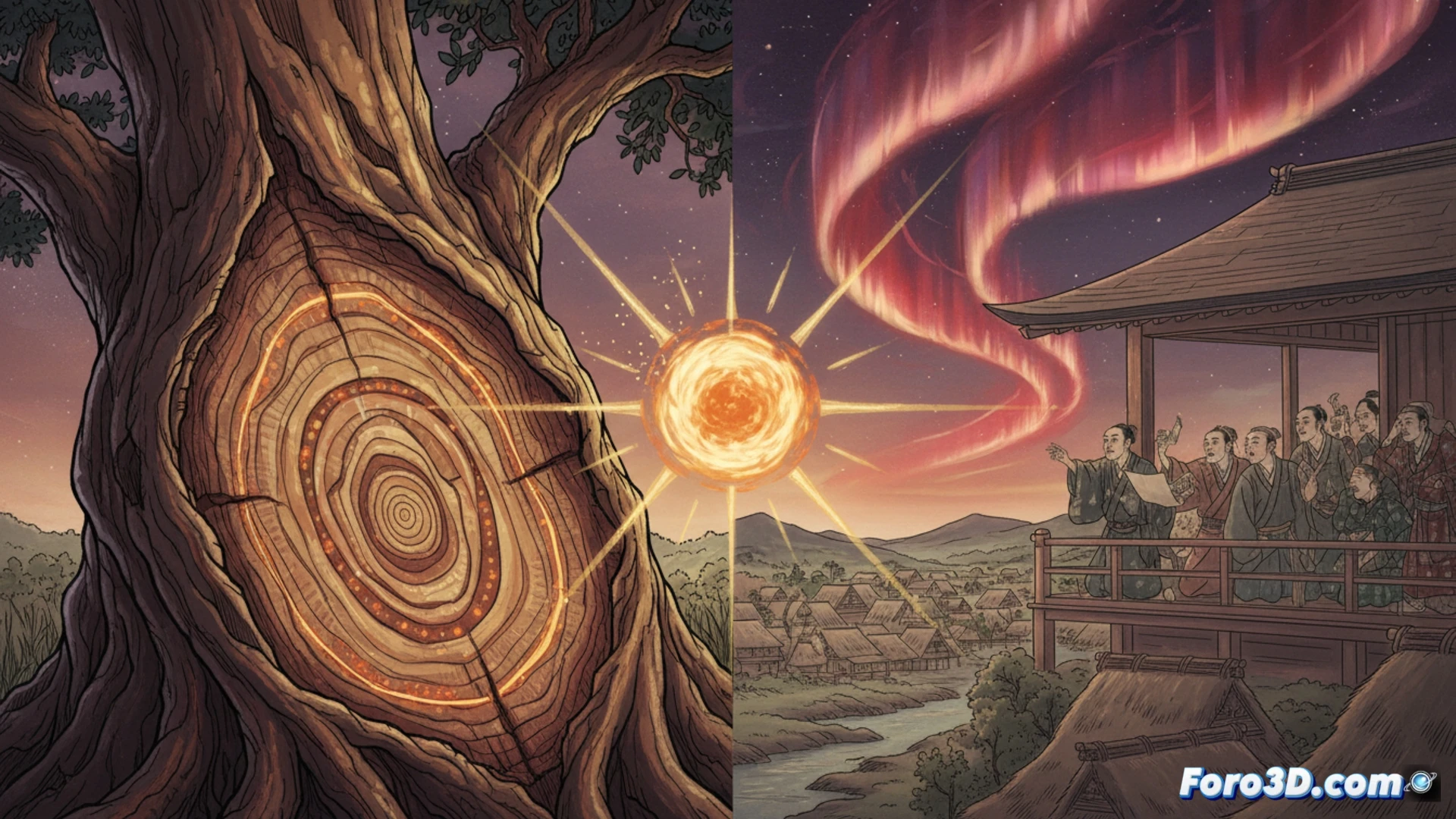
How carbon-14 in tree rings reveals the solar past 🌲
The key to the study lies in rare isotopes like carbon-14, which are generated when intense solar activity impacts Earth's atmosphere. These isotopes become trapped in tree rings, functioning as a historical record of solar activity. By analyzing samples from trees buried in northern Japan, researchers detected carbon-14 spikes that coincide with the period described in the 1204 poem. This method allows for reconstructing past solar cycles with a precision that other techniques do not offer, revealing a more erratic Sun than previously thought.
The Sun was in a hurry: 7-year cycles to finish work early ☀️
It seems that in the 13th century, the Sun decided to speed up the pace and complete its cycles in just 6 or 7 years, like a worker wanting to go home early. Meanwhile, the Japanese of the time enjoyed aurora borealis in their own country, something that today only those living near the North Pole see. Now we know that the Sun was not always as lazy as it is now with its 11-year cycles; it used to be more intense, but also more impatient. Perhaps we should ask it to return to that rhythm so that scientists have something more interesting to study.