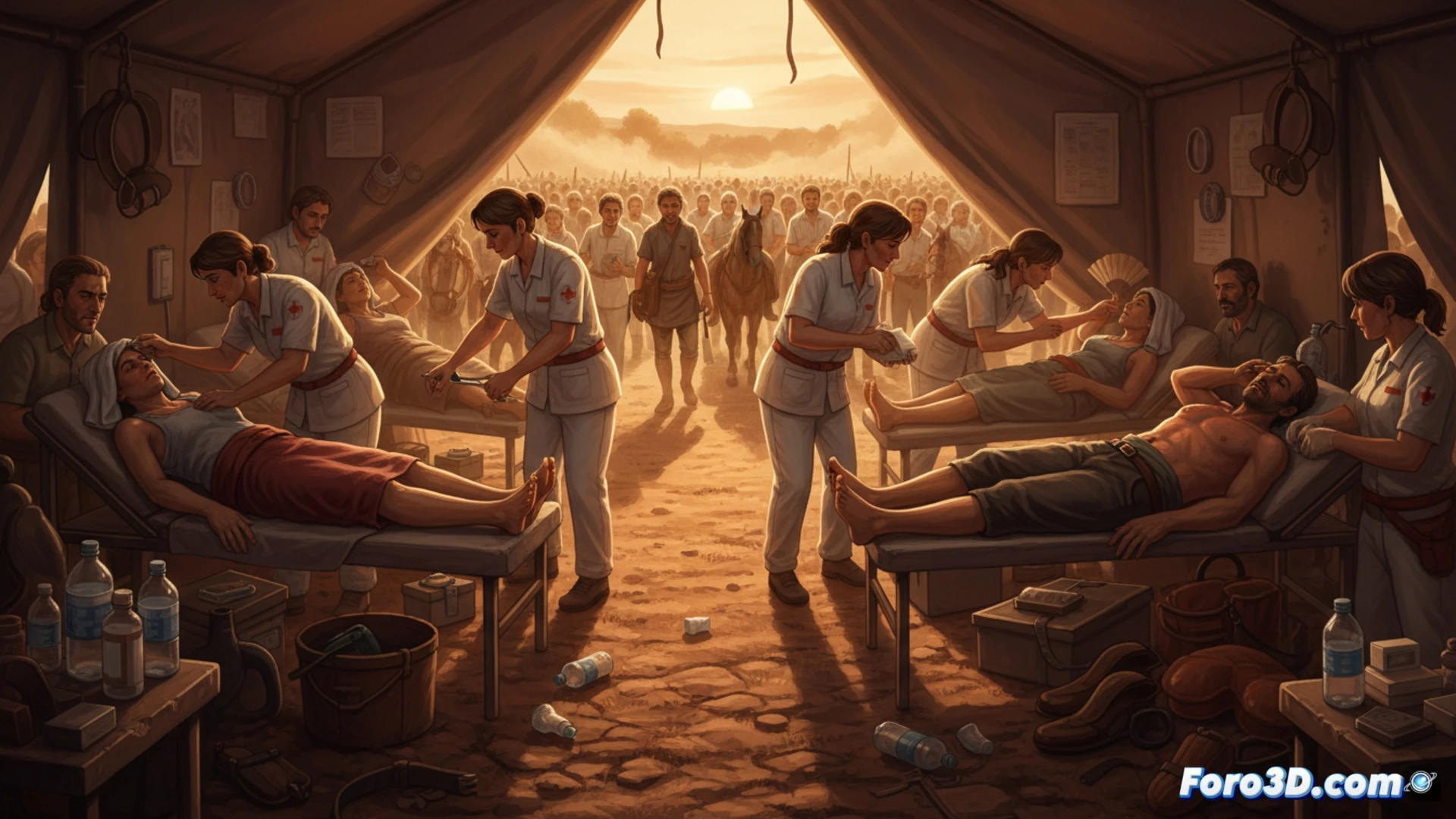
The second day of the Rocío pilgrimage has seen a 57% increase in medical care compared to the previous year. The large influx of pilgrims has overwhelmed medical stations, which have primarily treated cases of heatstroke and exhaustion from physical exertion. The heat and long walks are taking their toll on the devotees.
Alert systems and geolocation to prevent healthcare collapses 🚑
Faced with this peak in incidents, emergency teams have reinforced the use of portable thermal sensors and drones with infrared cameras to monitor the body temperature of attendees in real time. Additionally, geolocation applications have been deployed that allow health coordinators to anticipate critical congestion points and redirect mobile resources to areas with the highest density of pilgrims. These systems, combined with smart hydration stations that notify consumption levels, aim to reduce urgent care needs before dehydration cases worsen.
Doctors ask for a step-back, but the Rocío only understands steps forward 😅
Health workers suggest pilgrims take a break in the shade, but the procession moves on relentlessly. While doctors run back and forth with IV fluids and cold cloths, the pilgrims repeat that saying it's one thing to preach and another to practice, or in this case, to provide water. At this rate, next year they'll need a field hospital with air conditioning and a terrace overlooking the marsh.