A team of researchers led by Yuuki Kawabata has solved an evolutionary mystery: the sideways walking motion of crabs emerged only once in a common ancestor. By analyzing the movement of 50 species and mapping it onto a genetic tree, they discovered that all sideways-moving crabs descend from an ancestral group that gave rise to Eubrachyura, the most successful lineage with nearly 7,500 living species today.
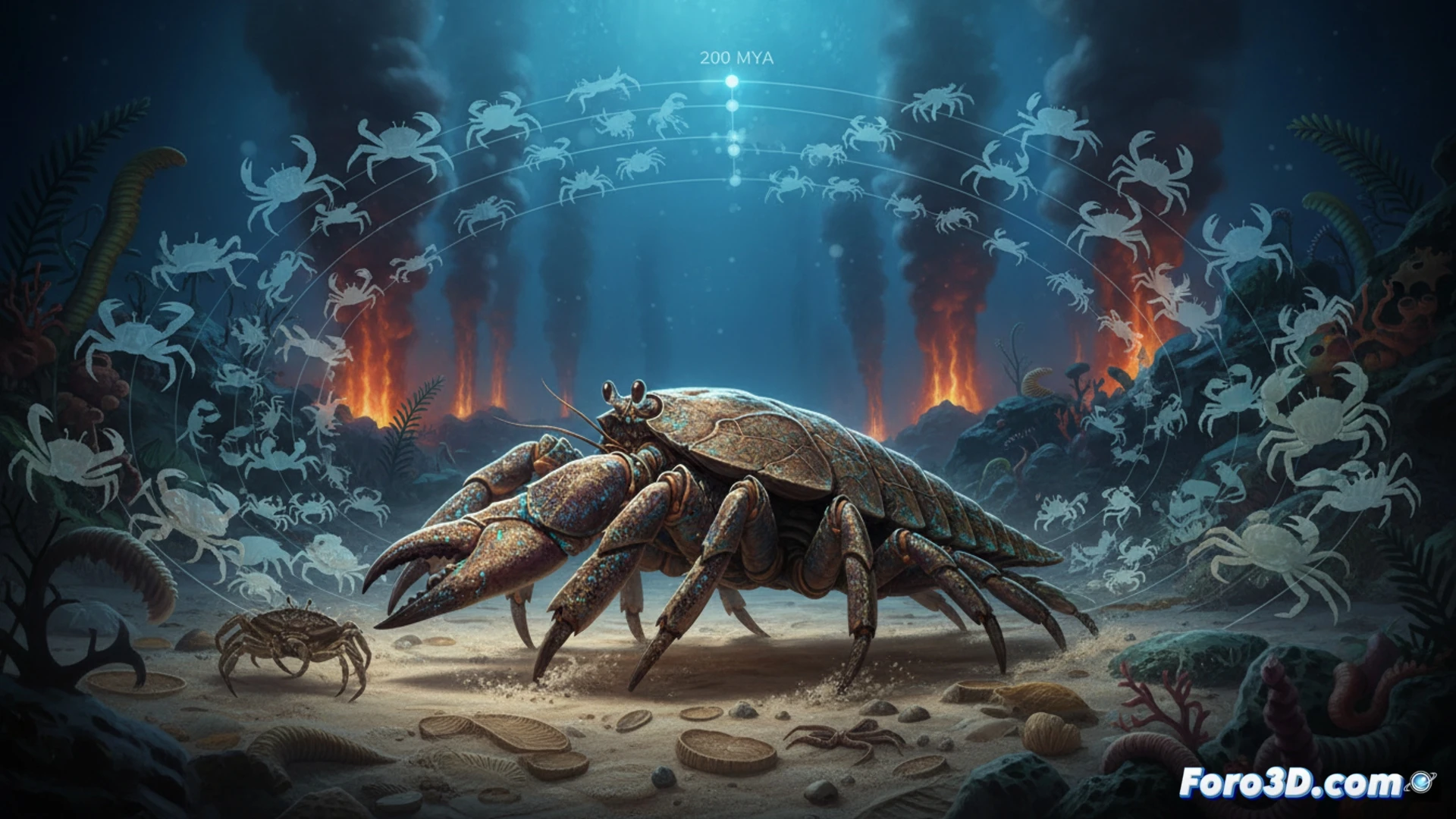
Locomotor innovation as a key evolutionary advantage 🦀
The study, published in eLife, suggests that this change in locomotion was a key innovation for the group's success. While crabs that move forward and backward total only 156 species, sideways-moving crabs dominate with thousands. Researchers believe that walking sideways allowed these crustaceans to quickly escape predators and colonize diverse habitats such as reefs, mangroves, and seafloors. The phylogenetic analysis based on DNA reinforces the hypothesis of a monophyletic origin for this trait.
Straight-walking crabs: the minority that missed the memo 🧭
While sideways crabs celebrated their evolutionary innovation with 7,500 different parties, the 156 that still walk in a straight line must feel like those colleagues who insist on using a paper map when everyone has GPS. Perhaps their problem isn't a lack of direction, but that they didn't receive the memo from 200 million years ago. At least, when facing a predator head-on, they can boast of being the only crustaceans that walk the way nature intended.