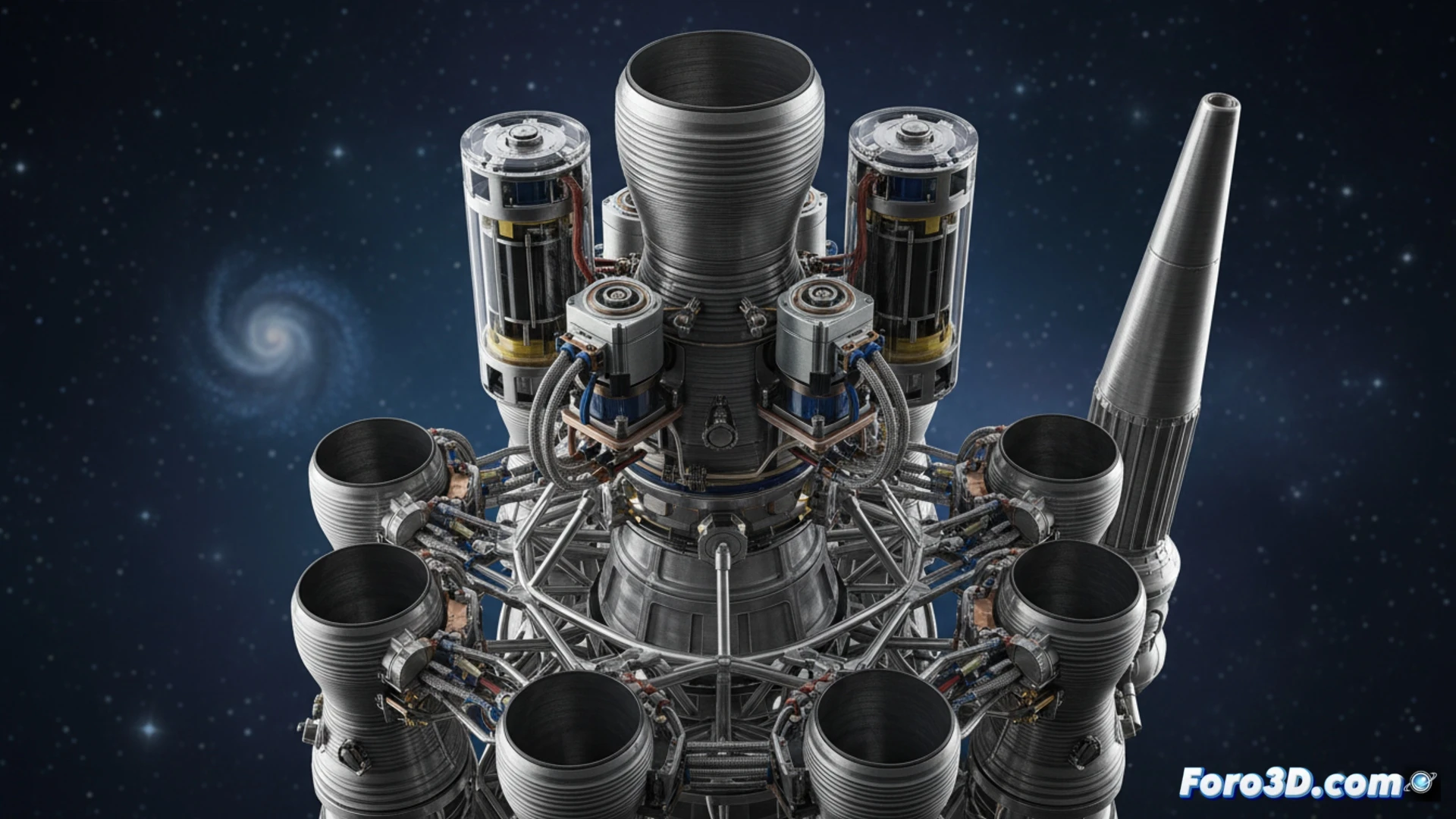
Rocket Lab's Rutherford engine breaks with traditional space propulsion schemes. Weighing just 35 kilograms, it replaces complex gas turbines with electric motors powered by lithium-polymer batteries. Nine of these engines power the first stage of the Electron rocket, generating 24 kN of thrust each, while the second stage uses a vacuum-optimized version.
Rapid production with 3D printing and ambitious goals 🚀
Each main component of the Rutherford engine is manufactured using 3D printing, allowing a complete unit to be assembled in a single day. Rocket Lab has set an annual production target of 200 engines. By the end of 2025, over 800 units had flown on more than 70 Electron rocket missions. This industrial approach contrasts with traditional engine manufacturing timelines, which typically require weeks or months.
Goodbye to turbines: now space runs on batteries 🔋
Classic aerospace engineers must have their hearts skip a beat: the Rutherford engine runs on rechargeable batteries, like a remote-controlled toy, but with enough power to put satellites into orbit. The best part is that if it runs out of charge, you can't plug it into the space electrical grid. Luckily, the propellant burn ends before the rocket needs a power bank.