A recent study proposes that the icy water at Mercury's poles did not form there, but was brought by the impact of an ice-rich comet or asteroid. Protected in craters that never see direct sunlight, this ice layer would have persisted for billions of years, explaining a mystery that has puzzled astronomers since its discovery.
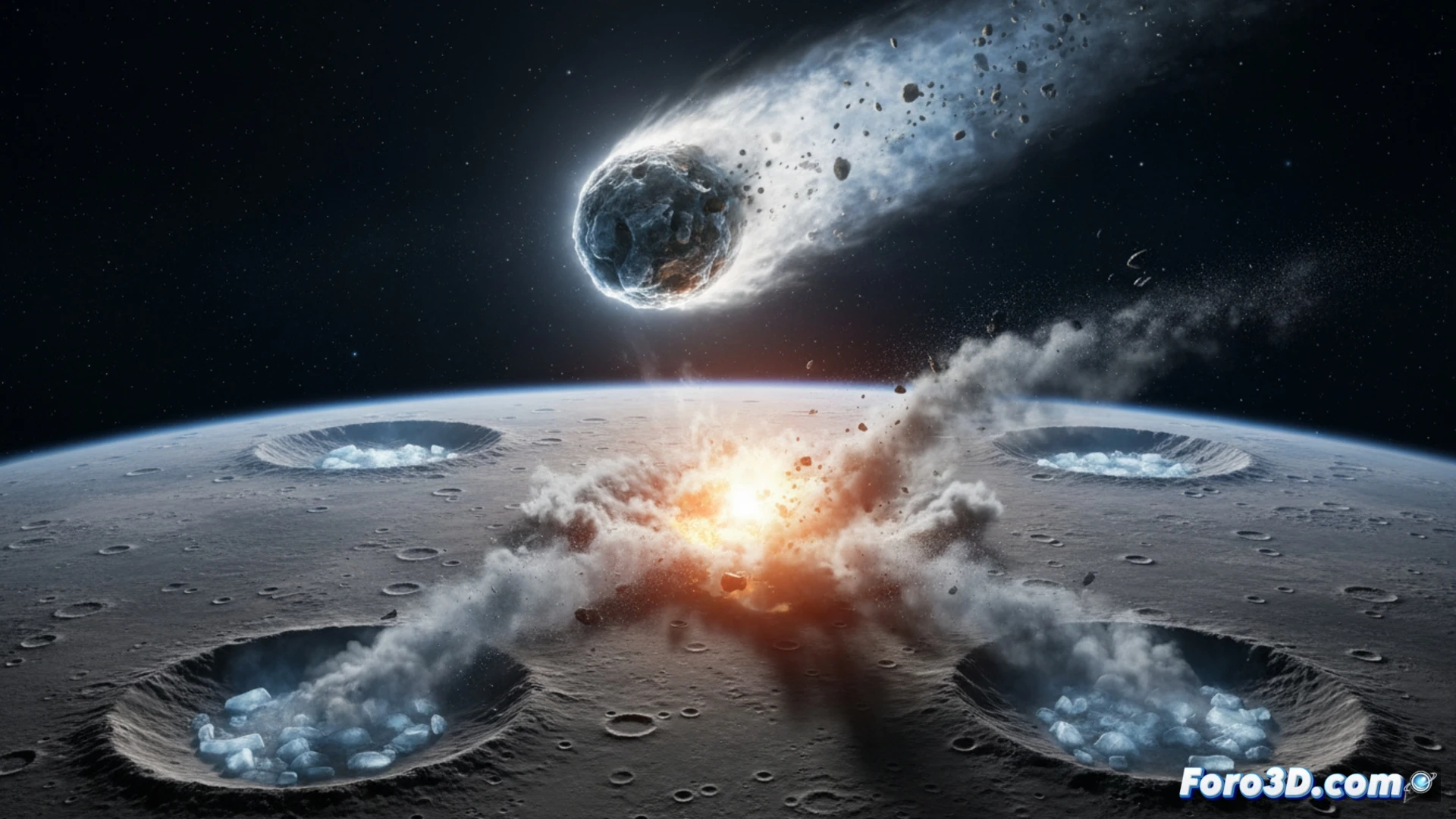
How a Single Impact Could Seed the Poles with Ice 🧊
The study's authors modeled the impact of a large icy object. The simulation shows that the released material was selectively distributed, depositing only in the permanently shadowed areas of polar craters. There, the temperature does not exceed -170 °C, allowing the ice to remain stable without sublimating. This mechanism, occurring in a single event, resolves the question of how a planet so close to the Sun can harbor water deposits.
Mercury: The Planet That Ordered Ice for Its Coffee ☕
So Mercury, the world closest to the Sun and famous for frying anything at 430 °C during the day, turns out to have ice at its poles. The explanation: a kamikaze comet that stamped its icy cargo right into the dark corners. Like a cold drink delivery driver who got the address wrong and, instead of leaving them in the fridge, tossed them in the desert. But hey, the ice came to stay.