The Tindaya Mountain, in Fuerteventura, is a sanctuary of pre-Hispanic engravings and a unique geological monument. It bears one of the most controversial artistic utopias of the 20th century: the project by sculptor Eduardo Chillida, who planned to hollow out its interior to create a perfect cube measuring 50 meters per side, illuminated solely by a zenithal skylight. After decades of litigation, doubts about the stability of the volcanic rock, and environmentalist opposition, the work has been frozen in an administrative limbo. However, 3D technology today allows us to visualize that impossible space and understand the magnitude of the conflict.
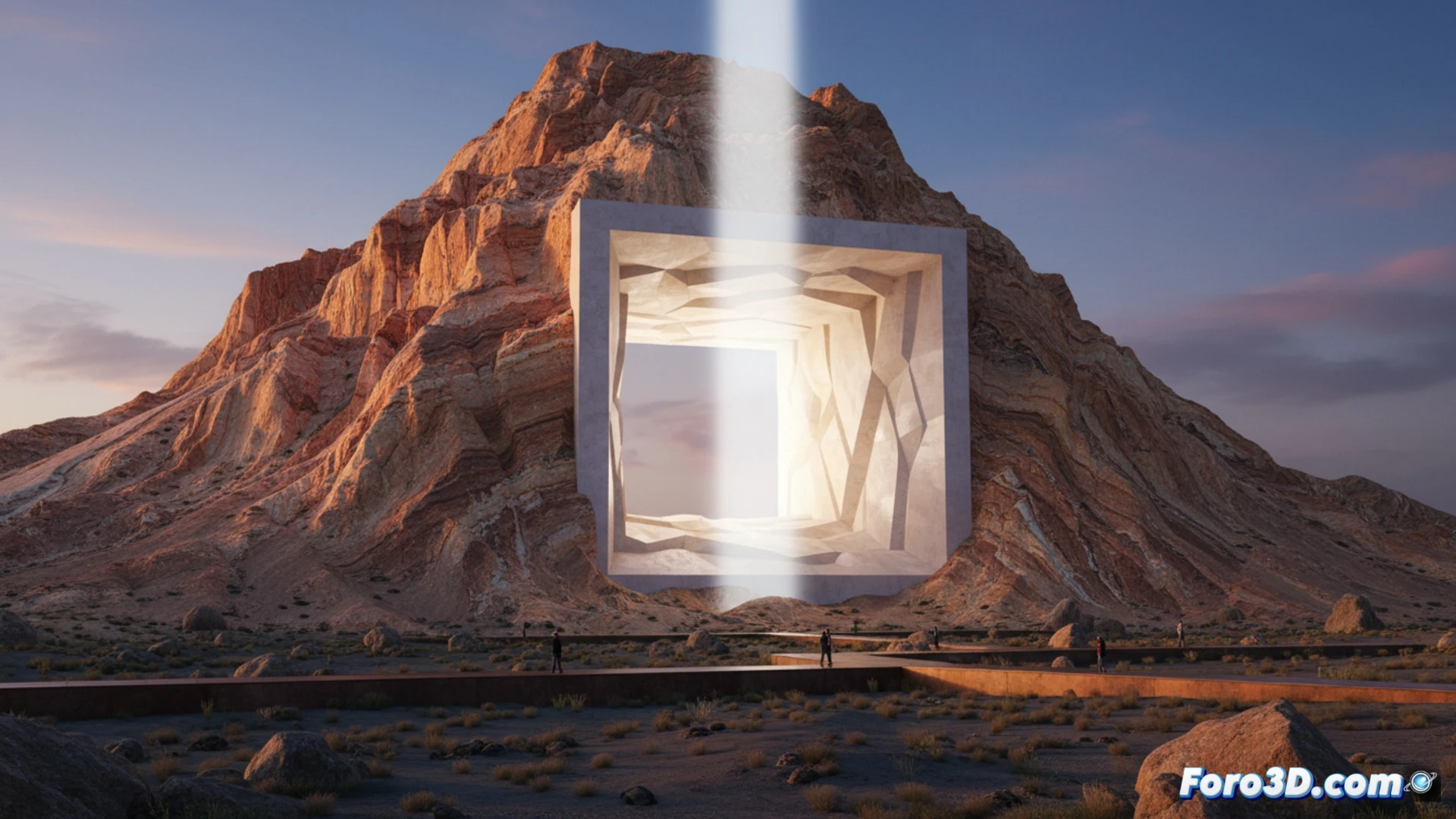
Virtual reconstruction: the cube of light as a technical model 🏗️
From a technical standpoint, the virtual recreation of the Tindaya project requires a complex workflow. First, a digital terrain model of the mountain must be obtained through drone photogrammetry or public LIDAR data. On that base mesh, the interior hollowing is modeled: a 50x50x50 meter cube, oriented exactly according to the solar axes that Chillida specified in his sketches. Global illumination software (such as Blender Cycles or Unreal Engine) allows simulating the beam of natural light that would enter through the upper opening, projecting a cone of light that would change throughout the day. The main technical challenge is calculating the structural stability of the hollowing, data that real engineers never certified. The recreation must include a visualization mode showing simulated geological stresses, graphically representing the risk of collapse that the opposition cites as a key argument.
The model as a tool for digital activism 🖥️
The 3D representation of this phantom work becomes a powerful tool for dissemination. By comparing the current state of the mountain (intact, but sealed by bureaucracy) with the vision of the rendered cube of light, the viewer understands the dilemma: is art a right that justifies the intervention of a sacred space. An interactive web viewer, accessible from any device, would allow navigating the virtual interior, activating or deactivating ecological information layers, and reading texts from technical reports. This immersive experience transforms the abstract debate into a tangible reality, forcing the public to take a stand between protecting natural heritage and realizing an artistic dream. The 3D model does not resolve the litigation, but it illuminates the conflict with the same light that Chillida wanted to bring into the mountain.
As a digital activist, what role does ethics play when modeling in 3D Chillida's impossible cube, knowing that his real project in Tindaya has been rejected due to environmental and cultural impact?
(PS: at Foro3D we believe that all art is political, especially when the computer freezes)