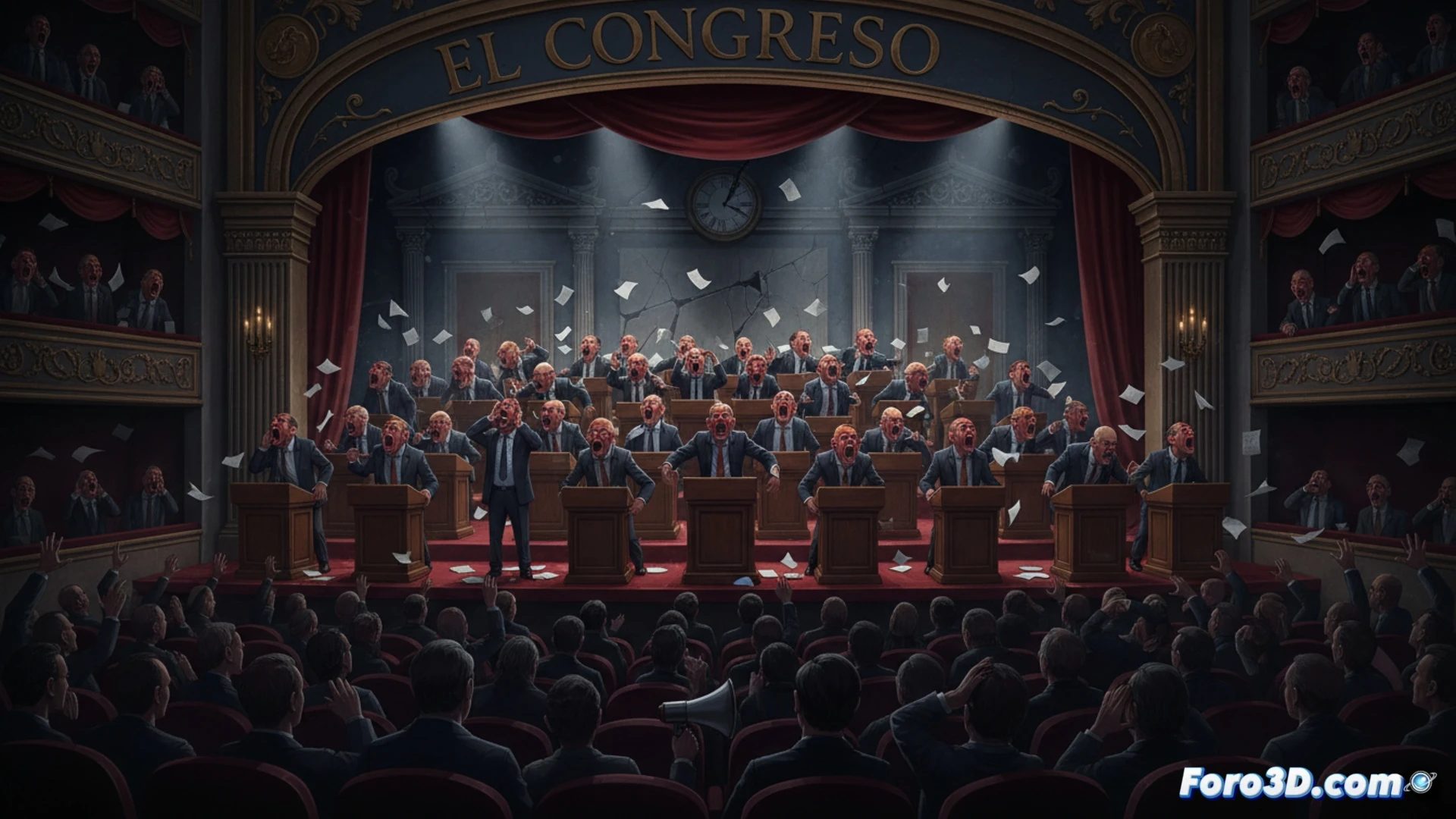
The plenary session of Congress functions like a poorly written play: the same actors repeat the script every week, shouting is the favorite special effect, and citizens watch from the gallery without being able to intervene. While deputies argue passionately, the country waits for solutions. But the show goes on, season after season, with no changes to the script.
If Congress Were Programmed Like Software 🖥️
Let's imagine a system that optimizes parliamentary debate. An algorithm that detects infinite loops of speeches and automatically stops them. An AI that filters out shouting and allocates speaking time based on the technical relevance of each proposal. Votes would be recorded on blockchain to prevent manipulation. Citizens could audit every decision in real time. But of course, that would require political will, not just code.
The Gallery Wants a Seat, but No One Listens 🎭
Citizens, from their seats in the gallery, toss virtual popcorn on Twitter while the actors bicker on stage. The problem is that no one has installed a speaker to connect the stands with the floor. So we keep watching the show, bored, waiting for someone to shout bring down the curtain or, better yet, bring a new script.