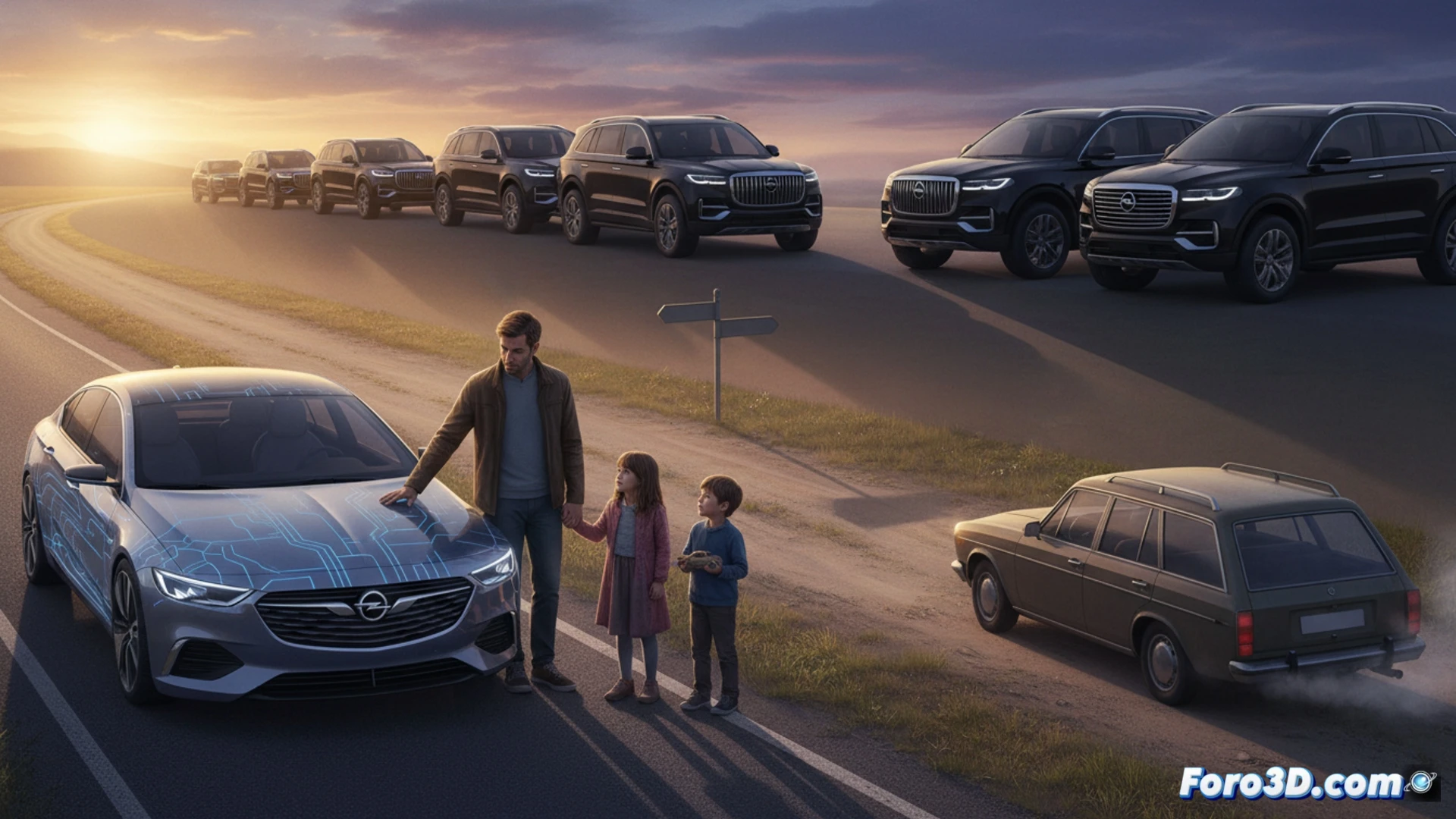
The cancellation of the electric Opel Insignia has exposed an uncomfortable reality. While brands compete to launch luxury SUVs or battery-powered sports cars, families needing a spacious and affordable car are left with no options. This move, dictated by group strategies rather than actual demand, reduces supply in a key segment and prolongs the life of combustion engines in households that depend most on their cars.
Modular platforms and the profitability dilemma 🚗
The Insignia was to be based on Stellantis' STLA Medium platform, designed to offer ranges exceeding 500 km with a family-sized body. However, the decision not to manufacture it responds to internal profitability calculations. Production of higher-margin models, such as the electric Peugeot 3008, is prioritized, leaving a gap in the D-segment. This type of strategy shows that the technology exists, but its application is filtered according to the interests of each subsidiary, not according to market needs.
The masterstroke: a family electric car that never reached the starting line 😅
Stellantis has decided that no, families do not need a large car without gasoline. After all, why complicate things when you can buy a coupe SUV with LED lights and a painful price tag. The electric Insignia stays in the drawer of good ideas, alongside universal chargers and prices without VAT. But no problem, surely in the next brand restructuring they will bring out a seven-seat crossover with an engine they haven't invented yet. Ironies of marketing.