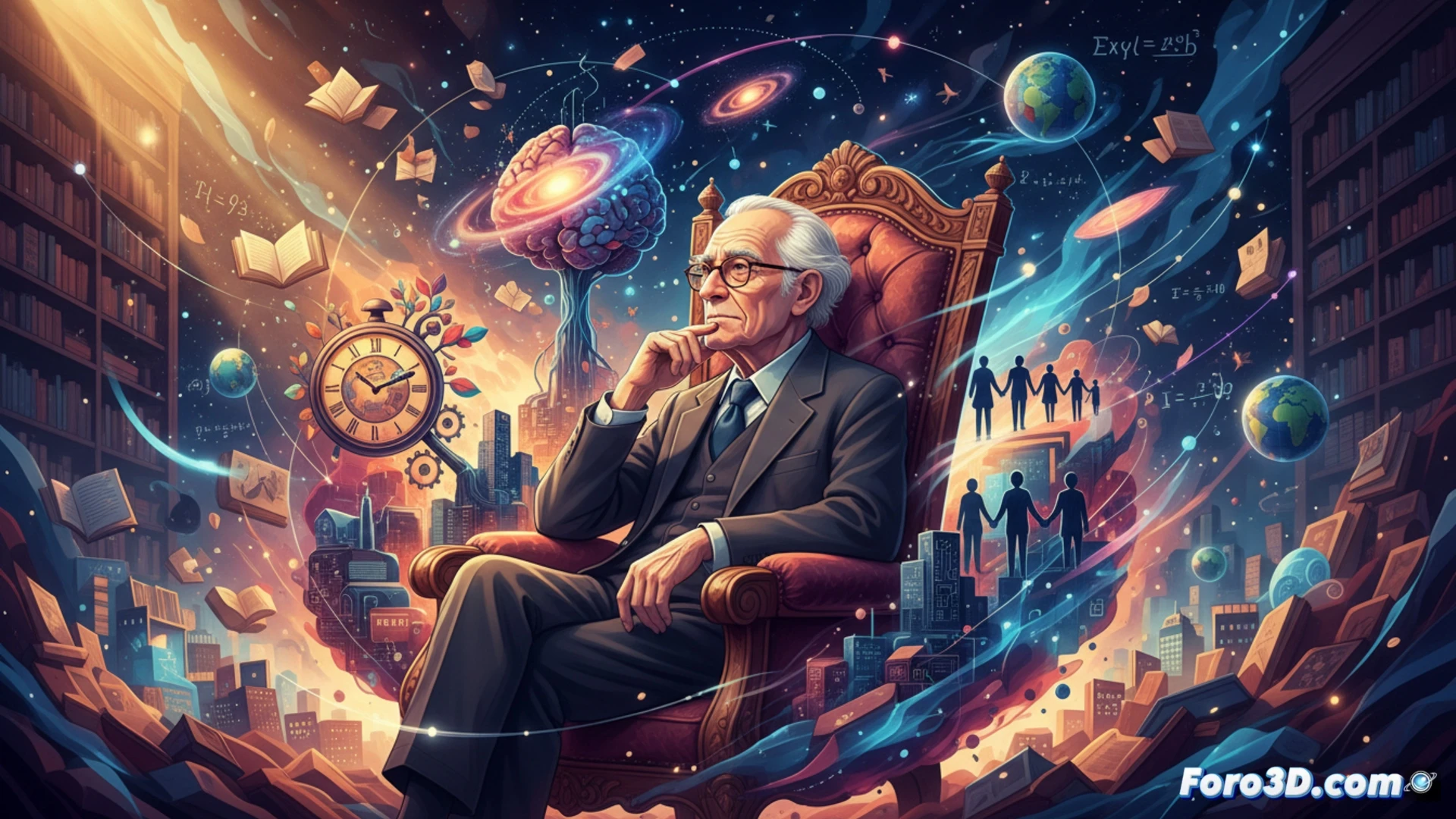
French philosopher Edgar Morin, creator of the theory of complex thought, has died at the age of 104. He was a key figure in 20th and 21st century sociology and philosophy. For the public, losing this thinker means saying goodbye to someone who promoted understanding the world in an interconnected, non-simplistic way. His legacy invites reflection on how we approach everyday problems without falling into reductionism.
Complex thought applied to code and development 🧩
In software development, Morin's theory clashes with our reality: frameworks that promise simplicity and then drag in endless dependencies. A project is not a linear algorithm, but a living system where each module affects the rest. Ignoring that interdependence creates bugs that are impossible to trace. Applying complex thought here means accepting that there is no single solution, but an ecosystem of decisions that must be managed with technical humility.
Morin's death and the end of deep tweets 📱
The irony is that Morin spent decades explaining that reality cannot be understood in a tweet. And now that he is gone, social media will continue to be filled with misattributed self-help quotes. Surely in three days someone will post: Morin said: life is danceable. Morin never said that, but it doesn't matter: the algorithm will reward it. That's how the complexity of the digital world works: we simplify until it hurts.