The United Arab Emirates have given the green light to accelerate the construction of the East-West oil pipeline, a key infrastructure that will connect inland oil fields with the port of Fujairah in the east of the country. The crown prince ordered the state oil company to move up the deadlines so that this project, already underway, enters operation next year. The goal is to double export capacity without relying on the Strait of Hormuz, a sensitive route in the region.
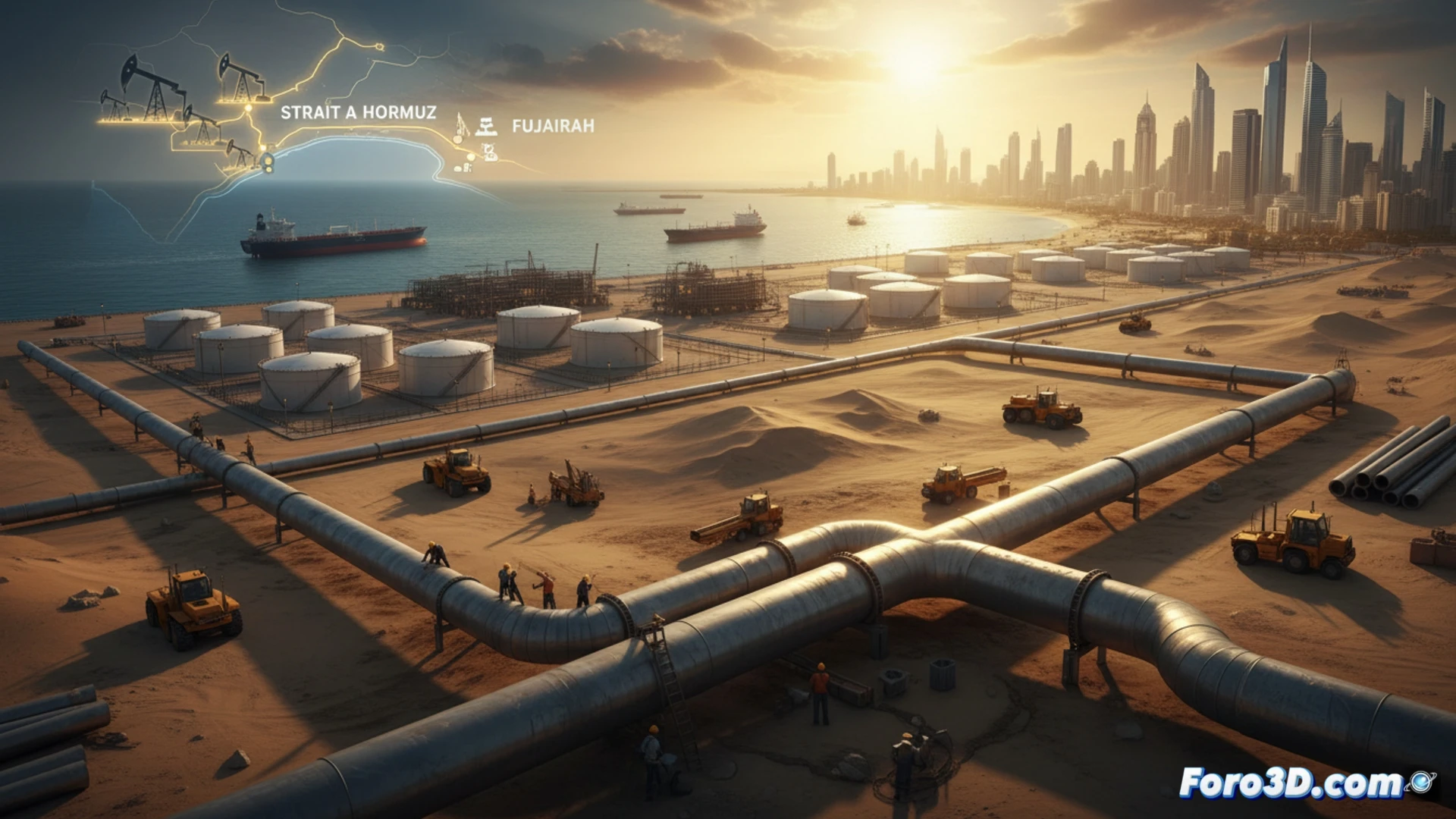
Strategic pipeline to bypass geopolitical bottlenecks 🛢️
The East-West oil pipeline, approximately 400 kilometers long and with a capacity to transport up to 1.5 million barrels per day, will allow the UAE to diversify its export routes. The infrastructure connects the Habshan and Bu Hasa fields with storage and loading facilities in Fujairah, avoiding transit through the Strait of Hormuz, controlled by Iran. The project includes high-pressure pumps and storage tanks with a capacity of 14 million barrels. Its completion will reduce the country's logistical vulnerability in the face of regional tensions.
The pipeline that promises more oil and fewer headaches 😅
The news has been received with relief in planning offices, where maps of the Strait of Hormuz were already starting to wear out from so much staring. Now, with the East-West, the Emiratis can sleep soundly knowing their crude has an escape route on the east coast. That said, we'll have to see if the port of Fujairah can handle the pace without bottlenecks, because doubling the flow of tankers in a single port sounds like a weekend plan on a toll highway.