Mahnaz and Somayeh Ebrahimi, two Afghan cousins with no prior artistic training, escaped Kabul for being Hazara and Shia. Now, from exile, they create black-and-white photographs that express the suffering and dreams of women under the Taliban regime. Their images, a blend of reality and poetry, were exhibited in Madrid in 2024 with the support of a Spanish curator. They fear reprisals if their real identity is discovered.
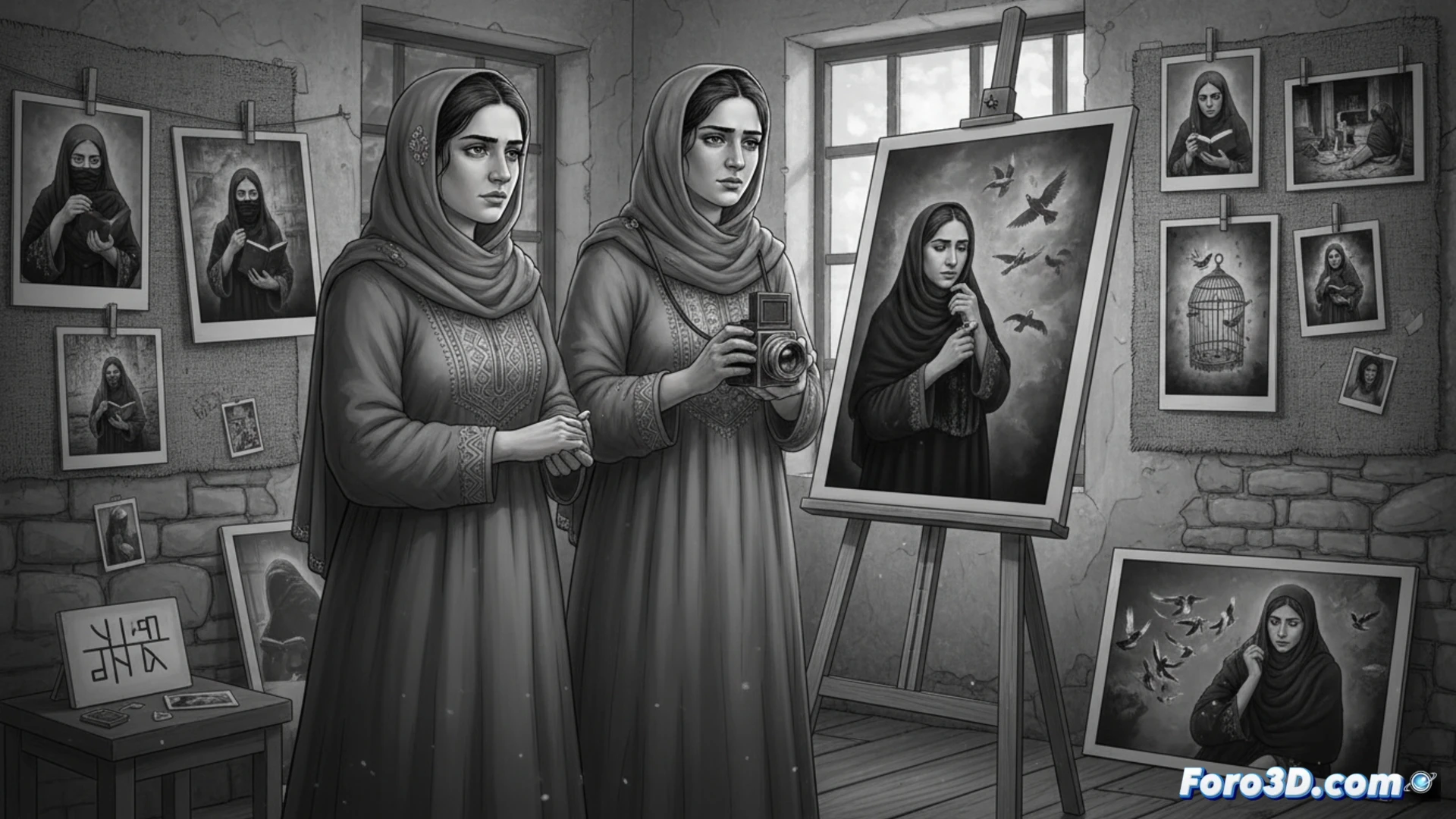
Analog photography and basic editing to narrate the horror 📷
To achieve that poetic and raw effect, the cousins use manual SLR cameras and black-and-white film rolls. They do not use complex software; editing is limited to contrast and grain adjustments in free programs. The process is slow and artisanal: each image requires planning the composition, natural lighting, and the posing of the models, who are other exiles. The lack of technical resources becomes an aesthetic advantage, giving the photos a timeless and direct feel.
The drama of searching for WiFi to upload photos of oppression 🌐
The most ironic thing of all is that, to denounce a regime that prohibits women from using the internet, the cousins depend on an unstable WiFi connection at a cybercafé in Pakistan. While they pose with torn veils and lost gazes, their greatest technical drama is the router restarting just as they upload the final photo to the cloud. The Taliban takes away their rights, but the real enemy is the local internet provider.