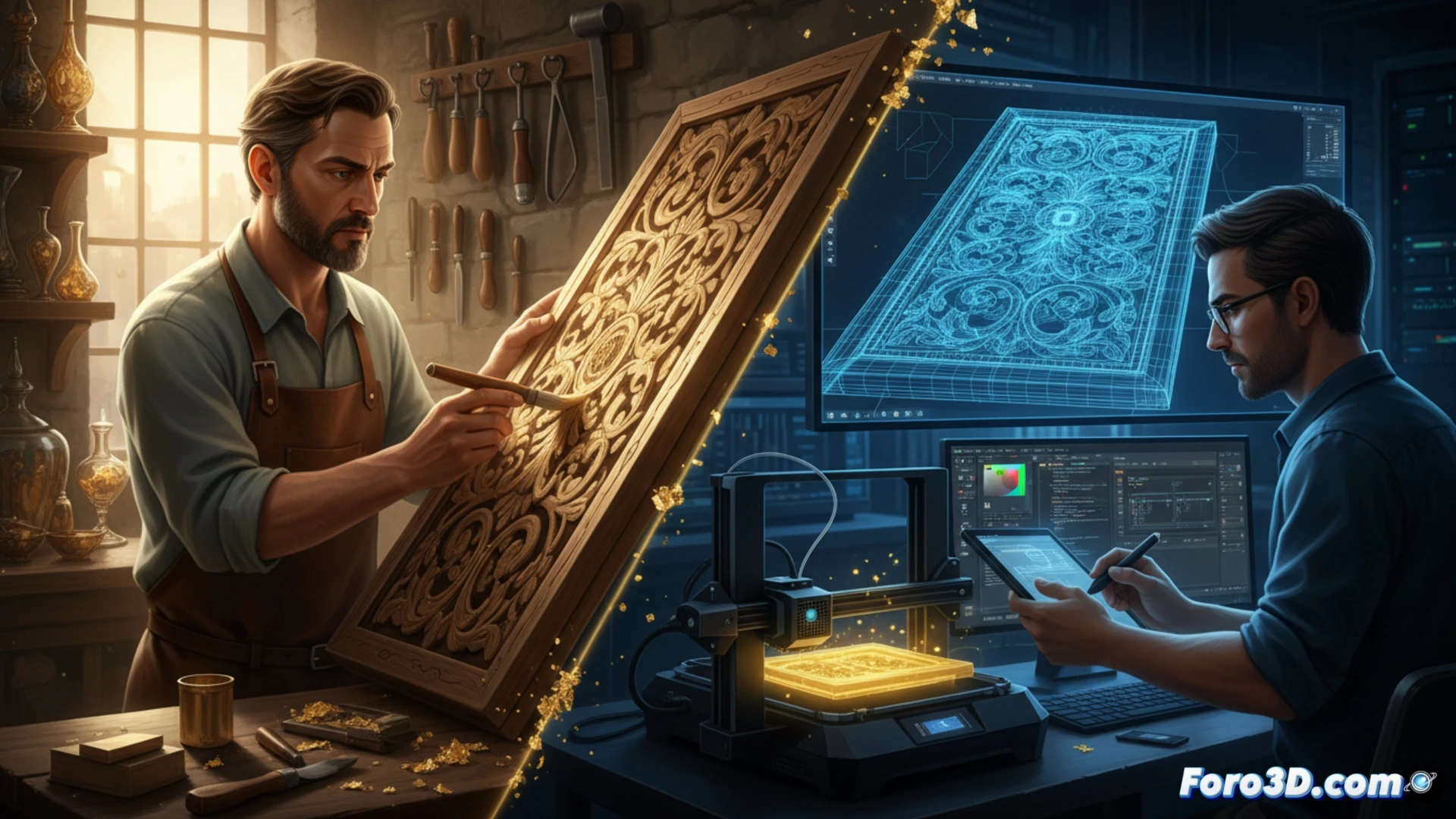
Artisanal gilding, which involves applying gold leaf to wood or plaster, finds an unexpected ally in 3D technology. Digitization allows for the creation of complex reliefs and molds with millimeter precision, reducing hours of manual carving. A clear example is the restoration of picture frames: the damaged original is scanned, the missing piece is modeled in 3D software, and a mold is printed to apply the gold leaf. Key programs include Blender for modeling, Meshmixer for mesh repair, and a scanner like the Einscan-SP.
Technical workflow for the digital gilder 🛠️
The process begins with 3D scanning of the object to be restored, capturing every detail of the relief. With Blender, the missing areas are reconstructed using the digital sculpting tool, which mimics the gesture of the gouge. The model is then exported to STL format and printed in high-definition resin using an SLA printer like the Anycubic Photon. The printed mold is coated with bole and gold leaf following the traditional technique. This method avoids wear and tear on antique pieces by not having to handle them directly.
When the brush goes digital and doesn't stain 🎨
The best part is that by modeling on the screen, you save yourself from plaster dust on your clothes and visits to the physio for bad posture. Of course, you swap the hammer and gouge for a mouse and the saintly patience to keep Blender from crashing without saving. Because, let's be honest, nothing beats spending hours adjusting a vertex so the gilding is perfect, only to realize the client wanted the frame in copper color. Technology advances, but the client's taste remains an unfathomable mystery.