The Zaragoza City Council has presented the DIM 2026 edition, an event that explores 3D animation from a dual perspective: artistic creativity and scientific rigor. Far from being limited to entertainment, this discipline integrates mathematics, physics, and computer science to bring virtual environments and characters to life. The event aims to highlight the collaboration between artists and scientists, reflecting on the future of animation and its possibilities for innovation.
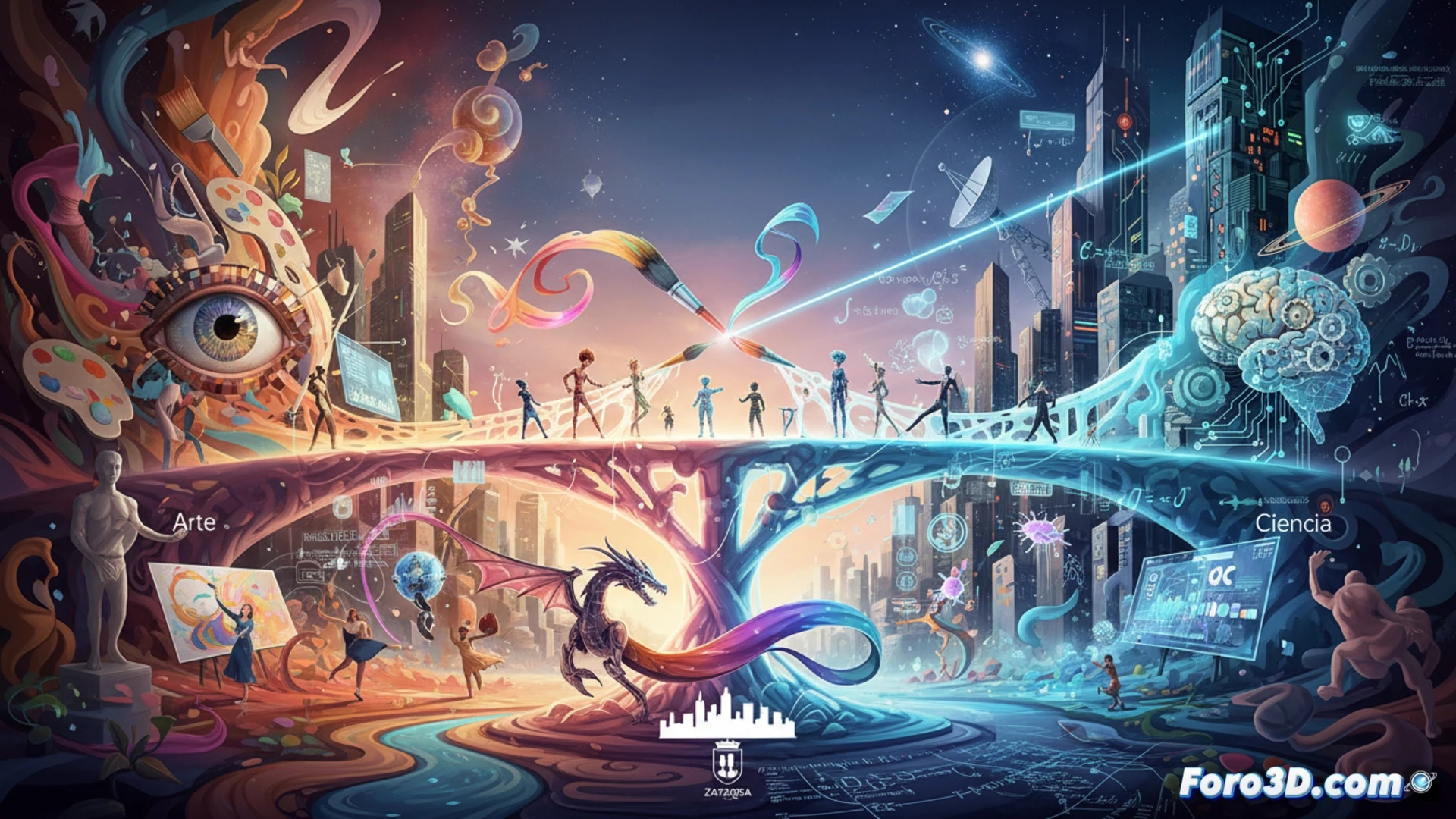
Modeling and algorithms: the technical skeleton of animation 🎨
Behind every animated character lies a technical process that combines polygonal modeling, procedural texturing, and particle systems. Artists define the shape and light, while developers implement motion equations and physical simulations so that hair flows or clothing folds. DIM 2026 will showcase tools such as inverse kinematics-based rigging and real-time rendering engines, demonstrating that a good camera shot requires both an aesthetic eye and an understanding of optics.
When art asks math for help to avoid looking like a rubber doll 🤖
Because yes, we've all seen that epic scene where the hero jumps and looks like a deflating balloon. To prevent characters from looking like they're made of plasticine, animators turn to physics: gravity, inertia, and even Hooke's law for bounces. At DIM 2026, you'll discover that making an arm move naturally requires more equations than a college entrance exam. And watch out, because if you mess up a decimal, your dragon turns into a jelly with legs.