An inductive wireless charging system for electric trucks suddenly stopped transferring energy. LiDAR scanning of the asphalt revealed a 12 mm differential settlement in the roadway, causing a critical misalignment between the buried coils and the vehicle's receiver. This failure, detected using Leica Cyclone and modeled in Civil 3D, was validated with electromagnetic simulations in CST Studio Suite, demonstrating how geomatics and 3D modeling are essential for diagnosing and preventing problems in dynamic charging infrastructure.
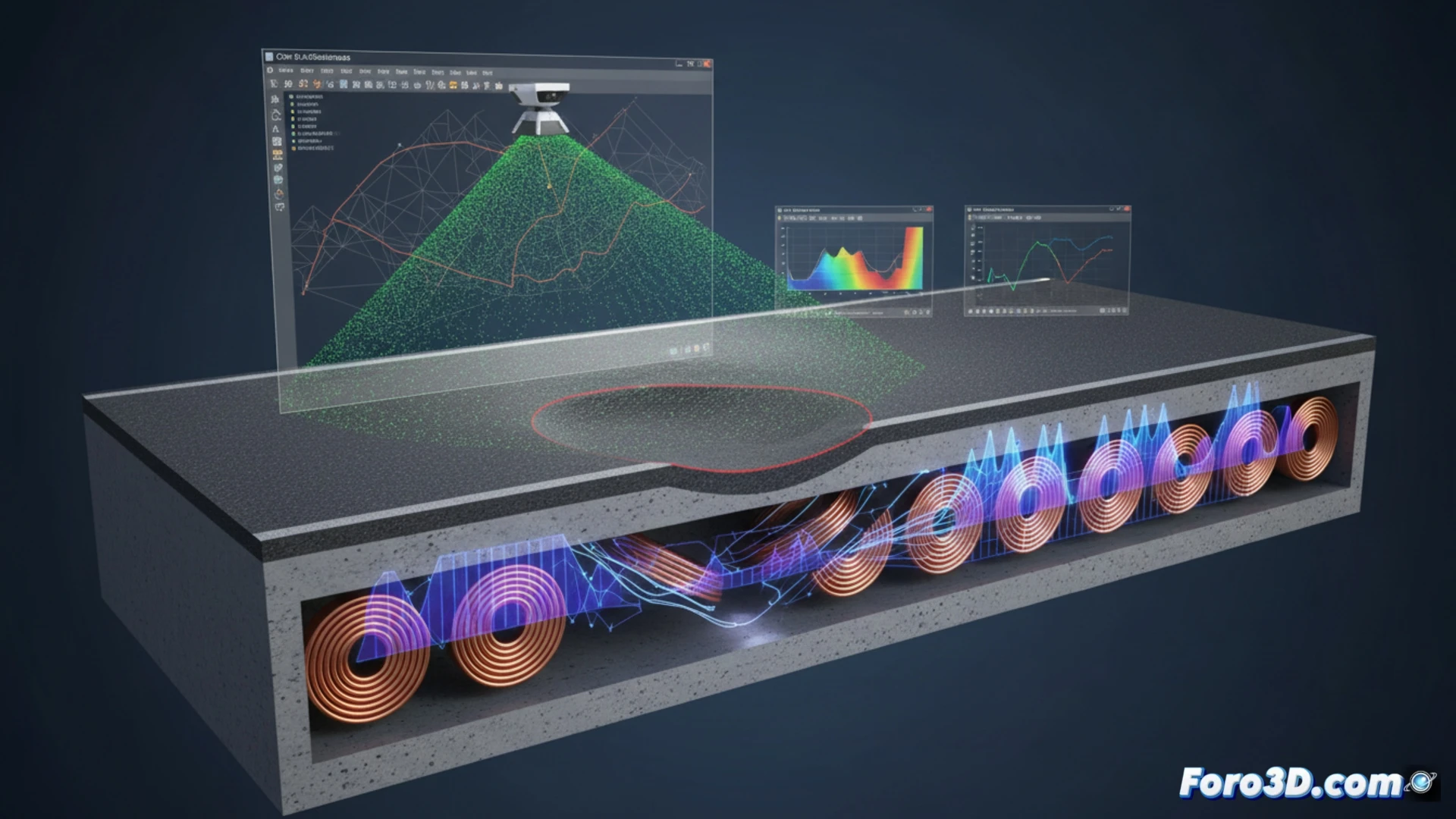
Synergy between geomatics and electromagnetic simulation in inductive charging failures ⚡
The diagnostic process began with capturing a point cloud using terrestrial LiDAR scanning, processed in Leica Cyclone to generate a pavement surface model. In Civil 3D, a localized differential settlement was identified, with a 0.8-degree slope in the area of the primary coils. This data was imported into CST Studio Suite, where the angular and vertical misalignment between the transmitting coil (buried at 80 mm) and the truck's receiver was modeled. The electromagnetic simulation confirmed a 34% drop in the coupling coefficient, reducing the transferred power from 200 kW to less than 50 kW, insufficient to maintain vehicle operation.
Preventing misalignments in electrified roads through 3D modeling 🛣️
The differential settlement originated from uneven compaction of the fill beneath the roadway, exacerbated by heavy traffic. To prevent future misalignments, it was proposed to integrate the Civil 3D terrain model with the coil installation plans, establishing maximum asphalt deformation tolerances of 5 mm. Additionally, periodic LiDAR scanning allows updating the road's digital twin, dynamically adjusting the control parameters of the power inverter. This multidisciplinary approach, combining surveying, civil modeling, and EM simulation, is fundamental for the technical viability of inductive charging systems on highways.
As a LiDAR diagnostic engineer, what specific electromagnetic anomaly in the primary coil would 3D scanning reveal as the root cause of the abrupt power transfer interruption in an inductive wireless charging system for electric trucks?
(PS: at Foro3D our cars have more polygons than horsepower)