Homework afternoons have become a battlefield in many homes. Shouting, sitting next to them, or even doing the exercises for them are common strategies that generate more stress than learning. Child psychologist Paco Royo, from the Aragonese Association of Psychopedagogy, proposes a change of approach: stop being a superhero and start training children's autonomy. The key is not in giving the answers, but in teaching how to find them.
How to apply the scaffolding method to school tasks 📚
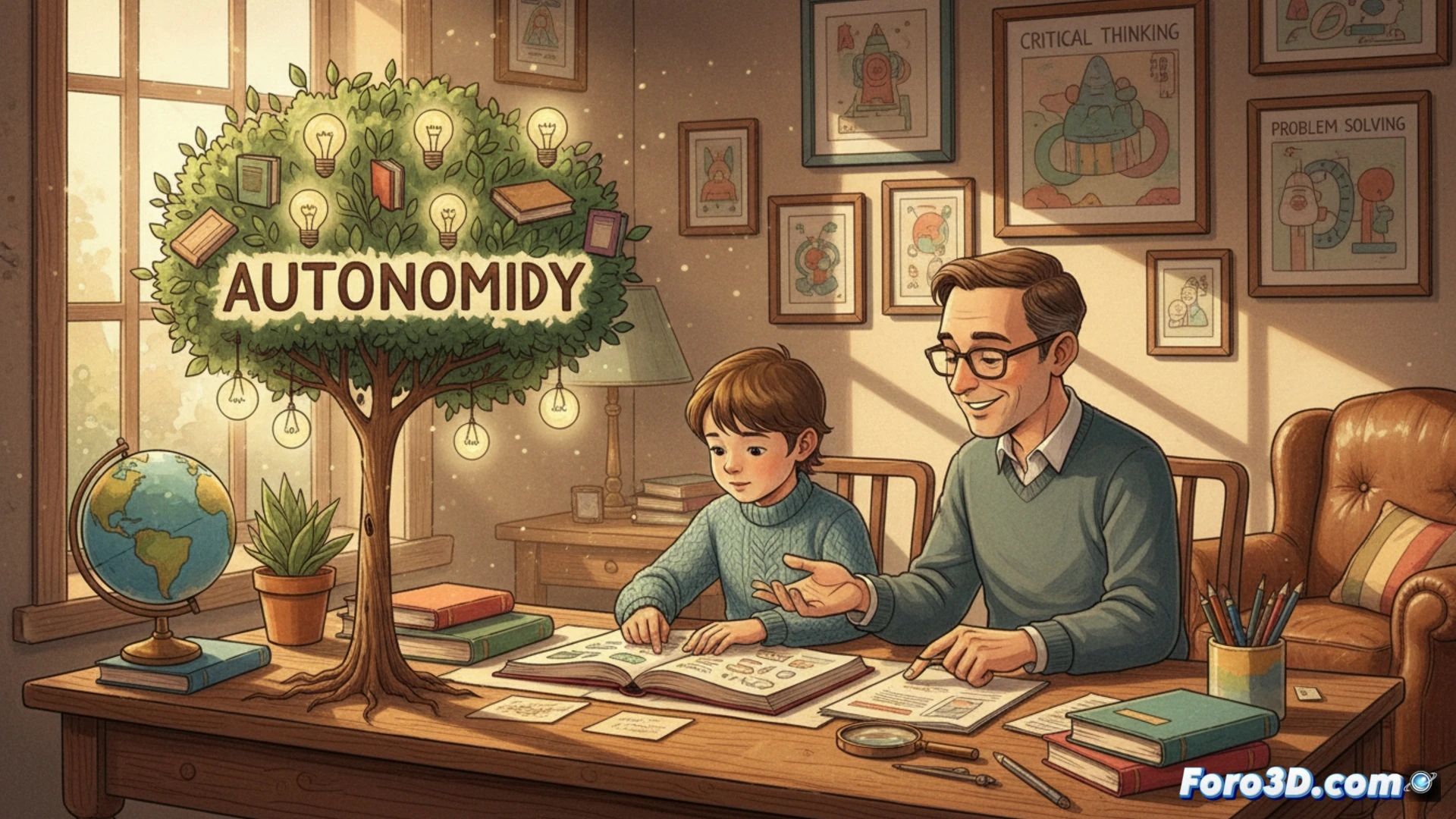
Royo explains that the concept of scaffolding, taken from developmental psychology, consists of offering only the minimum support the child needs to move forward. In practice, this means guiding with questions instead of giving direct solutions. For example, if the child does not understand a math problem, the adult can ask them to read the statement aloud or identify the key data. The challenge is to gradually withdraw that support, avoiding the overprotection that hinders the ability to solve problems independently.
Instruction manual for not doing homework (for your children) 🧠
If your current method consists of doing the math exercise while your child stares at the ceiling, bad news: you are not helping, you are doing a PhD in elementary school without a degree. Royo suggests a foolproof plan: if the child asks, answer with another question. You: What does the statement say? Him: I don't know. You: Read it again. And so on until they get tired and do it themselves. It works sometimes, but at least you save yourself the social studies exam.