The traditional miller works with metal and chips, but 3D technology offers new tools to optimize their work. From rapid prototyping to manufacturing complex parts, 3D printing complements CNC milling. A clear example is the production of jigs and clamping blocks in plastic, which are designed and printed in hours, saving machining time and costs.
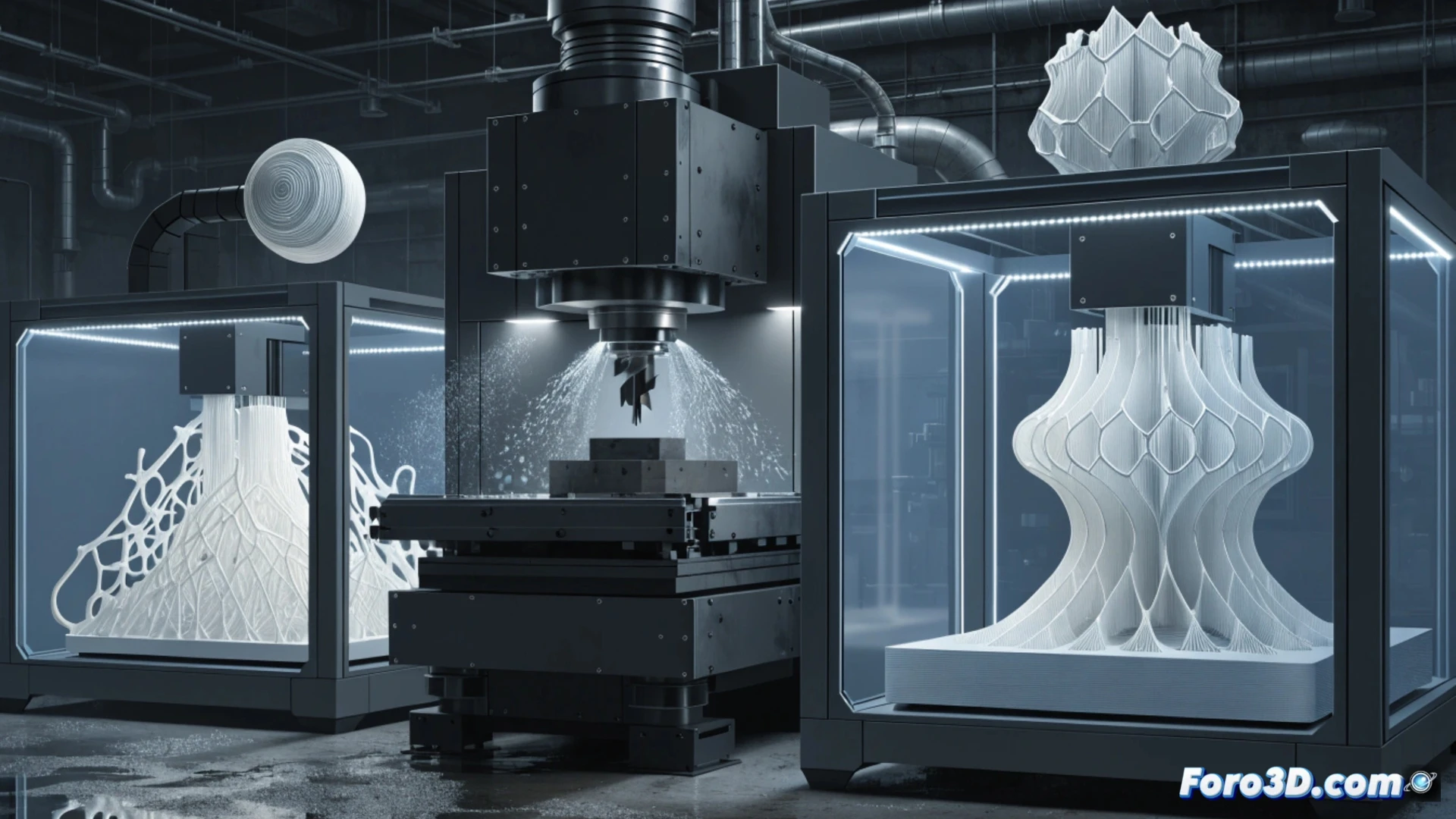
Essential programs to integrate the 3D workflow 🛠️
To combine milling and 3D printing, modeling and simulation software is needed. Autodesk's Fusion 360 allows designing parts and generating toolpaths for both CNC and FDM printers. Another key program is Blender, useful for organic geometries that are difficult to mill. For layer slicing, Cura or PrusaSlicer are stable options. With these programs, the miller can validate designs before touching the metal, reducing errors and waste.
The miller who now also prints their own screws 🔩
Because yes, after years of struggling with the lathe and the mill, now you can print in plastic that part that always breaks at 3 PM on a Friday. Of course, don't try to mill a printed part at the same speed as steel, or you'll see your end mill turn into a butter drill bit. In the end, 3D technology doesn't take away your job, it just gives you excuses to have more gadgets in the workshop.