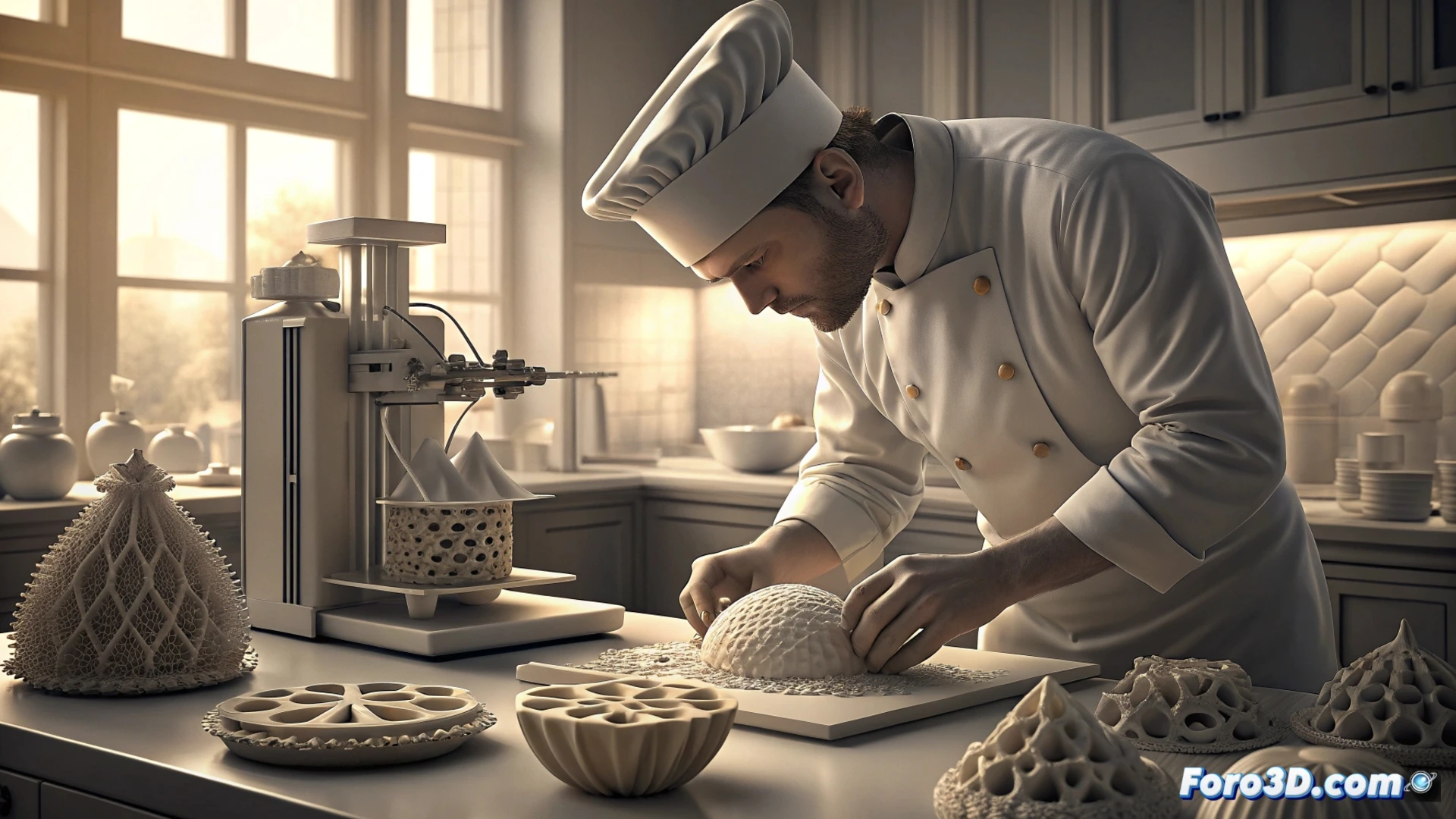
3D technology arrives in the kitchen to transform the way chefs present their dishes. From impossible textures to geometric decorations, additive printing allows the creation of edible elements that would be unfeasible by hand. A clear example is the preparation of puree garnishes with complex shapes or chocolates with hollow internal structures, all controlled by modeling and slicing software.
Hardware and software for additive cooking 🍽️
To work with food, printers like the Foodini or Procusini are used, which extrude doughs, purees, or chocolates. The necessary software includes 3D design programs like Blender or Fusion 360 to model the pieces, and then a specific slicer like Repertor to convert the design into printable layers. Some printers come with their own software, such as Foodini Creator, which simplifies the process so the chef doesn't need to be a CAD expert.
When the dish gets stuck in the nozzle 😅
Of course, it's not all glory: the day the printer decides the mashed potatoes are too lumpy and gets clogged, the chef ends up closer to mechanics than cooking. And if the 3D model has an error, the diner receives a cube of chocolate foam instead of a perfect sphere. But hey, you can always say it's conceptual art and charge double.