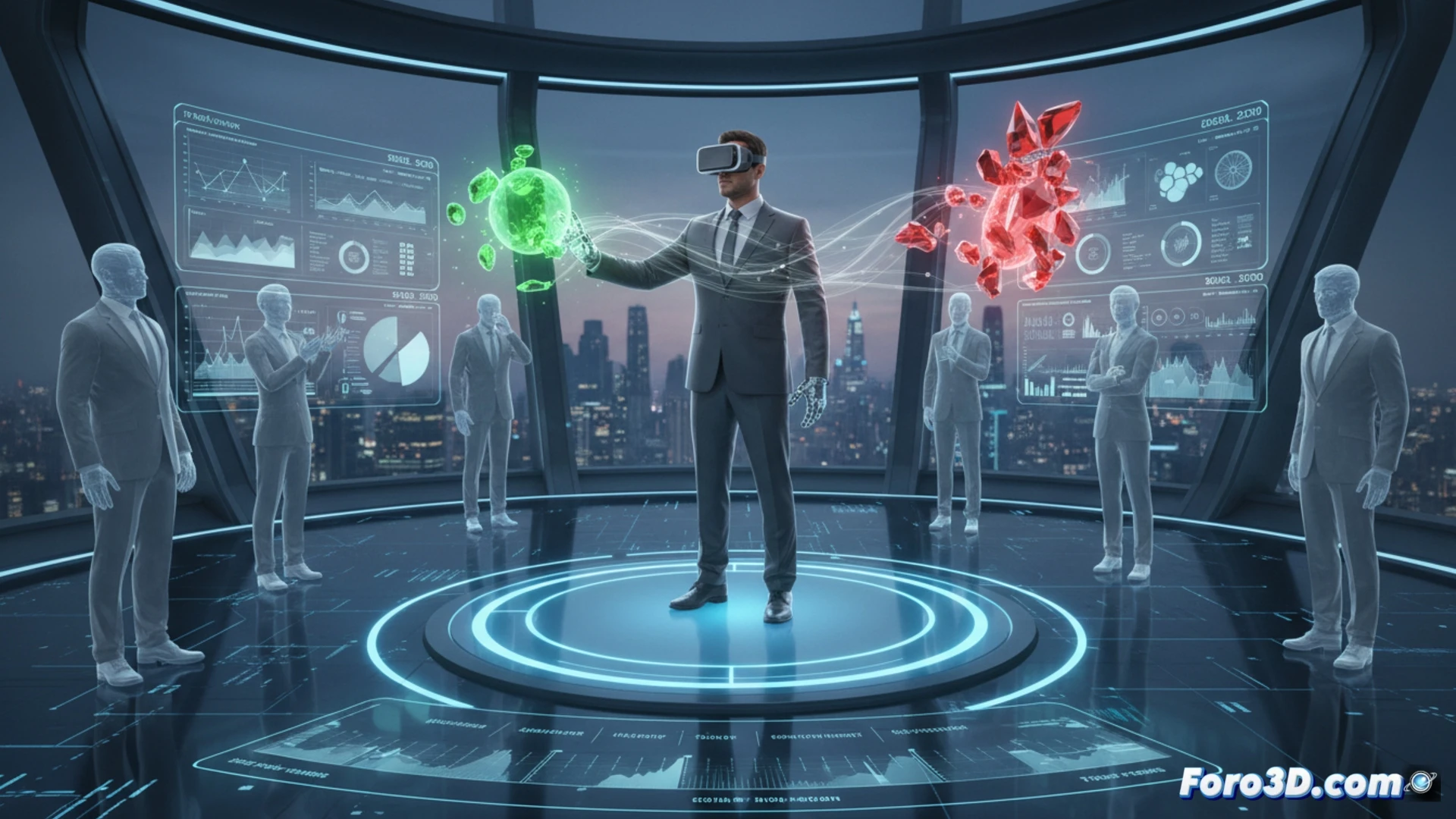
An executive coach works with communication, leadership, and decision-making. 3D technology allows for creating virtual scenarios where the coachee practices a negotiation or a presentation in front of a simulated audience. Gestures, postures, and movements that go unnoticed in an office conversation are identified. All without having to rent a room or hire extras.
Modeling situations with Blender and Unity 🛠️
To build these environments, Blender is used to model boardrooms or auditoriums, and Unity is used to program interaction with AI-controlled avatars. With a virtual reality headset like the Meta Quest 3, the coachee sees their own body reflected in a virtual mirror. The coach, from another device, can freeze the scene and point out with a 3D pointer the stiffness of the shoulders or excessive eye contact. Motion capture software like Rokoko Studio is also needed if you want to record the session for later analysis.
The day the avatar corrected my posture 🤖
The best part is when the virtual avatar itself starts giving you advice. You've been rehearsing a sales pitch for ten minutes, and a polygon puppet tells you to relax your hands. The executive coach is out of a job because the 3D puppet is more direct and doesn't charge per session. Then you realize the puppet is controlled by the coach from their laptop while sipping coffee. Technology advances, but the power remains in the same seat.