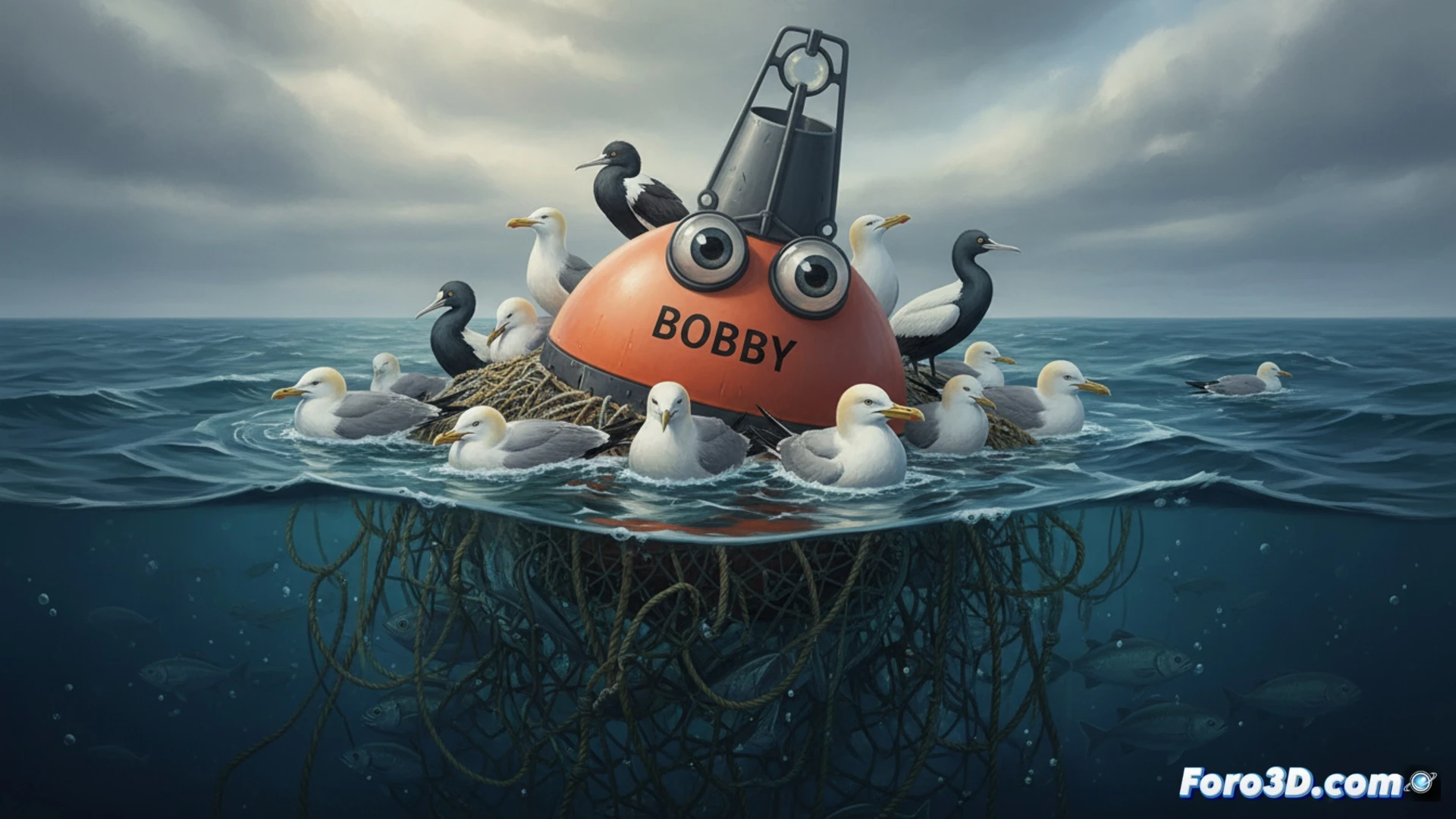
A scientific study in Denmark revealed the failure of a device designed to scare seabirds away from fishing nets. The device, called Bobby, is a yellow buoy with wind-driven rotating eyes that simulates a predator. Researchers counted over a thousand birds over 46 days and confirmed that after 23 days, the birds stopped fearing it, even perching right next to the buoy.
Visual strategy fails due to bird habituation 🐦
Bobby's design was based on imitating a predator using rotating eyes and striking colors to generate an alarm response. However, the repetition of the movement and the absence of a real threat led to the birds' habituation. The study shows that static or predictable visual deterrent systems quickly lose effectiveness. To be effective, these devices require variability in their patterns or additional stimuli that prevent the adaptation of target species.
Bobby, the marine scarecrow that no one fears 😅
Poor Bobby ended up being more of a beach accessory than a net guardian. The gulls, far from fleeing, adopted it as a new resting spot with a sea view. The invention went from being a simulated predator to a floating garden ornament. Perhaps the next prototype will include an irritating sound system or, directly, a sign that says: No perching.