Off the coast of the Bahamas, under just six meters of water, lies a formation of rectangular limestone blocks that looks like a paved road. Known as the Bimini Road, this nearly 800-meter-long structure has been a subject of debate among archaeologists, divers, and paranormal enthusiasts. Is it the remnant of a submerged civilization or simply a whim of nature?
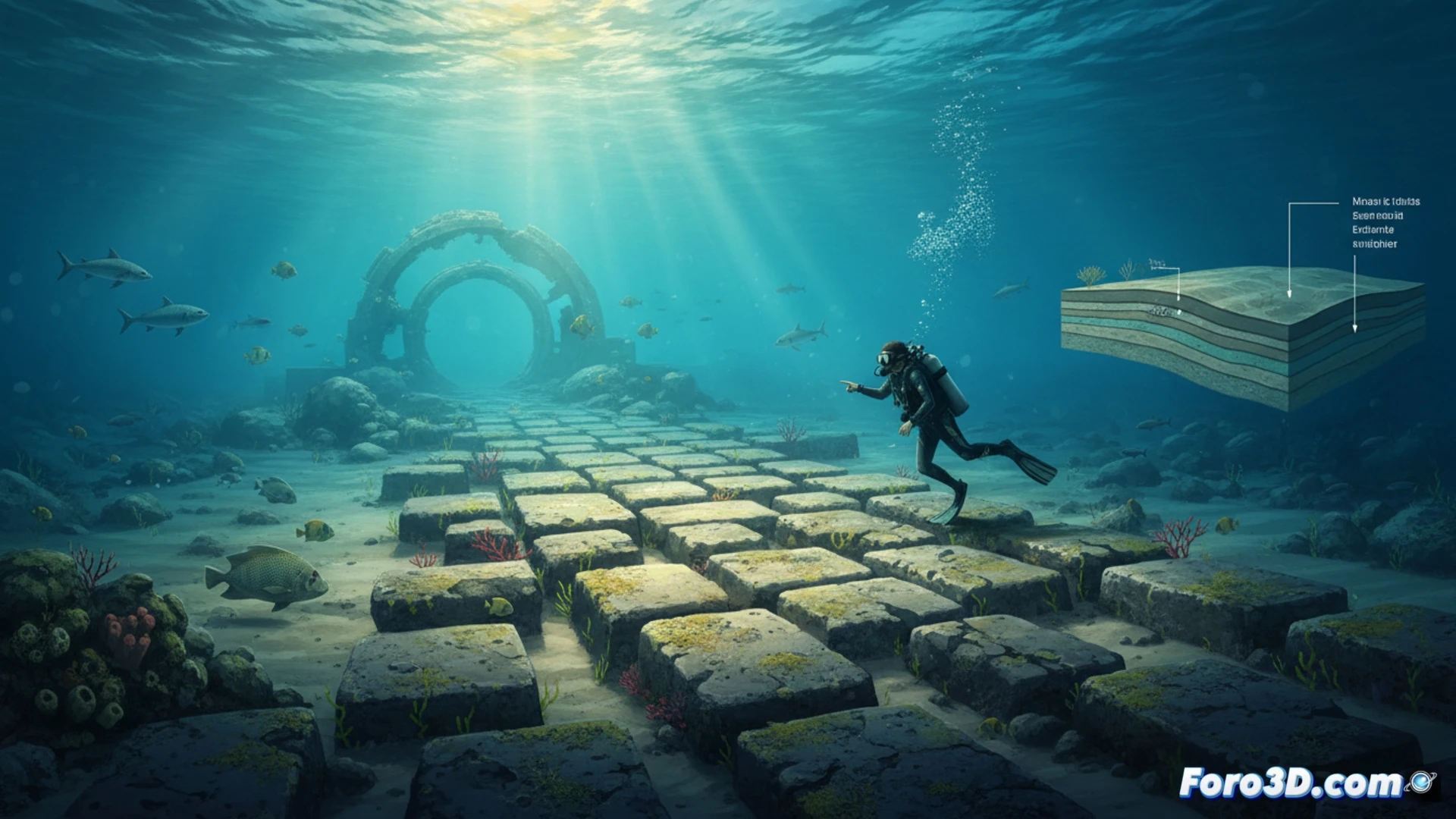
Technical analysis of the geometric arrangement of the blocks 🧱
The limestone blocks, between two and four meters wide, are placed in straight lines and 90-degree angles, forming a pattern reminiscent of a Roman pavement. Proponents of its artificial origin point to the presence of cut edges and an alignment that cannot be explained by natural processes such as erosion or fractures. Skeptics, on the other hand, provide geological evidence: limestone tends to fracture into rectangular shapes, and the arrangement resembles coastal formations called beachrock. Radiocarbon dating places the sediments at around 3,500 years, but the rock itself is much older.
In case Atlantis wasn't there, at least we have a sidewalk 😂
It's curious that the supposed road of a lost civilization is right next to a tourist resort. Perhaps the Atlanteans built their main avenue so that tourists could comfortably reach the beach in flip-flops. Or, as geologists suggest, it's just a stone that split in an orderly fashion. But of course, it's more fun to think that Plato was right and that we are walking (or diving) on the main street of Atlantis.