A user suffered a severe electric shock when connecting their electric vehicle, an incident that could have been fatal. Forensic analysis of the charging head using micro-computed tomography (Micro-CT) revealed the root cause: moisture penetrated through a poorly sealed gasket. This article breaks down how 3D electromagnetic simulation and precision modeling allowed recreating the arc flash phenomenon, exposing a critical design flaw in EV charging systems. ⚡
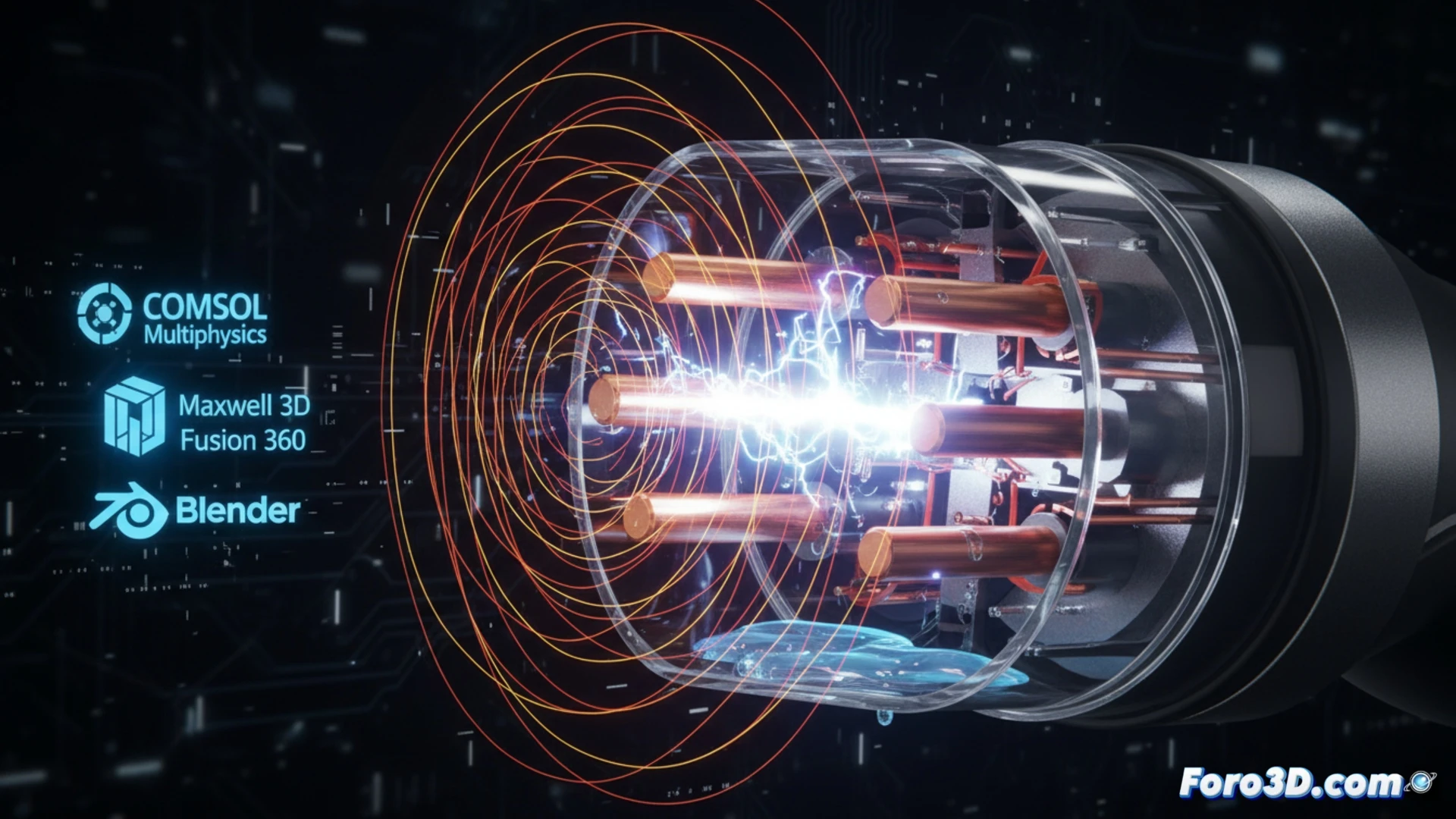
Micro-CT and Modeling in Fusion 360: Locating the Faulty Gasket 🔍
The first step was to scan the damaged head with a Micro-CT, generating a high-resolution point cloud. This data was imported into Fusion 360 to reconstruct the exact 3D model of the connector. Inspection revealed a micro-crack in the O-ring, invisible to the naked eye, which acted as a conduit for condensation. With the digitized solid, the geometry was exported to COMSOL Multiphysics and Maxwell 3D. The goal was to simulate real conditions: a humid environment and the high 400V DC voltage flowing through the power pins to the battery.
The Arc Flash: Lessons for Connector Design 🛡️
The 3D electromagnetic field simulation demonstrated how saltwater, acting as an electrolyte, reduced the dielectric strength between the pins and the metal housing. COMSOL modeled air ionization, while Maxwell 3D calculated current density. The virtual result matched the actual failure: a disruptive discharge that carbonized the plastic. To prevent this, it is recommended to design gaskets with double sealing labyrinths, use humidity sensors in the connector, and validate models with electromagnetic transient simulations before mass production.
What techniques would you use to represent embedded electronics in a vehicle?