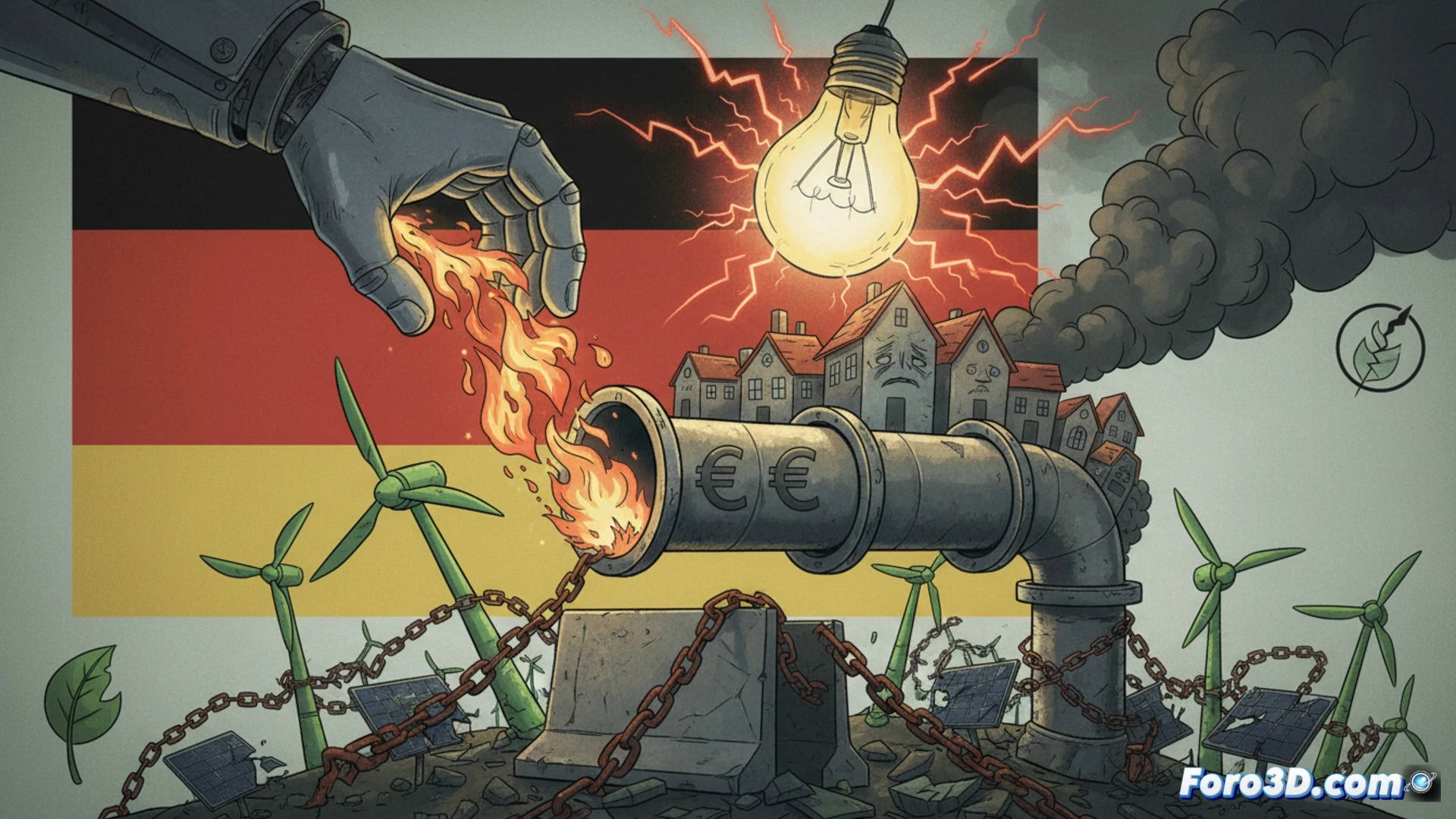
The German government claims to drive the ecological transition, but its accounts reveal a different reality. While solar and wind are already cheaper, Berlin maintains millions in subsidies for natural gas. This contradiction makes electricity more expensive for households and delays the shift towards a clean and stable system. Citizens are left footing the bill.
Solar and wind: technology has already won, politics hasn't caught up 🌱
Solar and wind generation costs have fallen by 80% in the last decade, dropping below 30 euros per MWh. Gas, on the other hand, hovers around 80 euros and requires costly infrastructure. Despite this, Germany delays permits for wind and solar farms. The technical solution lies in eliminating fossil fuel subsidies and simplifying bureaucracy to deploy renewables at scale.
Berlin: lots of green posturing, lots of gas in the pocket 😤
The German government promises to save the climate while embracing gas like a teddy bear. It's like going to the gym and ordering a cheeseburger with extra cheese. The electricity bill goes up, emissions stagnate, but at least the gas lobbies are happy. Of course, no one can say they didn't try: they try to make us pay more for the same energy.