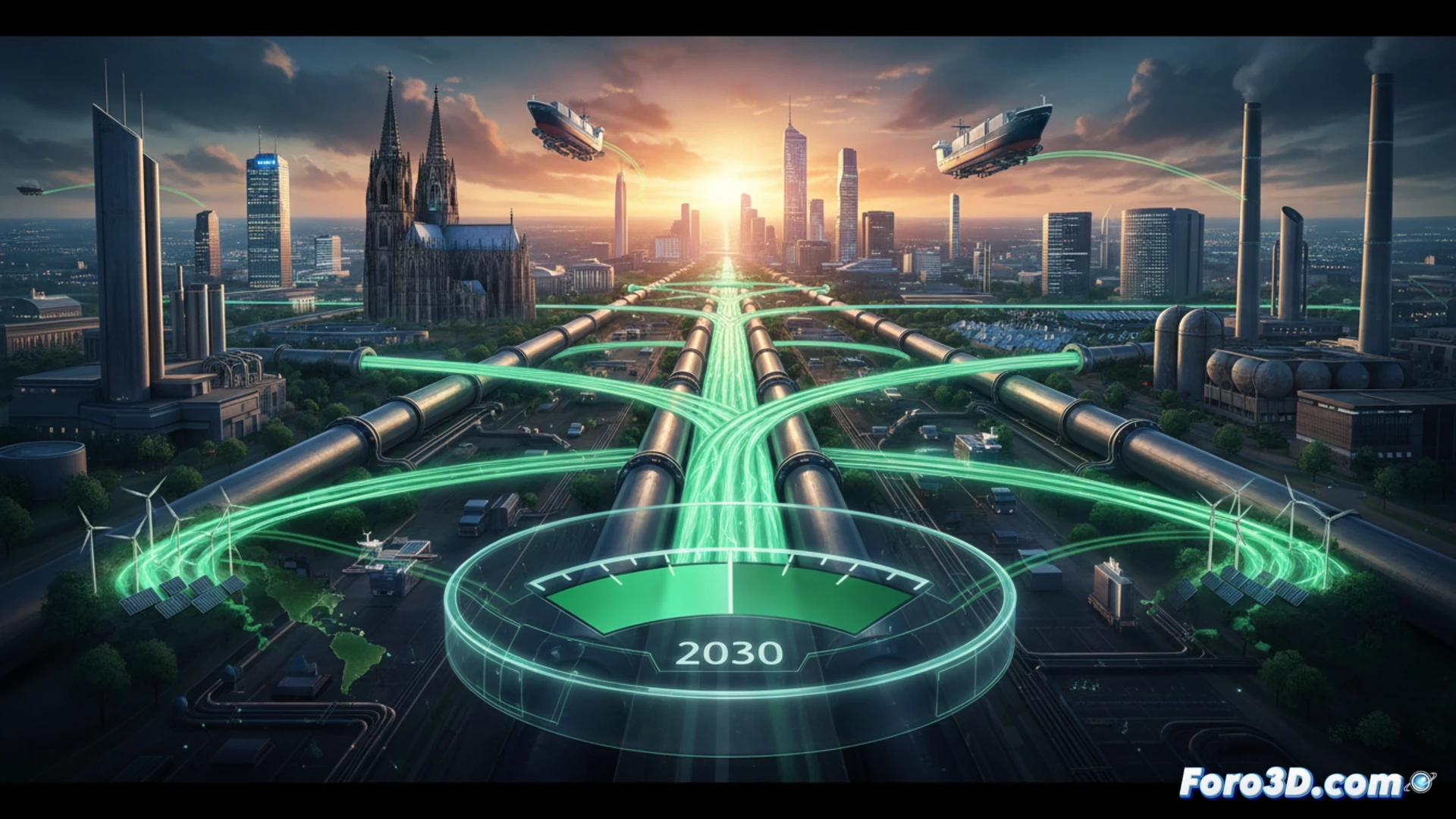
Germany is preparing for a sharp increase in demand for green hydrogen by 2030. However, its domestic production capacity will not meet the needs. The country will depend on massive imports to fuel its industry and energy transition, sparking a debate on supply security and global logistics.
Electrolyzer technology and import logistics ⚙️
To close the gap, Germany is pushing for proton exchange membrane (PEM) and high-capacity alkaline electrolyzers. However, local production will reach about 10 GW by 2030, far from the estimated annual demand of 130 TWh. Maritime transport of green ammonia and conversion to hydrogen via cracking are the most technically viable routes, although they involve energy losses of 20% to 30% in the process.
Hydrogen will arrive by ship, like gas has always done 🚢
Germany plans to import hydrogen from countries with more sun and wind, such as Spain or Chile. The idea is simple: they produce, we pay. The funny thing is that, after spending millions on subsidies and feasibility studies, green hydrogen will end up traveling by ship, like coal or natural gas. In the end, the energy transition is a global business, and the sun cannot be sent through a pipeline.