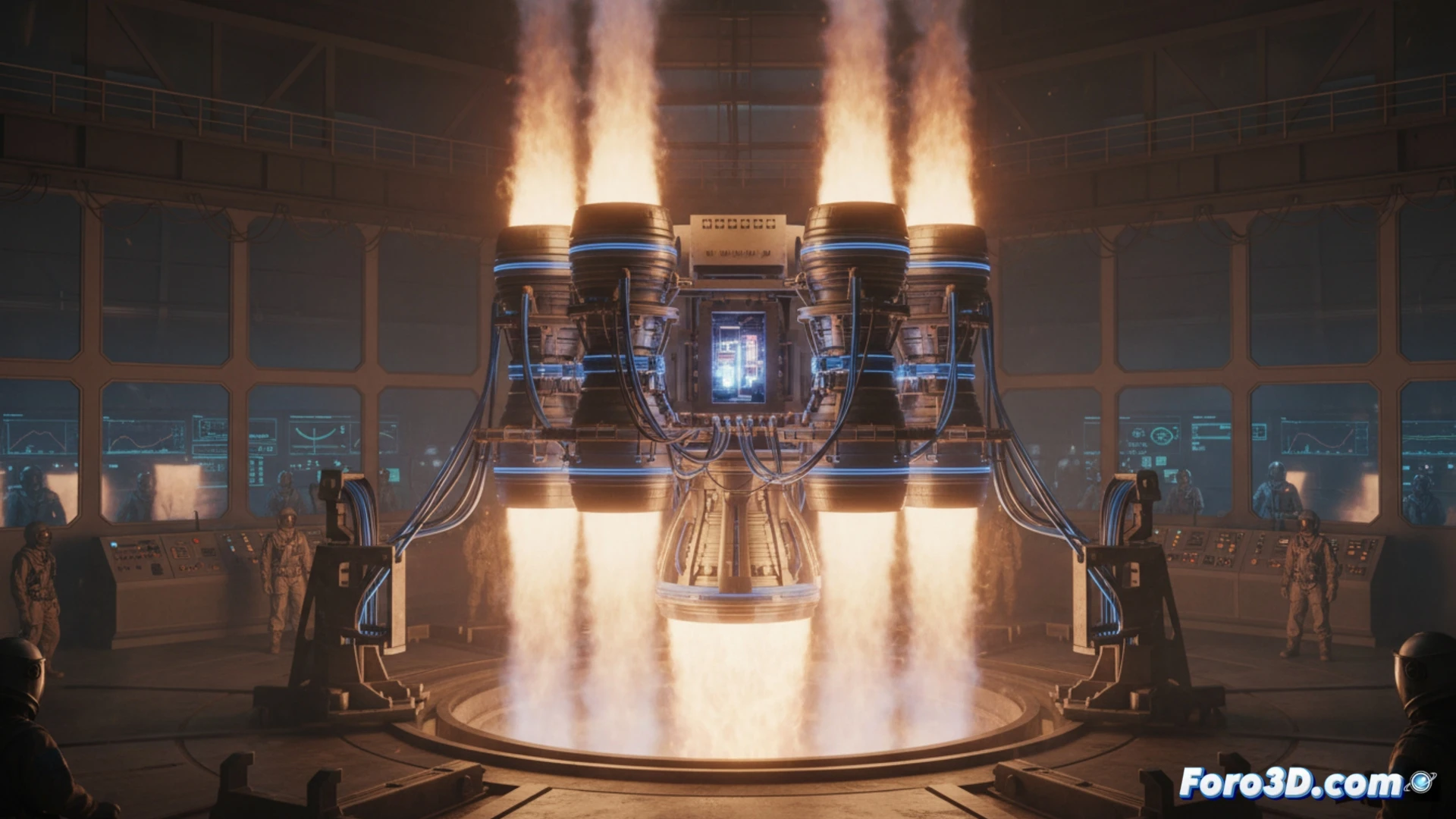
Indian startup Agnikul Cosmos has successfully completed the first simultaneous ignition test of four semi-cryogenic engines in a cluster configuration. Manufactured using 3D printing and electric pumping, these engines aim to demonstrate that rapid production can scale to meet space market demand without sacrificing thrust control or reliability.
Electric pumping and additive manufacturing: the duo accelerating development 🚀
The electric pumping architecture allows precise thrust control and reduces maintenance by eliminating complex turbomachinery components. By 3D printing all four engines, Agnikul shortens production timelines and avoids supply chain bottlenecks. The cluster test validates that the technology can be replicated without synchronization failures, a key step for small and reusable orbital launchers.
Printing rockets like sale flyers 🔥
Agnikul has made printing rocket engines almost as fast as ordering a pizza, though with less cheese and more cryogenic temperatures. The idea of having a cluster of engines ready in weeks instead of months sounds good, but we'll have to see if they don't end up with a returns accepted sign on the hangar door. For now, the only flaw is that there's no discount coupon for buying four.