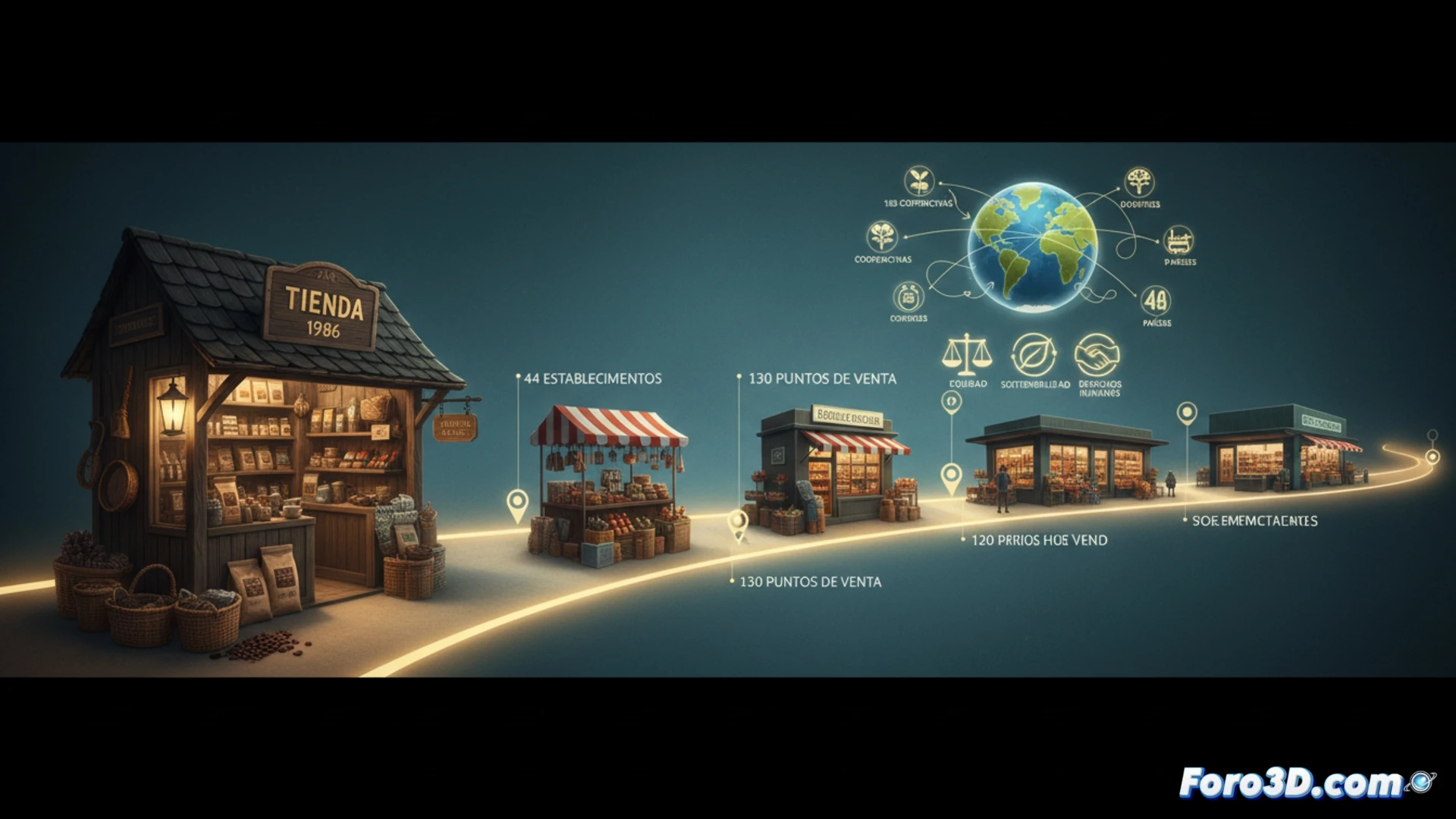
The Fair Trade movement celebrates four decades in Spain. Since opening its first specialized store in 1986, the network has grown to include 44 establishments and 130 points of sale. They work with 138 cooperatives in 48 countries, promoting a model based on equity, sustainability, and respect for human rights and the environment.
Blockchain and traceability: technology at the service of ethics 🔗
To ensure that every product meets Fair Trade standards, traceability systems based on blockchain have been implemented. This technology allows recording each stage of the supply chain, from the producing cooperative to the store shelf. The consumer can scan a QR code and learn the exact origin of the coffee, cocoa, or handicraft they purchase, verifying that minimum prices and agreed-upon working conditions are respected.
The drama of explaining that paying more is a profitable business 💰
Four decades later, the biggest challenge remains convincing the buyer that paying an extra euro for a coffee is not a scam, but an investment in someone else's dignity. While big-box stores fight over pennies, here we have been proving for 40 years that you can sell without exploiting. Of course, low-cost marketing still hasn't forgiven us for not using children in advertisements.